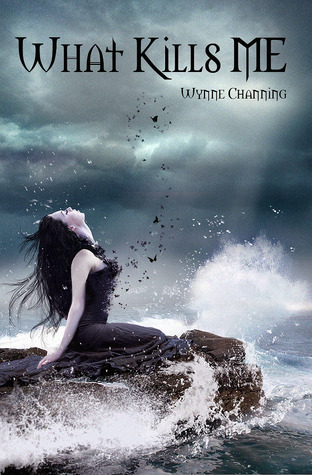
Review | What Kills Me, Wynne Channing

Poor Zee. All she wanted was a summer fling with a hot Italian guy. At 17, the only fling she’s ever had with a guy “was when Felix Lewis flung me in the air during cheerleading tryouts.” Unfortunately, fling prospect Paolo turns out to be more dangerous than she’d realized, and Zee is turned into a vampire. Not just any vampire, but quite possibly the vampire prophesied to “bring about the death of the entire vampire race.” Quite a lot for a clumsy, awkward girl to deal with, especially when the vampire Monarchy has her in their sights.

Wynne Channing has quite the task with What Kills Me, overcoming the Twilight stigma and distinguishing her book from the shelves of other vampire YA novels. She does so with humour and some pretty cool kung fu fight scenes. To be honest, Channing hooked me with her second paragraph: “I walked out of the bakery with a box of cannoli…” I’m almost certain her choice of pastry is incidental, but that line, so close after the foreboding vampire prophecy in the epigraph, made me remember “Leave the gun. Take the cannoli.” from The Godfather. Zee should’ve taken the gun and left the cannoli, eh?

For the first few chapters, I thought the book was pretty solid — interesting, with Zee turning into a vampire and going on the run — but as a whole, it didn’t really grab me or compel me to keep reading. There’s a really touching passage where another vampire advises Zee to let her family think she’s dead:

“If they believe that you are alive, they will wait for you to come home.”

“What’s wrong with that?” I said, though I knew the answer.

“They will wait forever. They will never grieve and they will never move on.”

“I don’t know which is worse. Having them wait or having them move on.” [17%]

Heartbreaking reality of a vampire’s new life, and Channing renders it with beautiful simplicity. There are similarly wonderful moments in the first few chapters of the book that also stood out for me, but I wasn’t taken in quite yet.

What Kills Me really took off, in my opinion, when Lucas enters the picture. I generally don’t like the romantic subplots that YA authors seem to want to insert even into thrillers/adventure stories. But in this case, the chemistry between Lucas and Zee really pulled me in. I love their banter, which is playful, sometimes tense, but always feeling natural. For example, when Zee, frustrated at being unfairly labelled a killer because of a prophecy, crushes a box, Lucas quips, “Did that make you feel better? Are you starting your murdering spree with the wooden box?” [48%]

I also love this bit of dialogue:

I watched him put the pouch [of blood] to his lips.

“What are you looking at?” he said after swallowing half the bag.

“It just looks… weird, you drinking out of that thing.”

“What?”

“I just thought vampires would like, you know, vicious while drinking blood,” I said. “You look like you’re in kindergarten with your juice pack.” I regretted it when I saw his face.”

“Shut up and drink your juice.” [45%]

Oh, Zee, always saying the wrong thing. Zee is clumsy and awkward, and in some books, these characters are usually token clumsy (really gorgeous, but just clumsy enough to be adorable to the love interest) or stupid clumsy (Bella Swan, anyone?). Channing manages to make Zee seem real, and I can definitely relate to some of the stupid things she says. For example, upon discovering some new physical skills as a vampire:

“Did you see that?” I asked. I pointed over my shoulder with my thumb.

“See what?”

“See me not fall out of the truck? I did like, a flip or something,” I said.

He rolled his eyes and walked by me.

“That was amazing,” I said, to no one in particular. [40%]

Yes, if it were me, I’d be doing flips over being able to do flips as well. Most of all, I love that Zee’s vampire abilities are just as much liability as asset. When she tries to leap onto a cliff, for example, she misjudges her own strength and accidentally crushes her handhold instead, almost toppling off the edge. Minor quibble: Zee’s later transformation into a skilled fighter seems too quick and convenient. I understand super strength, but some of her moves were practically Jackie Chan. That being said, I do like that she progresses from being scared and helpless to being a fighting force to be reckoned with. I just wish the transition was smoother.

There was a twist near the end that seemed almost deus ex machina, which is always a disappointment for me. Still, thinking back on the rest of the story, I saw where Channing planted hints of this throughout. The ending felt a bit anticlimactic, but the twist also created some very interesting implications for the rest of the series. With this ending, I have no clue where Channing can take Zee’s story, but I’m definitely intrigued.

+

Thank you to the author for a copy of this ebook in exchange for an honest review.
Review | River Dragon Sky, Justin Nicholes

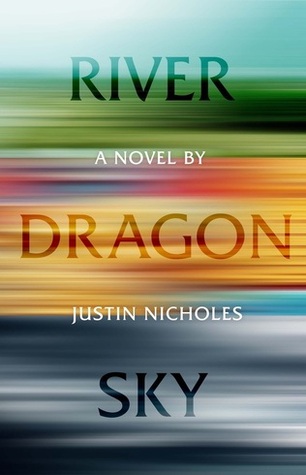
I’m a sucker for good cover art, and the cover of Justin Nicholes’ River Dragon Sky caught my attention immediately. Kudos to Justin Kowalczuk for the beautiful cover image.

In a debate over the importance of guanxi (connections, or, more specifically defined by the professor, nepotism), university student Zhuan He argues that the importance of guanxi shouldn’t even be in question — we all use it. “It is part of the human being,” she says. “You have to cut out his heart if you want to cut out guanxi.” She adds that if you ask Americans what they like about China, “they will say the Chinese are cooperative where the Americans quibble. It’s in all the textbooks.” [64% of eARC]

I include these quotes because they seem to me indicative of the general thrust of this novel. River Dragon Sky explores the connections between five characters — Zhuan He, her boyfriend Feng, Russian professor Kal (also Zhuan He’s lover), American missionary David (also Feng’s professor), and the seer Junping (who believes Zhuan He is his long-lost daughter Xiling). Their lives intersect in a web of connections — Kal for example frames David as Zhuan He’s lover, so Feng becomes insanely jealous of the wrong man; Feng becomes an obsessive stalker, yet Junping as well watches Zhuan He closely; the university is concerned over arson cases when we know fairly early on the arsonist’s identity; and so on.

Adding to the complexity of the story are shifts in time and perspective — we learn about Junping’s courtship of Xiling’s mother, as well as Kal’s history of trouble at school. Nicholes also adds cross-cultural complexity — Zhuan He, for example, knows that her classmates view her relationship with Kal as a bid to leave China, and as she says in her debate speech, “If you do [marry your coach], maybe you marry him because he can enable you to do something. Can you go abroad to study, to practice English, without guanxi?” [64%] It’s quite a lot for a novel to cover, and in the hands of, say, David Mitchell or Haruki Murakami, this tale could have been amazing. Unfortunately, in Nicholes’ hands, the story just feels disjointed, convoluted and erratic. There are a few moments of beautiful insight, and chapters that drew me in to the story, yet for the most part, I found myself either confused or detached.

A lot of it, I think, had to do with language. In attempting to create an atmosphere of great import, Nicholes veers too much into abstraction and waits too long before giving the reader something concrete to grasp. Take for example the following passage:

The memory that Junping had teased from the American was from a long time before. He sucked in a break while thinking it over. His stomach burned.

In other life, Junping had lifted a newborn’s hand to his face and pressed his lips into its palm. The smell had been sour. The child had been cradled in blankets beside a woman.

Junping stumbled back against the wall. He brought his hands up to his face because he couldn’t believe what was happening. Another ghost approached him (they had visited, shifting shapes, before), another omen come to unsettle him, to prevent him from glimpsing, when that walking stick lay in his deathbed in place of his body (the sign that he’d achieved immortality), the all-subsuming Tao.

It was a girl. She was reading the hexagrams he had drawn into the paper. He couldn’t believe it. He couldn’t believe who this was. But it was true, and it all made sense.

But why? After all these years? [5%]

The narration is probably supposed to be dramatic, building up to the big reveal about who the girl was. Unfortunately, the dramatic impact is undercut by the lack of clarity. The sentence about the ghost is a prime example of what I mean about abstraction. Nicholes injects some spirituality and horror into the narrative, but uses an overly convoluted sentence with bracketed clauses that distract more than elucidate. As well, at this point, we have no idea why Junping is so affected, or why he’s thinking of ghosts and the Tao.

It’s frustrating for a reader, and even within this passage, we still have so many unanswered questions. Who is this newborn and this woman? How can we tell when the flashback begins and ends? Where did these hexagrams come from? Who is this girl, why did she have such an effect on Junping, and what does all this have to do with the baby?

The language also gets oddly formal, or at times rather awkward, making me wonder if this is a translation (it’s not). Take for example “before he had molted the identity of Yang Dong” [5%], “Kal had revolted against his dad” [27%], and “he’d absconded with Darlene” [27%].

I don’t usually mind difficult books, but in this case, the language wasn’t compelling enough to put me under its spell, and the payoff (various revelations and insights throughout) didn’t feel significant enough to merit the self-important tone. It’s not a bad book. I did enjoy the kung fu scenes and the relationship between Zhuan He and Kal. I also found Feng’s stalker tendencies creepy and David’s attempts to stay out of the love triangle drama somewhat amusing. Overall, however, I think much could have been streamlined and clarified.

+

Thank you to Signal 8 Press for an eARC of this book in exchange for an honest review.


Review | Remember Tomorrow, Tricia Merritt

A year after her brother Zach dies, Alannah Greer receives an email from his partner Benson inviting her to Hong Kong for Zach’s memorial service. The email ends with a cryptic assertion that Zach didn’t have to die. En route to Hong Kong, Alannah discovers that she has the ability to time travel, and you can probably figure out the rest of the story from there.

Tricia Merritt’s Remember Tomorrow has an interesting concept. Certainly, I can understand the desire to change history and save a loved one’s life. It turns out that the hit-and-run that killed Zach may have been orchestrated by a corporation studying genetic abnormalities, and so the story takes a thriller-ish turn. It was fast-paced, I liked Benson as a character, and the mystery about the corporation interested me, however, there were several major problems with the novel.

First and most glaring is the language. Merritt goes too far in attempting to make her words sound poetic. 5% in and I was already very frustrated.

…a bologna and ennui on dry rye [1%]

…the bland despair of white bread [1%]

…a little guilt-rodent poked its head up out of its gopher hole [1%]

A mosquito-cloud of distractions… [1%]

…before there’s nothing left but a scalding vortex of antimatter? [1%]

I’m not a big fan of super poetic narratives, but at times, I can see how it works. I am also generally understanding of the occasional unfortunate metaphor. However, so many clustered even just within the first few pages of the eARC, and it was driving me mental.

This is especially unfortunate because there are times when Merritt gives truly striking turns of phrase. For example, I loved the first few lines:

Sometimes, life’s all about cravings. My name is Alannah Greer, and until recently, I’d have killed for a nice tuna salad on sourdough. [1%]

Sharp, concise, intriguing. The tone is just quirky enough to hook the reader. Merritt follows that up with the “bologna and ennui” line that I hated as being overly poetic, but because the first couple of sentences were so striking, I was willing to give her a shot. Another passage I liked:

Benson was my brother’s partner. Was. As an English teacher, I understood the finality of the past tense more clearly than most, and thus I hated it more intensely.

Fucking was. [1%]

Again, concrete details, with a distinctive voice. We learn quite a bit in just a few lines.

For a splinter of a second, I felt sorry for her with her bad posture and her endless cups of lukewarm herbal tea. [2%]

“Splinter of a second” reminded me too much of the earlier-quoted “mosquito-cloud of distractions” — trying too hard to insert metaphor — but I absolutely, absolutely love the image of “endless cups of lukewarm herbal tea.” Amazing.

Merritt has some outstanding phrases, and it’s unfortunate that just when I see a line I absolutely love, I then see a series of lines I absolutely hate. The overall impression is of a young writer in love with her proficiency with language, yet still lacking the experience to know when to pull back.

Her attempts at humour are even less successful than her overly poetic descriptions. She does have some funny moments, but oftentimes, I’d read an offhand comment or a piece of dialogue and cringe, because it just felt too forced to be funny. There was also a truly awkward moment where Zach, teasing Alannah about a date, asks “Did you spit or swallow?” [69%] Merritt acknowledges the impropriety of the question with Benson turning pale and Alannah pertly replying, “That’s for me to know and you to wonder about.” [69%] To be honest, I’m not sure what the line was there for in the first place. Crude humour, perhaps, but it just felt pointless (people with brothers, would they really ask that?) and therefore horribly awkward.

Another issue that could have used a good editor is Merritt’s propensity to go off on tangents. Just when the mission to save Zach really kicks off, and Alannah realizes she now had to investigate who wanted Zach dead in the first place, Merritt pauses that storyline to take Alannah on a shopping trip. I understand Alannah’s need for new clothes at that point, but detailed, Becky Bloomwood-like descriptions of her trip around Hong Kong shops were completely unnecessary. Just as unnecessary was Alannah’s reflections, right after the shopping trip, on her lack of a love life. Again, I’m sure she was lonely and really in need of a sexual encounter at that point, but I just couldn’t care less. A bit later on, when teased about a date the night before, she reminds Benson and Zach about their investigation and tells them they should focus. All I could think was, about time.

I was also bothered by Merritt’s treatment of Alannah’s ability to time travel. After emphasizing how physically draining it is to travel through time, such that Alannah literally collapses after her trips, Merritt then turns time travel into a convenient plot device. Alannah’s plans to prevent Zach’s death involve her travelling through time and undoing whatever errors were in each attempt. It’s still physically draining, and we do see the toll it takes on Alannah to have to time travel after Plan A fails, then Plan B, Plan C and so on, but after a while, Alannah’s ability to time travel starts to feel like deus ex machina.

After all the build up and the random tangents, the ending was rushed. It felt like Merritt realized she had to end the novel and so decided on some action scenes to tie up loose ends. The villain gives a speech about his master plan, and Merritt tries to alleviate the cliche nature of this scene by having Alannah comment sarcastically on the fact that he’s giving a monologue, but it doesn’t help. Worse, even after we get the big reveal, nothing still makes sense to me. How did the villain get involved in the scheme in the first place? Who are the mysterious “they” he keeps alluding to? How did the villain pull all this off, and what does he hope to achieve? Alannah eventually acts like she’s figuring things out, but her explanations still leave many questions unanswered.

Then, in the last few pages, there’s another big reveal, a surprise twist that I saw coming from the beginning. Unfortunately, I only saw it coming because it seemed like a convenient point to add a surprise twist, and not because Merritt set it up well. There were no indications leading up to this twist, and even the reveal was handled in a couple of pages, and in a very anticlimactic way. This revelation had the potential to be huge, yet it was handled with barely a whimper.

Finally, after the big action scenes, there were still some minor threads left unexplained. The action scenes had their casualties, and I at least wondered what happened after that, considering other people in the corporation weren’t aware of the villain’s plot. Didn’t security cameras catch the action? Didn’t the characters have to deal with some kind of fallout afterwards? I was frustrated, and I felt like the author rushed me through the most pivotal moments in the book.

Overall, an interesting concept, and despite all the problems I pointed out, the plot still makes it worth a read. I just think the story deserved better editing.

+

Thank you to Signal 8 Press for an electronic ARC of this book in exchange for an honest review. This book was published under the Scarlet Storm Press Imprint of Typhoon Media in Hong Kong.