 By utter coincidence, I started reading Nancy Garden’s Endgame on the same day I heard about the Newtown shooting. Endgame happens to be about a high school shooter, and returning to the book felt a bit like a betrayal to the Newtown victims. I steeled myself against any attempt by Garden to elicit sympathy for the shooter, and to be fair, this did colour my approach to the book.
The back cover blurb is what I would expect for a teen book told from the perspective of the shooter — fourteen year old Gray Wilton is bullied at school, can find no support, and his “only joys are taken away… first his beloved drums, then his dog, and finally his only friend.” To the author’s credit, despite all Gray goes through, she very clearly establishes his disturbed nature. Rather than a total innocent who suddenly snaps, Garden portrays Gray as full of anger, fantasizing about torturing and killing his bullies. She contrasts the violence of Gray’s anger with that of his best friend Ross, who is also bullied, and who also fantasizes about getting back at the bullies, and yet laughs nervously at the extent of Gray’s fantasies, suggesting perhaps milder forms of revenge. With this contrast, we see how, despite what Gray is going through, he is still a psychologically disturbed individual who will clearly make the wrong decision.
Again, to be fair, I’ve been biased against Gray from the beginning, because I know from the back cover that he kills his classmates with his father’s semiautomatic. Granted, I feel sorry for him for being bullied, because the school bullies in the book really are major jerks. Still, when Gray complains about his father limiting his drum practice time at home and requiring Gray to use padded sticks, all I could think was, of course, otherwise you’d disturb the neighbours. Perhaps I’m just becoming old and cranky, but really, Gray, it’s not the most unreasonable request.
Gray’s parents are interesting characters. His mother is a sympathetic figure, too weak-willed to stand up to her overbearing husband, which is too bad because she seems smarter than the father and might’ve kept him from pushing Gray over the edge. Gray’s father, while understandable in some respects, such as his concern about Gray potentially taking weapons to school, is inept at best (Gray easily sneaks a knife past his father’s daily body checks), and must share in much of the blame for Gray’s shooting spree. Despite Gray’s anger issues, it is his father who pushes him to take up shooting in order to “man up” and face the bullies. There’s an uncomfortable parallel here with the Newtown shooter, and in Gray’s case at least, you can’t help but want to yell at the father to see all the warning signs. Much easier to do in a book where you know how it’ll turn out, rather than in real life, of course.
I love the character of Lindsay, the girlfriend of Gray’s brother. She is the only one who really reaches out to Gray and tries to help him face his problems in a non-violent manner. She is a hero, and her ultimate failure in preventing Gray from his shooting spree is utterly tragic.
Garden does take us into Gray’s head — we learn about the events leading up to the shooting from Gray talking to his lawyer. Tellingly, he claims to not remember the details of the actual shooting. Garden does make us feel his guilt, and his grief, in his unwillingness to think about the students he’s killed. You may be reminded that he’s only fourteen, and himself a victim of bullying. As well, Garden does show how Gray tries to get teachers to help him with the bullies, but they generally turn a blind eye. So she does present both sides of the story, and we can view Gray in a sympathetic light. Personally, I had little sympathy.
Endgame isn’t quite as brilliant as We Need to Talk About Kevin, but in some ways, it feels much grittier. We actually see the progression of a school shooter’s thoughts, and given how much anger Gray had since the beginning of the story, his crime seemed inevitable. This is an emotional book, however it ends up making you feel about Gray and his experiences. I don’t know if Nancy Garden set out to present Gray as a sympathetic character, a victim of bullying, or if she wanted to present him as I ended up seeing him — a disturbed person who had little to no justification for his actions. I admit it may be my personal bias, but again, kudos to Nancy Garden for the ambiguity created by her straightforward narration.
+
Thank you to Thomas Allen Ltd for a copy of this book in exchange for an honest review.

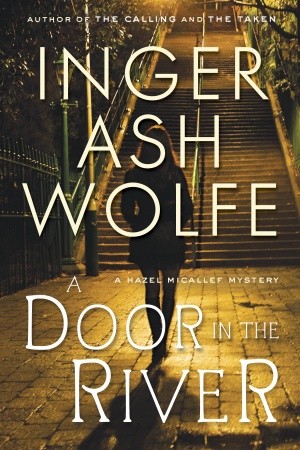 Inger Ash Wolfe’s A Door in the River is my first Hazel Micallef mystery, and at first I didn’t believe the person on Twitter who told me the series was disturbing. After all, I’ve read Stuart MacBride and Val McDermid, and at first glance, the mystery of a well-liked man being killed by a bee sting didn’t sound too horrific. The book doesn’t get quite as gruesome or horrific as MacBride and McDermid, but it does enter some pretty emotionally and psychologically intense territory.
 Literary Treats