Review | The Buried Giant, Kazuo Ishiguro

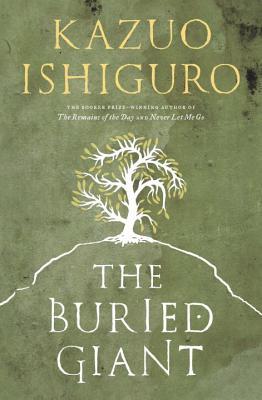
22536182“There’s a journey we must go on, and no more delay.” So goes the blurb behind the advance reading copy of Kazuo Ishiguro’s The Buried Giant. It’s a beautiful book, the stylized tree on the cover combined with the text on the back conveying a world of magic within its pages.

And indeed, Ishiguro invites us into an Arthurian style world, where a mist causes forgetfulness, and an elderly couple sets out on a quest to find their son. The language evokes a world of myth, the childlike Middle Earth in Tolkien’s The Hobbit rather than in his later trilogy. The themes are universal — love and forgiveness and the power of memory.

In Giant, amongst the encounters with knights and battles with dragons, amid the backdrop of political turmoil in England, the heart of the story lies in the love between the elderly couple Axl and Beatrice. A fog of forgetfulness has hidden memories of their past together, and at several points the question is raised whether some memories are best left forgotten. This is a particularly poignant question in light of the setting of the story — right at the crux of change, the death knell of the Arthurian age and the beginning of modern Britain. How much of Axl and Beatrice’s Britain will survive in memory, and given the various armed conflicts in their Britain’s history, how much would we ultimately want to remember?

As with any quest, there is a particular point of no return, the crux as it were of the entire adventure. For Axl and Beatrice, this takes the form of a legend about a boatman. According to the legend, couples who truly love each other may be ferried across to an island where they would be together forever. Yet before the trip, the couple must pass a test to prove the depth of their love, and if they fail, they are doomed to wander the island alone for all eternity. It’s a beautiful metaphor for death, and recalls the romantic ideal of love so strong that it lasts beyond death.

There are a lot of beautiful moments in Giant, and the conversations between Axl and Beatrice at times brought me to tears. But something was missing. I can’t quite put my finger on it, and it’s possible that my expectations were just too high (it’s an Ishiguro, after all). But I was expecting to be transported. And with such a mystical framework for the narrative, with such lyrical language and mythological encounters, I was expecting to lose myself in the world that the author has created. Yet I wasn’t. The story felt just a tad too crafted, the language just a tad too designed that it never quite clicked into a natural cadence. I appreciated what the author was trying to do, and I liked his characters and his themes, but I never quite fully connected to the story. This is a shame, because I love Ishiguro’s work, and I really wanted to lose myself in this book. It wasn’t bad, but it could have been so much more.

+

Thank you to Random House Canada for an advance reading copy of this book in exchange for an honest review.

Review | 9 1/2 Narrow: My Life in Shoes, Patricia Morrisroe

Shoes9 1/2 Narrow is touching, funny and uplifting, a charming memoir about significant events in author Patricia Morrisroe’s life told through the framework of the shoes she wore at each incident. It’s fascinating to realize just how symbolic a choice of footwear can be.

I love how she credits meeting her husband to the shoes she wore — she happened to be tying her laces at the same time he passed by — and then later details how his collection of a certain type of athletic shoes became a cause of strain in their marriage. I also especially love the section when she wore a pair of fashion forward shoes at a new school to be cool only to discover that the popular girls were all wearing a completely different style — the incident turns into the type of “mean girl” misunderstanding that must have been much more painful than the author’s lighthearted touch leads us to believe. Having grown up studying in an all-girls’ school, where we had to wear uniforms, I know all too well the importance of choosing the right accessories, and the right pieces of clothing over which we had some degree of control (i.e. shoes).

My favourite part of this book by far is the relationship between Morrisroe and her mother, told through the lens of their constant battles over footwear. It’s a relationship other women may remember with their own mothers or daughters, and again, the lighthearted comedic touches of heated debates over shoes belie the deep bond between them. The tone of these segments stand out as well — in a mostly amusing series of anecdotes, there’s a poignancy to her encounters with her mother that tell a tale far beyond a story of shoes.

The book reminded me of a shoe-related skirmish I had with my own mother, over the height of the heels I could wear to my high school prom. Having been constrained by a school uniform all my life, I had Disney princess-ish visions of glamour for prom night, and those, in my mind, equated to high heels. I wanted four inch stilettos, my mom wanted nothing higher than an inch. We compromised with 3 inch chunky heels, and I was feeling like a glamourous princess for maybe the first hour, until I realized why my mom had been so adamant about low heels. Limping around at the end of the evening, I was grateful that she’d forced me into rounded toes and chunky heels.

That memory is one in a series of many memories of high school and of my mother, yet even now, whenever I see a pair of four inch stilettos, or otherwise wobble around in heels wishing I were in flats, I remember my mom and my high school prom. It’s fascinating, the impact footwear has on us, and Morrisroe captures this feeling wonderfully in her memoir.

Whether Morrisroe is arguing with her mom over a particular type of shoes, or falling in love with her husband over another pair, shoes play such a big role in our lives, and our choice in footwear tells so much about us. There are shoes I associate with particular friends or family members, and shoes I associate with particular moments in my life. And by framing her life in shoes, Morrisroe succeeds in drawing us into her life, and helping us visualize precisely the type of footwear that got her to where she is today.

+

Thank you to Gotham Books for a copy of this book in exchange for an honest review.

Review | Armada, Ernest Cline

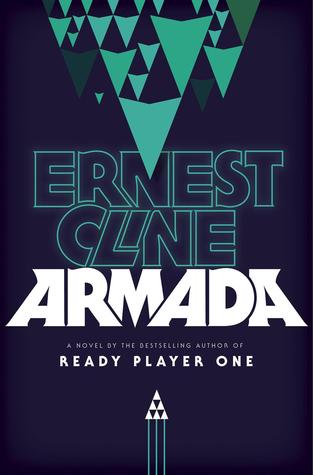
ArmadaThis was disappointing. I absolutely geeked out over Ernest Cline’s Ready Player One, and I was eagerly anticipating his next novel. But while Armada wasn’t bad, necessarily, it also wasn’t anything special, and after providing such geeky pleasure with Ready Player One, being just “meh” is probably the worst thing that could have happened for the author’s next novel.

Like Ready Player One, Armada dives deep into gaming culture, and posits the premise that the fate of the world lies in the hands of nerds. In Armada, a particular video game involving aliens comes to life in the real world, and it turns out that this game was actually a training device aimed to prepare the world against an alien invasion. Enter Zach Lightman, video gamer extraordinaire who is recruited to join the elite forces in saving the world. There is also a bit of a subplot involving Zach’s relationship with his father, a fellow gamer who became consumed by his own conspiracy theories and ended up dying in a sewage plant explosion when Zach was a baby.

Unfortunately, overall, this whole story and all its subplots just felt all “same old, same old.” Certainly, most of the references (Star Wars, Ender’s Game) are deliberate — and I likely missed a whole list of other references in my reading. Cline peppers his narrative with quips about how familiar things feel, and characters calling attention to cliches. But in this case, the quips hit too close to home. Rather than clever homage, as Ready Player One did so well, Armada just felt stale.

Worse, the characters all felt like stock characters. There’s the Ender-type chosen one with daddy issues, the wise mentor in disguise, the bully, the quirky manic pixie dream girl love interest, and an assorted cast of other people. There is a poignant moment near the end, where it seems like the aliens are about to win and various gamer/soldiers begin to pair off for a potential last moment of human connection. But otherwise, the characters felt as flat as their video game counterparts.

It’s possible that I’m just not the right kind of geek for this. Whereas I was in geek heaven over Ready Player One’s references to Nintendo type games, I rarely played space battle games unless at an arcade, and so perhaps I’m just not the target demographic for this novel. Perhaps someone who grew up playing World of Warcraft type video games would enjoy this book, or maybe someone who loved Ender’s Game would appreciate whatever subtlety there is in Cline’s homage to the story (rather than a straight up copy, which is how it struck me from seeing the Ender’s Game movie trailer).

Still, I really wish I’d enjoyed this book more. I devoured Ready Player One, and I’m up to read whatever Cline writes next. Unfortunately, I had fairly high expectations for Armada, and it fell short.

+

Thank you to Random House Canada for a copy of this book in exchange for an honest review.