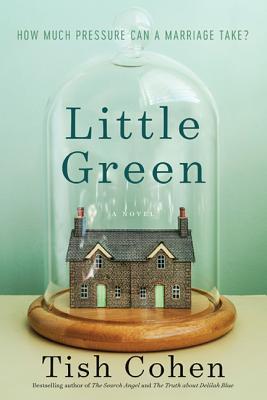
 Little Green is such a beautiful, moving story. I immersed myself in it on a hot summer’s day, and absolutely felt for all of the characters. Cohen has written a story about a marriage undergoing tremendous strain, and then pushed to the breaking point when the unthinkable happens to the couple’s daughter, and I love how real, nuanced and complex the characters and their relationships are.
Elise Sorensen is a horseback rider who competes in dressage and aspires to be in the Olympics. Her husband Matt has curtailed his own professional ambitions to be the primary caregiver for their child Gracie, and as a result has not yet made partner at 50. The novel takes place at Lake Placid, where the couple needs to sell off Matt’s childhood home to pay for Gracie’s school and physiotherapy and for Elise’s career.
Cohen is incredible at the subtle tensions and complexities of real life. The very beginning of the novel demonstrates this: Elise is on her way home to see Gracie in her first play, but has to deplane because of an issue with her horse. In response, Matt drives Gracie to Lake Placid without waiting for Elise, and soon learns that his first girlfriend (as Elise sourly notes, literally the girl next door) is back in town as well. Each is a minor incident on its own — a missed school play, an early drive — but as we can probably relate to from our own lives, each is also infused with so much hidden meaning.
Within the first few chapters, we understand Elise’s guilt at how much time she spends away from her family, but also her unwavering determination to achieve her professional goals. We can feel Matt’s frustration at his wife’s absence, and underlying that, his resentment that because he’s always around, his presence doesn’t mean as much to their daughter. We can understand how he could have fallen in love with Elise for her drive, but now longs for a quieter life. Elise and Matt are real, and with each new layer of emotion and memory and hidden resentment Cohen adds on, their lives become ever more relatable.
There’s a great moment where Matt reflects that Elise is fine with him making major decisions while she’s away, but expects to take over when she comes home, as if Matt is a middle manager and Elise is the CEO swooping in with veto power. That moment is particularly strong because Elise seems to regard the decisions she makes as minor, and doesn’t quite realize how she’s affecting Matt. I especially love that while Matt and Elise certainly lack open communication, their relationship has also gotten to a point where you feel like simply talking things over is not going to help.
I love that Cohen flips the traditional gender dynamic, with the husband supporting the wife’s career — and that neither Matt nor Elise is bothered by this. I also love that their relationships with the family that raised them (Elise’s deceased mother and estranged father, and Matt’s deceased grandfather) have such a strong influence in the way they act, and that Elise and Matt don’t necessarily realize this until later in the book. I love how both of them have to confront uncomfortable truths about these family members, and how this impacts their approach to their marriage.
Little Green is such a nuanced story with compelling characters. I loved it a lot, and highly recommend it.
+
I met Tish Cohen at a recent #HarperPresents Summer Reading event. Read my recap here.
+
Thank you to Harper Collins Canada for a copy of this book in exchange for an honest review.
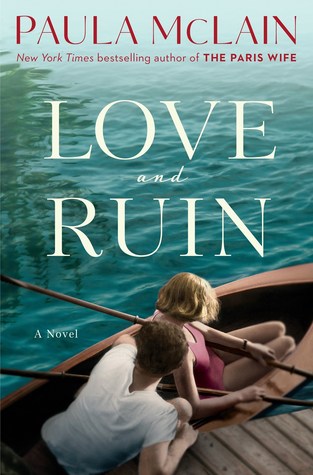 “Ernest Hemingway changed my life,” Paula McLain said at a recent meet-and-greet at The Spoke Club in Toronto. McLain’s books are intrigued not just by Hemingway himself but rather by the women in his life, and in particular, bringing forth their stories from behind his rather large and imposing shadow. The Hemingway in McLain’s books is larger than life, strong and brilliant enough that we can understand how women could fall in love with him, yet soon revealing the hot temper and (for lack of a better word) self-centred asshole behaviour that makes them eventually leave him.