
Review | Jane Steele, Lyndsay Faye

25868918In Jane Steele, Lyndsay Faye re-imagines Jane Eyre as a sort of avenging angel / vigilante heroine figure. Jane Steele is a serial killer — “Reader, I murdered him.” rather than “Reader, I married him.” — but all her killings were either in self defence or in defence of a woman or child facing abuse. It’s an intriguing premise, and much darker than I’d anticipated — the very first few chapters recounted Jane’s sexual abuse at the hands of her cousin, and later on, the boarding school scenes depicted a sadistic headmaster who withheld food from young girls. I love the idea of someone who is powerless wresting control from those who seek to keep her under their thumb. Jane Eyre has long been considered a feminist figure, with her desire for independence over romance, yet with the proviso that the extent of her feminism was very much constrained by the time in which her story was written. So it makes perfect sense to me that a contemporary author’s take on Jane Eyre’s story would bring the feminism much further to the forefront.

Other contemporary touches are evident, even within the story’s historical setting. Contemporary readings of Bronte’s novel have also applied a postcolonial lens, critiquing the novel’s idealization of Englishness and presentation of Bertha Mason, a Creole woman, as a madwoman to be locked away, unimpeachably an “Other.” In the 1960s, Jean Rhys wrote an excellent rebuttal to Jane Eyre’s colonialism, giving Bertha Mason a voice in the novel Wide Sargasso SeaLyndsay Faye takes a somewhat different approach, framing the Rochester character himself as an Englishman who has adopted another culture, in this case Sikh. Rather than privileging the “British” ideal, Faye’s story highlights the horrors that colonialism has inflicted in Punjab, and even when the Rochester figure Mr Thornfield returns to England, he takes with him a young Sikh ward and some practices from Sikh culture.

I love how Faye approaches this tribute to Jane Eyre by acknowledging the aspects that were problematic about the original novel and addressing them head on. Unfortunately, I can’t say that I love the book itself. The beginning was intriguing, and held much promise, but when Jane returns to Highgate House and meets Mr Thornfield and his family, the pace slows quite a bit. The writing is strong throughout, so the book was never a struggle to get through; I just found myself feeling less interested in the second half and wondering when another killing would occur and break the monotony.

+

Thanks to Penguin Random House Canada for an advance reading copy of this book in exchange for an honest review.
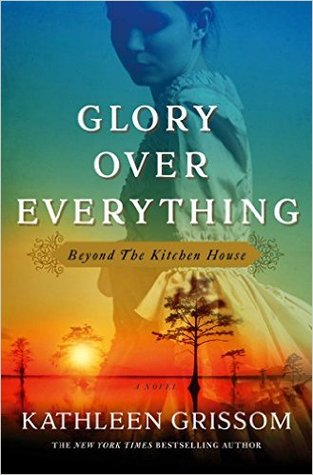
Review | Glory Over Everything, Kathleen Grissom

25813937Glory Over Everything is a highly readable story about James Burton, who has been passing as a wealthy white aristrocrat in Philadelphia, and who must now risk the life he’s built to return to the South and rescue a young servant boy named Pan. The action builds up slowly — Grissom spends the first half of the book building up James’ story, and it isn’t until the second half that James finally sets off to rescue Pan and the action picks up.

Still, James’ back story is highly fascinating. Having grown up white, he learns of his mixed race heritage only as a young teen, then almost immediately faces a potential life of slavery. Grissom barely glosses over this bit of his life here, and I can only imagine much of it is already discussed in the earlier book The Kitchen House, which I haven’t read yet. Instead, Grissom focuses on his life after escaping his childhood home, where he is rescued by a black free man Henry, who helps him find a job, a home and a future as a white man. James achieves wealth and social status, yet his hold over this life is clearly tenuous; even the loving, kindhearted woman who adopts him wouldn’t be able to accept him if she learned the truth. When James falls in love with a woman named Caroline, the relationship results in a pregnancy that jeopardizes the life he’s built, and he is torn between fear of telling her the truth and resignation that the truth may come out no matter what.

James’ story is certainly fascinating, yet even more compelling is the second half, where James finally goes South to rescue Pan. The reason behind Pan’s needing rescue in the first place struck me as rather silly, and to be honest, annoying, but admittedly in line with Pan’s character and his desire to impress James.

The truth stand-outs for me, however, are the other characters: Pan’s father Henry, overcoming his fear of being captured and sold back into slavery in order to save his son; and Sukey, a nurse and slave in the same household as the one Pan is sold into, who helps transport other slaves through the Underground Railroad, and who makes it her mission to rescue Pan. Both their stories are tragic and beautifully told, and I would personally have liked to hear more of them.

Glory Over Everything is thought-provoking, moving and thrilling all at various points in the story. I cheered for James to rescue Pan and get back home safely, just as I couldn’t forget Henry, Sukey and all other characters who faced even greater danger than James did. I love the idea of trying to escape your past and your heritage, especially with the realization that you can never truly do so. The novel ends with some tough decisions that James has to make, which will impact not just the future trajectory of his own life, but also the lives of people around him. His decision has some potentially interesting repercussions, and I wonder if Grissom plans to continue the series.

Blog Tour

Thanks to Simon and Schuster Canada for the invitation to join the blog tour for this book! Check out the rest of the stops below:

GloryBlOGimages

+

Thanks to Simon and Schuster Canada for an advance reading copy of this book in exchange for an honest review.

Review | A Girl’s Guide to Moving On, Debbie Macomber

25739091I really like the idea of a woman and her mother in law helping each other deal with cheating husbands and divorce, but I guess I was expecting a bit more out of A Girl’s Guide to Moving On. From the book description, I was looking forward to a lot of female bonding and self-empowerment, so I admit I was a bit disappointed that in both their cases, moving on turned out to mean finding a new man. A new romance is certainly a valid way to move on from a destructive relationship, and both romances were certainly entertaining to read about. It’s just that there’s this excellent line early in the book where Leanne notes that for a man to take the place of having no man, that man sure as hell better be worth it. Yet while there’s a glimpse in the beginning of the novel to the “Guide to Moving On” that both women penned, we barely get to know Step One (out of four) before the story shifts focus onto the developing romances. I don’t think I can even remember what the other three steps were.

That being said, the romances were entertaining to read, and as a romance fan, I really enjoyed the sweet, low-key chemistry between Nichole and the tow truck driver Rocco, who is the opposite of her ex-husband Jake in many ways. I love how Nichole bonds with Rocco’s teenage daughter, taking on a maternal role even when she and Rocco were still just friends, and how Rocco bonds with Nichole’s young son over a love for trucks. It’s a sweet story, and Rocco seems like a great guy.

I really wanted to like Leanne’s new man Nikolai, a student in her ESL class, but while he seems sweet (he bakes her bread every week), his jealousy and controlling nature also struck me the wrong way. For example, he freaks out when Leanne takes her ex-husband home from a doctor’s appointment and tidies up his house for him. I can understand Nikolai’s concern that Leanne’s ex is taking advantage of her, but I don’t like how he constrains her behaviour, and to my mind, he barely makes up for it near the end, when he does give her a bit more space. At one point, he even tells her to wait in the car while he talks to her husband for her, and while there are circumstances where I can see that making sense, in this case, it mostly felt like he didn’t trust her enough to let her speak for herself. The whole white knight thing appears to be something the book posits as romantic; even Rocco goes behind Nichole’s back to talk to her ex and resolve an issue, and while in both cases, things turned out well, it’s not really something that turns me on personally, or at least seems to me to be necessary within the context of this story.

Still, both romances were fun and sweet, and I enjoyed seeing Nichole and Leanne realize they were worth far more than their cheating exes made them feel. I especially love the family unit Nichole, Rocco and their kids created, and how well they all fit together. Leanne is a wonderful character, and while Nikolai isn’t personally my cup of tea, I’m glad she is able to find passion again with him, having been deprived of it and made to feel un-sexual for so long. I’m a huge fan of Debbie Macomber’s romances, and while I don’t think this will be one of my personal favourites, I think others may enjoy it, and I look forward to continuing to read more of her work.

+

Thanks to Penguin Random House Canada for a copy of this book in exchange for an honest review.