
 I thought Steve Hely’s previous novel How I Became a Famous Novelist was one of the funniest books I’ve ever read, bar none, and I’m a huge fan of his work on The Office, so I was really excited to read his travel memoir The Wonder Trail. In this book, he heads south from Los Angeles, and just keeps heading south until he hits Patagonia.
The book is structured as a series of anecdotes about his travels. The tone is one of irreverent but ultimately gentle humour, somewhat akin to a dorky but loveable uncle making side comments with a wicked grin and you laugh partly because his comments are amusing but also partly because he seems like he’s having such a good time doing it. Whether Hely is relating an amusing anecdote or sharing a bit of history, his enthusiasm shines through, and it’s easy to be caught up in that.
The key highlight for me are the people he meets: Guatemala Pam, Kelly Slater (not his real name, but he looks like a “Kelly Slater” would look), and the Australian “A-team,” among others. Hely meets up with quite a cast of characters throughout the trip, all colourful and interesting in their own way, but also quite ordinary, by which I mean you can easily imagine bumping into such characters yourself on a trip, without having to go on a major grand adventure. At one point, he comments that travellers tend to find each other and tend to want to share their stories. He then follows it up with a warning not to exaggerate your adventures too much lest the person you’re speaking with can top you, and it’s amusing to imagine seasoned travellers trying to one-up each other, but on a more serious note, I really like this idea of a community of travellers who somehow fall in together and manage to connect.
One of my personal favourites among the people Hely encounters is Alan Tang, who always travels in style. As a taste of Hely’s humour in this book, a footnote says Alan Tang is a fake name, so the real person can deny the stories are about them, and that his real name is actually Alan Yang. As a taste of Healy’s humour and Alan Tang’s style, in a chapter about getting to Machu Picchu, Hely notes that hard core travellers can walk the “something like 25,000 miles of remnant Inca roads and trails,” and agrees that Machu Picchu is “like the epic goal of a quest, like a place of pilgrimage.” But because he was with Alan Tang, they instead rode a train and a bus to the edge of the cliff and saw the amazing view without having to walk for days. All respect to hard core adventurers, but I think I’d like travelling the Alan Tang way myself.
My favourite passage in the book comes from Hely’s friend Professor McHugh, who compares some travellers’ behaviour to “Oompa Loompa hunting.” He’s referring to the hipster type of traveller, the ones who want nothing short of the “authentic” experience, and when that experience feels too familiar, it isn’t “authentic” enough. Professor McHugh compares it to looking for Oompa Loompas (characters from Charlie and the Chocolate Factory) because they’re looking for something “exotic” and out of the ordinary. Professor McHugh says:
People say they hate Bangkok because it looks like LA. “Get out of Bangkok,” they tell each other. Well, sure, on the surface, Bangkok looks like on LA. But then in some strip mall you can find a temple where people worship the embalmed corpse of a middle-aged woman who died in, like, 1998. Why do you have you go out to the jungle looking for people in funny costumes? [p. 244]
Wonder Trail is nowhere near as gut-splittingly hilarious as I remember Famous Novelist to be, but, like both Famous Novelist and The Office, it works because it has heart. Because the people Hely met were so interesting, part of me wishes we could have spent a bit more time with each of them and learned more of their stories, but on the other hand, I like how each new place brought a new encounter, and so meeting new people became as core of a feature of his trip as his geographical movement was. Wonder Trail is an entertaining travelogue, a bit uneven in terms of pace and humour, but overall, the stories of the people he meets and the insights on connecting with fellow travellers and on looking beyond the immediate familiarity make it worth a read.
And if you were an English major or are otherwise embroiled in the publishing industry, particularly around “literary” fiction, I highly recommend How I Became A Famous Novelist. It was published in 2009 (i.e. pre-social media, during the Dan Brown Da Vinci Code era) so some of the humour may seem dated, but its skewering of the literary ivory tower is still worth checking out.
+
Thank you to Penguin Random House Canada for an advance reading copy of this book in exchange for an honest review.
 In
In 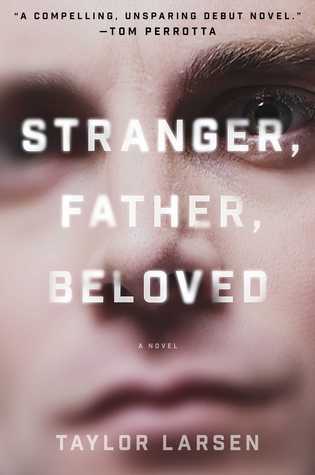 When Michael sees his wife Nancy chatting with a stranger at a party, his intuition tells him this is the man she should have married. What follows is a rather melancholy glimpse into the breakdown of a family, as Michael befriends the man, John, and schemes to have his wife fall in love and marry him. A concurrent storyline involves Michael and Nancy’s daughter Ryan who senses the marital tension and distances herself from her family, whilst, as the book blurb puts it, she “goes through a period of sexual awakening.”
