Event Recap | Books on Film: Sarah Polley on Away from Her


IMG_0174.JPG

I love TIFF’s Books on Film series (seeing Mohsin Hamad speak about The Reluctant Fundamentalist is still a favourite film memory), and I was thrilled to have the opportunity to see Sarah Polley at TIFF Bell Lightbox on March 27th being interviewed about her film Away from Her, based on Alice Munro’s short story “The Bear Came Over the Mountain.” I’ve long known Sarah Polley’s name as a talented Canadian filmmaker, and Alice Munro is, of course, Alice Munro. As Eleanor Wachtel said at the TIFF event, Alice Munro has been called “the Canadian Chekhov,” but with all her accolades, perhaps it’s Chekhov who should be known as “the Russian Alice Munro.”

I haven’t read “The Bear Came Over the Mountain” (read it here, in The New Yorker), so I couldn’t say how the movie compared to the story. It was also my first time seeing Away from Her, though I had known of it previously, and I was looking forward to seeing its portrayal of an elderly couple dealing with Alzheimer’s in the family.

What an incredibly moving and beautiful film Away from Her is! The movie garnered 94% on Rotten Tomatoes, and it’s well-deserved. The title comes from something Grant (Gordon Pinsent) tells a nurse at his wife Fiona’s (Julie Christie) long-term care facility, about how he and his wife have never spent such a long period of time apart before in all their 40+ years of marriage.

There is just so much I love about this movie. I love the relationship between Grant and Fiona, how comfortable they are with each other, how much Fiona loves to tease Grant. I also love how their relationship isn’t perfect, how Grant has clearly done something in the past that Fiona has decided to live with, but hasn’t quite fully forgiven. On the car ride to the facility, Fiona muses that there are memories you’d rather forget, but can’t. The look of wistfulness on Julie Christie’s face, and the flash of guilt on Gordon Pinsent’s, is just a masterclass in acting.

I love how it’s Fiona who decides she needs to check herself into the facility, and how it’s Grant who struggles with the policy of no visits for the first 30 days. Often, when characters have dementia, it’s their family members making the tough decisions, and I love that this movie places the agency firmly in Fiona’s hands. The scene in Fiona’s room at the facility before Grant leaves her moved me to tears, and is just one of the most beautiful moments in film.

AFH_01

Julie Christie and Gorden Pinsent Away from Her. Source: TIFF.net.

I also love that, despite the depth of Grant and Fiona’s love for each other, their relationship doesn’t remain perfect even after Fiona checks into the facility. When Grant finally visits after a month, he finds that she’s formed a close friendship with another resident, Aubrey. “He doesn’t confuse me,” Fiona says, and more than that, he needs her, which I think is what she needs. Despite this, Grant continues to visit every day, always with flowers or a book or some other treat, and even when his visits amount to nothing more than sitting on the common room sofa while Fiona and Aubrey play bridge, he continues to visit daily. We also meet Aubrey’s wife Marian (Olympia Dukakis), whom Grant visits because he wants a favour. Her prickly personality conceals an intense loneliness, and Dukakis plays the tension between those perfectly.

Even the minor characters are vivid. The nurse who helps Grant adjust to his wife’s new life has her own complex backstory that makes me curious to learn more about her life. There’s a grandmother/granddaughter pair who are often in the common room during Grant’s visits, and who caught my eye because they use sign language and I don’t often see Deaf characters in movies. There’s a scene where the grandmother doesn’t seem to recognize the granddaughter anymore — the granddaughter’s signing is becoming increasingly frantic, and the grandmother shrinks back and keeps looking away. The nurse tells Grant, “She’s the only one in her family who even bothered to learn to sign,” and I’m not sure if it’s the grandmother or the granddaughter who is Deaf, but it’s just a heartbreaking scene.

I can go on and on about all the things I love about the movie, but that will end up just being a play-by-play of each scene as it’s just amazing through and through. After the movie, Eleanor Wachtel interviewed Sarah Polley, who wrote the screenplay and directed the movie, and it was fascinating to gain additional insight into the way the story was adapted for the screen.

Polley is a fan of Alice Munro’s writing, and her love for the source material shows.  Wachtel actually had notes about which lines of dialogue were from Alice Munro’s original and which were written by Polley, but I love that I couldn’t tell the difference while watching. Polley’s own experiences came into the making of the film, both the experiences in her own life and the experience of reading the story itself. “There’s a space between the story and my experience of it, and I wanted to make that tangible,” she said.

Polley drew from her experience of looking for retirement homes with her grandmother, and that the characterizations of the hard-nosed facility administrator and the sympathetic nurse were based on people she met. She also said she has more experience now with memory loss — the final scene in the movie actually happened to her in real life after the movie was made, and because of her experience, she now has a clearer idea of how the characters’ stories will continue past that moment.

When asked about the bright colour palette for the film, which seems in contrast to the darker themes, Polley said she wanted to capture some of the feeling of being a caregiver for someone with Alzheimer’s: “I want it to be so bright you sometimes want to squint and close your eyes. I wanted it to feel somewhat alarming to see that light coming right at you.”

I was also fascinated by the discussion around what Polley chose to keep and to change from the original story. For example, the original story is told from Grant’s perspective, so Polley had to change some of his internal monologue into a dialogue between characters. Also in the story, Grant is able to delude himself into thinking that Fiona doesn’t know about his infidelity, whereas for film, because we see Fiona’s perspective as well, it becomes clear that she is aware of what happened. Aubrey being a visual artist adds an extra layer to his character and was an addition to the film; being non-verbal, he expresses his feelings for Fiona through his sketches of her. Interesting note is that Aubrey being an artist wasn’t Polley’s idea, but rather that of someone from Telefilm Canada, who provided part of the funding for the movie.

About her career in general, Polley remembers her second grade teacher, who let her write all week rather than do math or other subjects, on the condition that she read her stories out loud at the end of the week. She remembers overhearing the teacher tell an older student about her, “That one’s gonna be a writer.” I wonder if she’s still in touch with this teacher, and if not, I hope that the teacher somehow knows how much they’ve made an impact on this student’s life.

Finally, for anyone interested in music, Polley’s soundtrack while writing Away from Her was k.d. lang’s Hymns of the 49th Parallel.

Next on Books on Film
end-of-the-tour

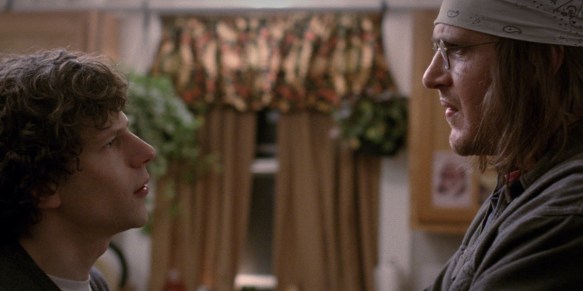
Jesse Eisenberg and Jason Segel in The End of the Tour. Source: TIFF.net.

On April 17, author and journalist David Lipsky reflects on the 1996 final interviews with eminent American writer David Foster Wallace, the evolutionary literary adaptation Although of Course You End Up Becoming Yourself: A Road Trip with David Foster Wallace, and 2015 feature film The End of the Tour.

Books on Film 2017 Full Schedule

+

Thanks to TIFF for a ticket to this event in exchange for an honest review.

TIFF Books on Film 2017

TIFF_BooksonFilm

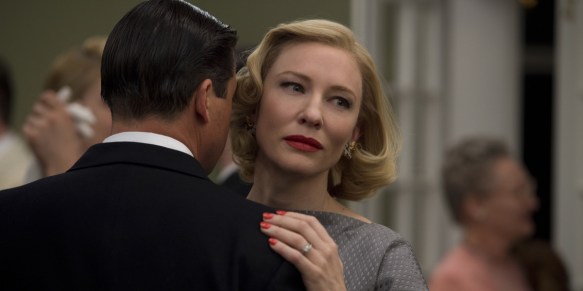
Carol (2015), Credit: Courtesy of eOne Entertainment
A Room With A View (1985), Credit: Courtesy of The Film Reference Library
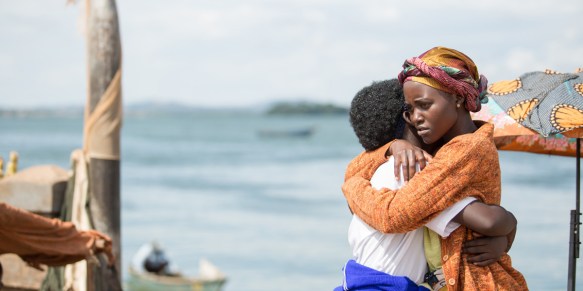
Queen of Katwe (2015), Credit: Courtesy of Disney

One of my absolute favourite programs in the city is TIFF’s Books on Film. I love books, my sister loves film, so this series is a perfect combination for a girls night out for both of us.

Hosted by Eleanor Wachtel, and scheduled on six Monday nights at 7 pm, Books on Film features a screening followed by a discussion about the art of adaptation and the sometimes challenging passage from page to screen. A personal highlight for me was the screening and Q&A with Mohsin Hamid about The Reluctant Fundamentalist — such a powerful, moving film!

This year’s line-up has me geeking out for all sorts of reasons!

March 13
Zadie Smith on A Room With A View

Room_With_a_View_3_-_Credit_-_Courtesy_of_the_TIFF_Film_Reference_Library

A Room with a View (1985), Credit: Courtesy of The Film Reference Library

My Thoughts:

It’s Zadie Smith!!! I haven’t had a chance to read White Teeth yet, but I absolutely, positively adored Swing Time. As if this alone isn’t enough to get me fangirling, I also happen to be a sucker for E.M. Forster books and Merchant Ivory films. So, um, OH MY GOD!

About the Event:

Man Booker Prize nominee Zadie Smith (White Teeth) discusses James Ivory’s adaptation of E.M. Forster’s classic novel about a young woman’s emancipation from the repressive cultural and sexual mores of Edwardian England.

About the Guest:

Zadie Smith is a London- and New York–based author. Her novels include White Teeth (00), The Autograph Man (02), On Beauty (05), and NW (12), and she has also written a collection of non-fiction essays called Changing My Mind (09) as well as various stories like The Embassy of Cambodia (13). Smith is a fellow of the Royal Society of Literature and has twice been listed as one of Granta’s 20 Best Young British Novelists. Smith has won the Orange Prize for Fiction, the Whitbread First Novel Award, and the Guardian First Book Award among many others, and been shortlisted for the Man Booker Prize and the Baileys Prize. Swing Time (16) is her latest novel.

About the Film:

A Room With A View
dir. James Ivory | UK | 1985 | 117 min. | PG | Digital
Helena Bonham Carter and Daniel Day-Lewis star in this adaptation of the E.M. Forster novel about a headstrong young Englishwoman who discovers love and liberation while on an Italian vacation. (Trailer)

March 27
Sarah Polley on Away From Her

AFH_01

Away from Her (2006), Source: TIFF.net

My Thoughts:

I’ve heard great things about this movie and Sarah Polley’s work in general, and of course, I love Alice Munro’s writing. This film sounds like it’ll be a very moving, emotional viewing experience.

About the Event:

Academy Award nominee Sarah Polley revisits her celebrated adaptation of Alice Munro’s short story “A Bear Came Over a Mountain,” starring Julie Christie and Gordon Pinsent.

About the Guest:

Sarah Polley was born in Toronto. She has appeared in films by such directors as Isabel Coixet, David Cronenberg, Atom Egoyan, Terry Gilliam, Hal Hartley, Wim Wenders and Michael Winterbottom. Her feature films as director are Away From Her which received an Academy Award® nomination for Best Adapted Screenplay, and Take This Waltz. Stories We Tell is her first documentary.

About the Film:

Away from Her
dir. Sarah Polley | Canada/UK/USA | 2006 | 110 min. | PG | 35mm
An elderly married couple (Gordon Pinsent and Julie Christie) face the toughest test of their decades-long relationship when one of them is diagnosed with Alzheimer’s disease, in Sarah Polley’s moving directorial debut. (Trailer)

April 17
David Lipsky on The End of the Tour

end-of-the-tour

The End of the Tour (2015), Source: TIFF.net

My Thoughts:

I once had a co-worker who absolutely loved David Foster Wallace. I tried reading Infinite Jest several times, but just couldn’t get into it. That being said, I like Jessie Eisenberg and Jason Segel, and think this could be a good film.

About the Event:

Award-winning author and journalist David Lipsky reflects on the 1996 final interviews with eminent American writer David Foster Wallace, the evolutionary literary adaptation Although of Course You End Up Becoming Yourself: A Road Trip with David Foster Wallace, and 2015 feature film The End of the Tour.

About the Guest:

David Lipsky’s fiction and nonfiction have appeared in Rolling Stone, The New Yorker, Harper’s Magazine, The Best American Short Stories, The Best American Magazine Writing, The New York Times, The New York Times Book Review, and many other publications. He contributes as an essayist to NPR’s All Things Considered and is the recipient of a Lambert Fellowship, a Media Award from GLAAD, and a National Magazine Award. He’s the author of the novel The Art Fair; a collection of stories, Three Thousand Dollars; and the bestselling nonfiction book Absolutely American, which was a Time magazine Best Book of the Year.

About the Film:

The End of the Tour
dir. James Ponsoldt | USA | 2015 | 106 min. | 14A | Digital
This illuminating road film depicts the true and complex story of Rolling Stone journalist David Lipsky (Jesse Eisenberg) and enigmatic American writer David Foster Wallace (Jason Segel) who embark on a tour to promote Wallace’s groundbreaking novel Infinite Jest. (Trailer)

May 8
Phyllis Nagy on Carol

Carol_01

Carol (2015), Credit: Courtesy of eOne Entertainment

My Thoughts:

Cate Blanchett and Rooney Mara! I meant to watch Carol when it was first released, and I’ve also been meaning to borrow The Price of Salt from the library. I haven’t gotten around to doing either yet, so this event seems like just the push I needed, as well as a great opportunity to meet the director.

About the Event:

Renowned playwright and Academy Award-nominated screenwriter Phyllis Nagy recounts her two-decade journey bringing Patricia Highsmith’s novel The Price of Salt to the screen.

About the Guest:

Phyllis Nagy is an award-winning director and screenwriter. She wrote and directed the television movie Mrs. Harris (05), which screened at the Toronto International Film Festival, received several Emmy and Golden Globe nominations, and won a PEN Literary Award for the script as well as a Gracie Allen Award for her direction. Nagy has won New York and Seattle Film Critics Circle awards and also received Academy Award, BAFTA, and WGA screenplay nominations for Carol (15).

About the Film:

Carol
dir. Todd Haynes | UK/USA/Australia | 2015 | 118 min. | 14A | Digital
Cate Blanchett and Rooney Mara star in Todd Haynes’ tender adaptation of Patricia Highsmith’s novel The Price of Salt, about a forbidden relationship between a young set designer and an older suburban housewife in early-1950s New York City. (Trailer)

June 5
Mira Nair on Queen of Katwe

QueenOfKatwe_01

Queen of Katwe (2015), Credit: Courtesy of Disney

My Thoughts:

I watched this movie with my sister and we both absolutely loved it! It stars David Oyelowo and Lupita Nyong’o, who are both amazing actors, and it’s about chess, which is nerdily awesome. I especially loved the end credits, where we got to see the real people beside the actors who played them. It’ll also be great to hear Mira Nair’s thoughts on the film, particularly since she also happens to be the director of The Reluctant Fundamentalist, which I also watched at TIFF and loved.

About the Event:

Following a screening of her new biographical drama about child chess prodigy Phiona Mutesi, award-winning director Mira Nair (Monsoon Wedding, The Namesake) discusses her personal connection with this twist on the classic “hero’s journey” narrative set in her adopted home of Kampala, Uganda.

About the Guest:

Mira Nair was born in Rourkela, India. She studied at Delhi University and Harvard University. Her films include Salaam Bombay! (88), which was nominated for an Oscar, Kama Sutra: A Tale of Love (96), Monsoon Wedding (01), The Namesake (06), and The Reluctant Fundamentalist(12), all of which screened at the Festival. Queen of Katwe (16) is her latest film.

About the Film:

Queen of Katwe
dir. Mira Nair | Uganda / South Africa | 2015 | 124 min. | PG | Digital
David Oyelowo (Selma) and Academy Award winner Lupita Nyong’o (12 Years a Slave) star in the true story of a young girl from rural Uganda (played by newcomer Madina Nalwanga) who discovers a passion for chess, and sets out to pursue her dream of becoming an international champion. (Trailer)

June 19
Colm Tóibín on Brooklyn

Brooklyn_01

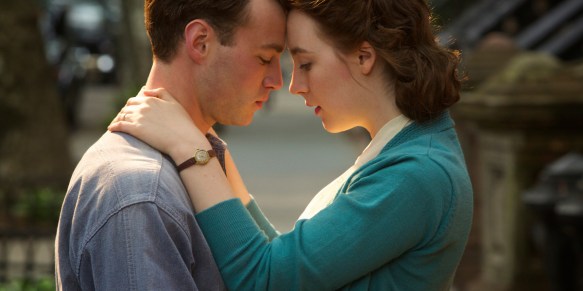
Brooklyn (2014), Source: TIFF.net

My Thoughts:

My sister watched this movie when it first came out, read the book immediately afterwards, and absolutely loved both. She says that Saoirse Ronan’s performance in the film is amazing, and has been trying to convince me to borrow her DVD so I can watch it for myself. Knowing how much of a bookworm I am, she’s also tried to lend me her copy of the book in case that’s what would work in hooking me on the story. I haven’t quite gotten around to either yet, which has nothing to do with the movie or book themselves, but rather just laziness on my part. But I’ll definitely be giving my sister a heads up about this event as I think she’d love the chance to hear the author’s perspective on the story.

About the Event:

Man Booker prize nominee Colm Tóibín (The Master, Nora Webster) recounts the experience of witnessing his much-loved novel Brooklyn adapted for the screen by fellow author Nick Hornby, which resulted in one of the biggest art-house hits of 2015.

About the Guest:

Colm Tóibín is an internationally acclaimed, award-winning author. His novels include The Master — winner of the International IMPAC Dublin Literary Award, Le prix du meilleur livre étranger, and the Los Angeles Times Book Prize for Fiction — and Brooklyn, winner of the Costa Novel Award. He lives in Dublin, Ireland.

About the Film:

Brooklyn
dir. John Crowley | United Kingdom / Ireland / Canada | 2014 | 105 min. |PG|Digital
In the early 1950s, a young Irish woman (Saoirse Ronan) crosses the Atlantic to begin a new life in America, in this exquisitely crafted adaptation of the acclaimed novel by Colm Tóibín. (Trailer)


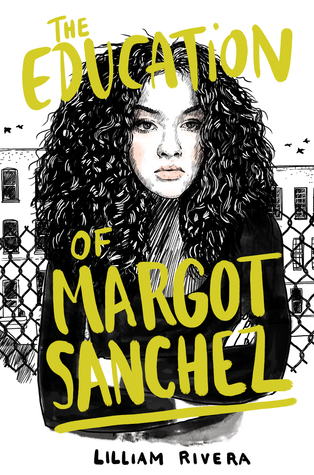
Review | The Education of Margot Sanchez, Lilliam Rivera

26594801The Education of Margot Sanchez is about a teenage girl from the Bronx who needs to work at her father’s grocery store for a summer after being caught stealing his credit card for clothes. This sucks for Margot since all she wants is to fit in with the rich and popular girls at the private school she attends, and to hang out with them at their cottage for the summer. She would also much rather be flirting with a handsome and popular jock from her school, but instead finds herself strangely attracted to Moises, an activist boy from her neighbourhood who is advocating against the development of nearby apartment buildings.

The book didn’t quite grab me like I’d hoped it would, but I like how realistic the story felt. Racism isn’t explicitly discussed, but it’s hinted at in the various aspects of her appearance and her life that Margot feels she has to tone down or outright reject in order to fit in with the popular crowd. I thought that was very well done, and I can imagine this aspect of the book striking a chord with teen readers. Margot’s fretting over her image was annoying at times, and to be honest, I often thought she was a spoiled brat, but I also have to admit that her character also felt real. I can certainly imagine a teenage girl, surrounded by much wealthier classmates, wanting to pretend to be as wealthy as they are, and that a family grocery store, despite the hard work put into it, just doesn’t quite fit that image.

I also like the bits of drama around Margot’s family. I love the character of the mother, and wish we got to know more of her story. I especially love the scene where she told Margot of her decision to get married; it isn’t the most romantic story, but it’s probably the reality for some women. Junior was mostly a nuisance at first, but I like how his story developed and especially like the part where he gives Margot a gift and boasts that he’s a better adult than their parents. That bravado and desire to prove oneself, regardless of the cost, may end up being destructive, but it’s an understandable impulse, and true to this character.

The romance subplot fell flat for me, and though the book is clearly not about romance, Moises’ character still played a pretty big role and I had expected more. Similar to Margot’s childhood best friend and even the popular kids at Margot’s private school, Moises felt more like a symbol than an actual character. Margot’s choice between Moises and the kids at school is clearly a choice between her true self and the image she’s cultivated, and most of the secondary characters felt fairly one-dimensional.

The Education of Margot Sanchez is a realistic depiction of a Puerto Rican teen coming to terms with her family and her neighbourhood. I think it’ll strike a chord for many teen readers.

+

Thank you to Simon and Schuster Canada for an advance reading copy of this book in exchange for an honest review.