Ever since I watched Why Not Theatre’s excellent ASL/English Prince Hamlet a few months ago, I’ve been on the lookout for other examples of Deaf representation in arts and culture. As a bookworm, my interest naturally fell on finding books that featured Deaf characters or touched upon Deaf Culture.
I should point out that I’m not Deaf, CODA nor hard of hearing, so I’m in no way an expert on how good or how problematic a book is when representing Deaf Culture. That being said, below are books I’ve recently discovered and enjoyed. Most of my online searches for books on Deaf Culture and about Deaf characters often showed only academic texts or children’s books teaching the ASL alphabet, so I hope compiling this list will help other interested bookworms find their next read.
Finally — I’m always looking for my next great read. If you know of any fantastic titles I can add to this list, let me know!

A birthday gift from a friend, this adorable graphic memoir is by turns hilarious and bittersweet. Based in part on the author’s own experiences of growing up, El Deafo is about a young bunny, Cece, who is the only deaf kid at her new school. Cece creates a superhero persona ‘El Deafo’ to gain confidence when trying to make new friends, and uses the super-powered hearing from her Phonic Ear to help her classmates keep out of trouble. See my full review here.

A deaf/hard of hearing college student falls in love with the hot deaf guy in her class. Carli has hidden her deafness all her life, and I love how her relationship with Reed helps her come to terms with her deafness, feel okay with needing CART services or close captioning, and learn ASL. The story was a lot more intense than the light-hearted romance I expected (content warning: child abuse, violence against women, suicide), and there were plot threads that I wish had been explored more (Reed’s birth father, Carli’s mother and sisters), but overall, I really liked this book.
I also love how signs are depicted in this book – most of the signed conversations are depicted in italics, but because Carli is just beginning to learn sign language, whenever characters use signs that she hasn’t learned yet, the author also describes the gesture. The scenes involving the sign for “falling in love” are particularly squee-worthy.
The author is hard of hearing and her next book Friend (with Benefits) Zone features two Deaf main characters.
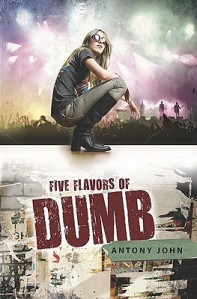
This funny, hipsterish middle-grade/young adult story is about a deaf teenage girl who accepts a dare to become the manager of her high school band ‘Dumb’ and land them a paying gig within a month. Fuelled mostly by passion, Dumb is great at making noise but horrible at actually creating music together. Piper’s efforts to enforce harmony amongst the members often go hilariously awry, but the novel’s heart lies in the characters’ sincere love for music, and Piper’s realization that being a good manager goes beyond just making the next quick buck.
I also really liked the family dynamics. A decision by Piper’s parents leads to a major turning point in her relationship with them, her rebellious younger brother turns out to be a staunch ally, and she confronts her complex emotions about her baby sister having cochlear implants.
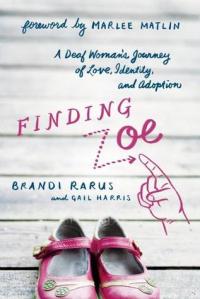
Brandi Rarus came of age at a very exciting time in Deaf history – she was a college student during the Gallaudet University 1988 student and faculty protest for a Deaf President, and ended up marrying one of the student leaders Tim Rarus. I loved learning about her life and seeing this period from her perspective as a deaf woman who grew up oral in a hearing household. For example, she writes about how Tim snubbed her at their first meeting because, having grown up in a multi-generational Deaf family, he viewed her as “too oral.”
The section about Zoe was the final third of the book, and I liked that Rarus featured the perspectives of the multiple people involved in the adoption, including Zoe’s birth parents and the family who had originally intended to adopt her. Rarus’ love for her child and joy over welcoming Zoe into their family is beautiful and heartwarming, but I felt bad for Zoe’s birth father. BJ wanted to raise his daughter and his parents had promised their support, but the birth mother Jess refused to give Zoe up to him (because it meant that she didn’t want her child, whereas giving the child up to a two-parent household meant “giving the child a better life”), and the adoption counselor eventually strong-armed him into agreeing that a traditional two-parent household (“with a mother and a father”) would be best. Even Jess’ decision to give up her child was heavily influenced by her religious mother, who basically convinced her that raising the child herself doomed Jess and the baby to a lifetime on welfare whereas adoption was presented in ridiculously fairy tale-like terms.
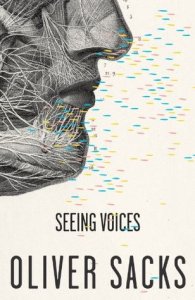
I discovered this book at a local bookstore and thought it was a great introduction to Deaf history. I was fascinated to learn about sign language’s roots in indigenous languages within the Deaf community, which developed as a natural form of communication despite attempts to teach Deaf people speech. I was also horrified to learn about the violence in forcing Deaf children to learn spoken languages, which delays their introduction to education in other areas.
I hadn’t realized that Sign Language used to be viewed by hearing people as only a gestural adaptation of English, until linguist William Stokoe argued about ASL having a linguistic structure and therefore being a language in its own right. I also hadn’t realized that Gallaudet University, which I’ve heard is one of the best post-secondary school for Deaf students, has had only hearing presidents until the late 1980s. Sacks covers the Deaf President Now protests, from a more detached yet detailed perspective than Rarus did, and that was my favourite part of this book.

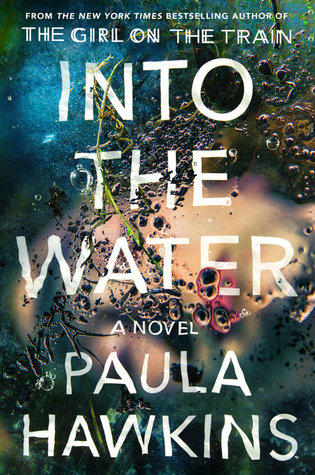 For Into the Water, Hawkins pulls back the tight focus she used in Girl on the Train and takes on the perspectives of an entire town responding to the mysterious death of one of their residents.


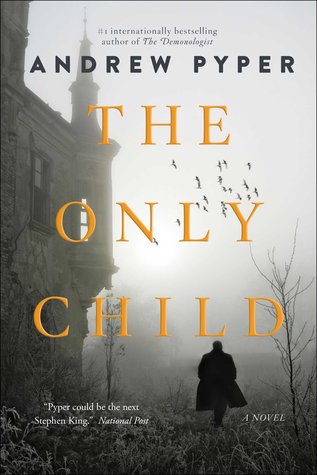 I’m a huge fan of Andrew Pyper’s work, but
