Virtual Advent Tour 2011 | Twelve Books for Christmas, Part 1

Someone recently told me that when he doesn’t like giving books as presents, because he feels “books are so personal.” He’d much rather give someone a gift certificate, and let them choose their own books. Now, I’m personally not a big fan of gift certificates (unless it’s a gift card to a coffee shop, which in my case will be very useful!), but I can understand the reluctance to give someone a book they may not necessarily enjoy, or that they may already have.

My sister told me once that she finds it hard to buy me books. For several birthdays and Christmases, she’d stand in the mystery section of a bookstore, trying to find authors I might enjoy but have not read. Result: she’s introduced me to the books of Robert B. Parker, Ian Rankin, Donna Leon and C.J. Sansom, all of whom I now count among my absolute favourite writers.

That is what I love about receiving books as gifts. Books are indeed personal things, and for some, they may well prefer to get a gift certificate and choose the books themselves. But personally, I love being introduced to books I may not necessarily have picked up on my own and yet may end up devouring. I also love the feeling that my sister, or whoever gives me that book as a gift, knows me so well they can guess what writer I’d like to read next.

So, for anyone who may be thinking of surprising someone on their list with a book, I do have a few, humble suggestions.

Scroll down, or click on the images below to go straight to that book’s write-up:

1. Harry Potter Page to Screen, Bob McCabe
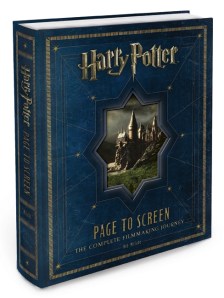
Harry Potter Page to Screen is at the top of my wish list this year. I firmly believe the Harry Potter series is the Lord of the Rings of our generation — a sweeping epic about the battle between good and evil, a series that not just captivates a generation, but defines it. The books are pure magic, and I especially love the progression towards darker stories that mimics so well the way our understanding of the world changes as we grow older. These books grow with us, and the movies have captured this magic wonderfully. What better way to relive that magic over and over than with a book that chronicles that journey from books to movies?

Then of course, there’s this book trailer:

Back to top

2. The Chronicles of Harris Burdick, Chris Van Allsburg et al
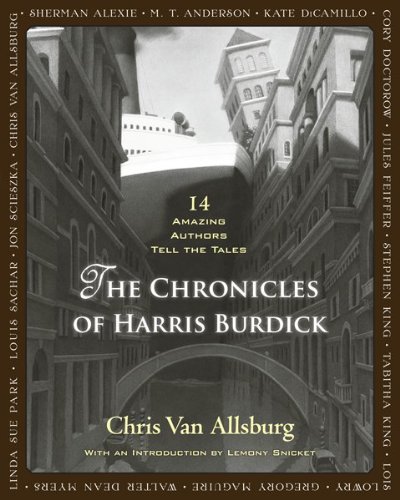
Chronicles of Harris Burdick is one of my favourite books of the year. Click on the cover photo to enlarge it, and check out the amazing list of authors who contributed to this book. Stephen King, Lois Lowry and Cory Doctorow all in one book? I want!

Then add the wonderful imaginative nature inspired by Harris Burdick: here are fourteen illustrations, paired with intriguing captions. What stories do these images tell? This book contains the stories created by professional authors, but I personally would love to know what stories readers can come up with.

This book is written for children, but I’d recommend it for people of all ages. All it takes is imagination. For more details, you can read my full, glowing review here.

Back to top

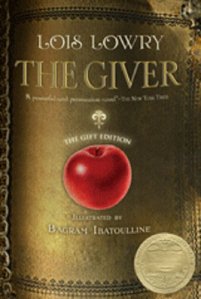
3. The Giver (gift edition), Lois Lowry and Bagram Ibattouline (illustrator)
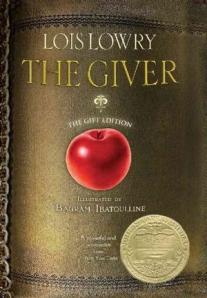
We all have that one book from childhood that completely changed how we view the world. For me, that book is Lois Lowry’s The Giver. I first read it when I was about 14. The story of a society where choice and emotion have been taken away scared me; like Giver protagonist Jonas, I want to live, with all the passion and wonder the italics imply.

I’m 28 now, and every time I read it, it’s a completely different experience. This book is a classic, and I just love this beautiful, illustrated edition. Whatever your One Childhood Book was, I hope you too get to see it so beautifully reissued. If, like me, it was The Giver, it’s a wonderful story to share with the young people in your life.

For more details about The Giver and this edition, my full review is here.

Back to top

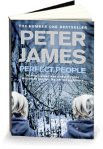
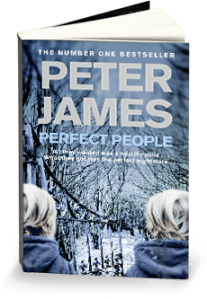
4. Perfect People, Peter James

I made the mistake of reading Perfect People in a mall. Every few pages, I’d gasp or shake my head or I’d stop reading and stare into space to absorb what I’d just read. The people walking past probably thought I was nuts. But really, that’s how good this book is.

What if you had the chance to free your unborn child from all genetic imperfections? Would you be able to face yourself if you turned it down? There are no easy answers, especially for John and Naomi Klaesson, who’d already lost a child to a rare genetic disease. Add a fanatic religious cult determined to destroy all “unnatural” children, and you’ve got a gripping, emotional, amazing thriller that just never lets up.

Back to top

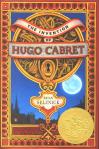
5. The Invention of Hugo Cabret, Brian Selznick

Confession: I’ve had Invention of Hugo Cabret on my reading list for a while now, but it was the movie Hugo that made me buy the book. The movie was sheer magic. It featured amazing use of 3D (I could almost feel the snow flakes blowing past) and a sweet, innocent story about an orphaned boy, a girl and a mysterious mechanical man. The plot is all about the magic of cinema, which makes it such a wonderful story to turn into a movie.

The book conveys this same magic through beautiful pictures. I love how Selznick integrated art and story — the images don’t just illustrate the story; they actually move the story forward.

Back to top

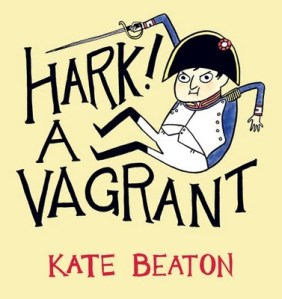
6. Hark! A Vagrant, by Kate Beaton

I was fortunate enough to have seen Kate Beaton speak at the recent International Festival of Authors. She is as funny and entertaining in person as her comics promise. She even drew Jane Eyre in love with a burned, disfigured Rochester on my copy of Hark! A Vagrant! We agreed that it’s great Jane Eyre is a love story between two unattractive people, but also that Rochester is a jerk. “Here,” Kate says, brandishing her pen after we chatted about how horribly Rochester treated Jane (quite a big secret to keep from your fiancee, Rochester!). “Let’s make him look even more disgusting.” Love it!

I especially love her send ups of literary figures like Tiny Hermione, the Bronte sisters and Holmes and Watson. She also pokes fun at history (can you guess the historical figure on the cover?) and Canadian stereotypes. Hark! A Vagrant collects a lot of her cheeky, witty and oh-so-true comics in a single, fun volume I’d recommend for just about anyone with a sense of humour.

Back to top

Part 2 here, featuring the following books:

(Note: You may also click on the thumbnail to be taken directly to that book’s write-up.)

Review | The Giver (The Gift Edition), Lois Lowry, illustrated by Bagram Ibatoulline

Lois Lowry’s The Giver changed my life when I was young, about 14, I’d guess. I was trying to figure out what I wanted to do with my life, and all I knew was that I didn’t want to become a businessperson. My relatives were all businesspeople, and not even in exciting jobs like manufacturing toys or selling books. With the exception of one uncle whose job required him to travel often, everyone else’s jobs seemed a vague, bland mass known only by the generic term “business.” I wanted to be something more exciting — a writer, maybe, or a lawyer or detective! My career dreams were heavily influenced by books I loved to read, where characters seemed to lead such exciting lives. Yet I was also afraid an office job would be my most practical, viable option. At 14, I wasn’t sure what I wanted, only that I wanted to LIVE, all caps, flashing lights and everything.

So Jonas’ world in The Giver really spoke to me. An orderly, “perfect,” yet ultimately colourless society, it is an ambiguous utopia, much like Anarres in Ursula le Guin’s The Dispossessed, where the inhabitants are content enough (no Hunger Games style scrounging for food) but no one’s truly happy. Everyone’s life is strictly planned out since childhood; your career is chosen for you at twelve based on your observable skills and you enter a few years of training before starting to work. All the memories of the world we know — all all the joy and pain that come with them — are stored in one person, The Receiver, who shields the rest of the town from those experiences. This society has sacrificed individual freedom and extreme emotion for peace and satisfaction.

I love how Lowry launches us into this society’s mindset right away, showing how even thought and language are restricted from the very first paragraph:

It was almost December, and Jonas was beginning to be frightened. No. Wrong word, Jonas thought. Frightened meant that deep, sickening feeling of something terrible about to happen.

Jonas almost immediately corrects himself: he doesn’t feel frightened, he feels “apprehensive.” Can you imagine the twelve year olds — or heck, even the adults — in our society, who can easily say things like “OMG, I’m freaking out!” about standing in line for the upcoming Hunger Games movie censoring their emotions like Jonas does automatically? To 14-year-old me, all eager to LIVE, Jonas’ world seemed like hell.

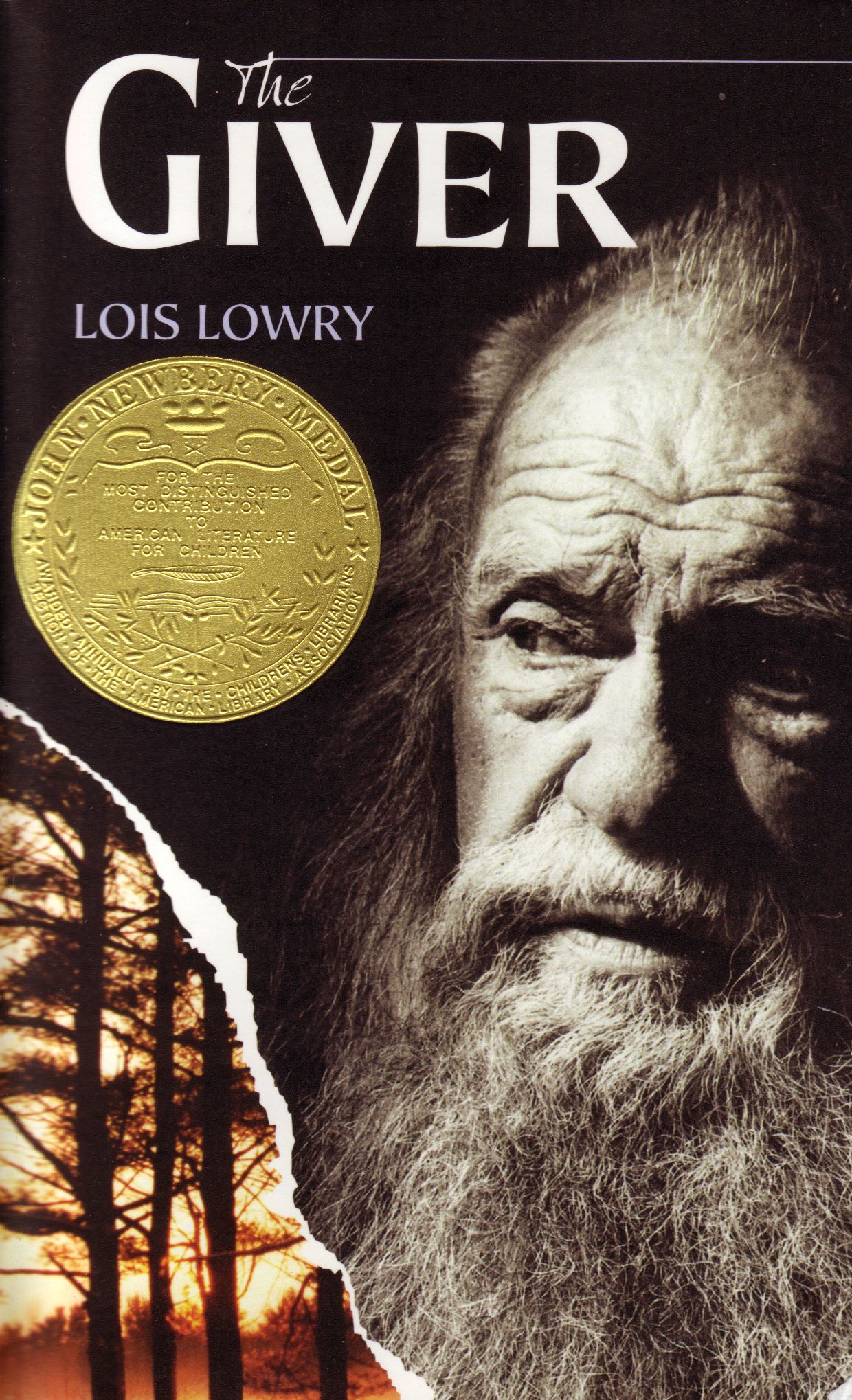
cover of my original copy from 1990s

When Jonas starts to realize himself that his world isn’t as perfect as he’d always been taught to believe, I wanted him to start a revolution. His battle was my battle, in the way only the very best books, read at just the right time, can do. If he can introduce passion to his world, it somehow meant that I too would be able to inject passion into my own future.

A lot of dystopian YA has been written since Giver, so let me make this clear up front: Giver doesn’t have the action or thrills of Hunger Games or Divergent. It’s a quieter, more contemplative and philosophical book. It’s also absolutely brilliant, a great book for anyone from eight years old up. It blew me away when I was 14, and it still blows me away now, at 28, though in very different ways.

So imagine my delight when HMH published a gorgeous gift edition, complete with illustrations and a ribbon bookmark. It’s utterly beautiful, one that I love to think will introduce a whole new generation to this story and grace the shelves of long-time fans like me, right beside the tattered, dog-eared copy with yellowing pages read so many times over the years. When I received this book in the mail, I literally had to stop for a moment, stroke the cover, savour the slow turning of pages, and just, well, stare in awe. My sister too, who first read it when she was 10, almost teared up when I showed it to her. We all have that one book from childhood that stays with us forever. The Giver was that book for me, and seeing it re-released over a decade later, in such a beautiful edition — well, it’s an experience I wish upon all of you.

Minor quibble, and to be honest, I don’t know how they could’ve avoided it, is that the illustrations give away a minor spoiler about something revealed only mid-way through the book. (If you haven’t read Giver yet, skip to next paragraph.) I remember reading how the apple changed for Jonas and not knowing how, because Jonas himself didn’t understand the change. I loved the experience of trying to figure out how it could’ve changed, and being utterly shocked at the discovery later on that colour was a foreign concept to Jonas’ town. Here, the illustration shows the apple bright red between black and white figures, robbing the readers of the experience I had, of imagining all the ways the apple could have changed. The idea of utter colourlessness is as foreign to me as colour is foreign to Jonas’ town, and I remember struggling to imagine how such a town would look. Is everything in black and white or just vague, translucent outlines? Are black, white and grey considered colours and if so, how does this town look? With Ibatoulline’s black and white sketches, however beautiful, this edition takes that mystery away completely. Unavoidable, but also somewhat regrettable.

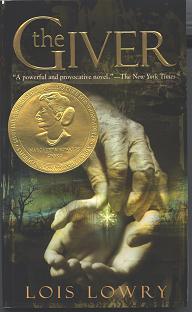
the cover of another edition I own

Overall, The Giver (Gift Edition) is a beautiful, fitting tribute to a mind-blowing classic. I love reading it again at 28 and seeing how much my views have changed since 14. I understand better now the desire to wipe out all pain and just lose all the memories that hurt, and I can see how that can be tempting enough to make me willing to give up even the potential for strong positive emotions. I can see how people would be willing to give up individual choice if that was the only way all wars and conflict would end. I still don’t think I’d make the choice that Jonas’ society did, but I do understand them better now. I see more now the subtle nuances in Lowry’s tale and appreciate its complexity better. What will I think of it at 42? At 56? Even next year, I might read it differently. The Giver is the kind of book that grows up with you, I think, and I love that about it.

For anyone who’s interested about how my 14-year-old self’s dreams turned out: I actually did end up with a business degree. I also ended up with jobs in an art gallery and a bookstore, both of which I think will thrill my inner 14-year-old, and both of which put my business background to good use. I grew up, and learned, among other things, that business doesn’t have to be boring after all. More importantly, I learned that even with a boring job, one’s life never has to be colourless. The most mundane moments come with infinite possibility, and excitement can come from the smallest things. That spark, or rather, the desire to keep that spark ignited, I owe to Lois Lowry, The Giver, and the amazing reading experience I had at 14.

+

Edited January 27, 2013:

For anyone who may not be aware: The Giver is the first book in a series of four. The final book, Son, was published last Fall. My review of Son here.

Review | The Chronicles of Harris Burdick, Chris Van Allsburg et al

“The story of Harris Burdick is a story everybody knows,” Lemony Snicket writes in his introduction to The Chronicles of Harris Burdick, “though there is hardly anything to be known about him.” Over fifty years ago, a man named Harris Burdick appeared at the office of children’s book publisher Peter Wenders. Burdick brought with him fourteen illustrations with captions and left, promising to return with the full stories the next day. No one ever saw Burdick again.

Truth be told, I wasn’t familiar with the legend of Harris Burdick, and immediately Googled him — surely, there must have been some clue about what happened to him? Turns out, he is a creation from the mind of children’s book author and illustrator Chris van Allsburg (also the genius behind the classic The Polar Express). I was somewhat disappointed at this discovery, but I was also in awe of van Allsburg’s imagination. What a marvellous idea! To learn more about Harris Burdick and see some fantastic stories inspired by him, go to www.whoisharrisburdick.com. There’s also a teacher’s guide at www.mysteriesofharrisburdick.com.

What is real is the amazing rush of imagination Burdick’s captioned illustrations inspire. In his 1984 introduction to the original Mysteries of Harris Burdick, van Allsburg writes, “I told Peter Wenders how difficult it was to look at the drawings and their captions without imagining a story.” Indeed, an idyllic image of children by a lake comes with the intriguing, horrific caption “He threw with all his might, but the third stone came skipping back.” An image of a harp in the woods has the caption “So it’s true, he thought, it’s really true,” which holds the promise of wonder and magic. The seemingly ordinary thriller-type caption “His heart was pounding. He was sure he had seen the doorknob turn” raises all sorts of questions with the accompanying illustration of a room with a door barely two steps high. I would love to take these illustrations to a third grade class and see the kind of stories eight year olds can come up with. I can imagine readers and writers of all ages delighting in the imaginative experience of creating the lost stories of Harris Burdick.

In Chronicles, that task falls to several of the best, most imaginative authors of our time. Included are stories by Stephen King, Lois Lowry, Gregory Maguire, Sherman Alexie, Kate DiCamillo, Cory Doctorow, and the creative genius who began all this in the first place, Chris van Allsburg. Seriously, this line-up alone was enough to make me want this book, even before learning the legend of Harris Burdick.

The book lives up to its promise. Put such talented writers together, provide them such inspiration and let their imaginations fly, and you end up with a wide range of really good stories. I enjoyed reading these stories, and I love how I enjoyed each story for a very different reason. Stories range from sweet to spooky and the subject matter from mundane to extraordinary.

Some stories in the collection did stand out for me, and for very different reasons. Sherman Alexie’s “A Strange Day in July” is one of my favourites. Alexie took the Enid Blyton-esque image of children by a lake and went the Neil Gaiman/Stephen King route, crafting a remarkably chilling tale about a pair of strange (to my mind, almost psychotic) children. As a major bookworm, I really enjoyed Walter Dean Myers’ “Mr. Linden’s Library,” about a book that kept writing itself as you read. It’s more sinister than you would imagine. Jon Scieszka’s “Under the Rug” is an amusing horror story that for some reason reminds me of Roald Dahl, about a grandmother who spouts cliche’d wisdom and a grandchild whose laziness creates a Dust Monster. Scieszka’s ending was unexpected, yet it totally fit, and I love how he poked fun at the grandmother’s bite-sized pieces of advice. Linda Sue Park’s “The Harp” is a traditional fairy tale, but its ending is very touching. I love the scientific angle to Chris van Allsburg’s “Oscar and Alphonse” and the Twilight Zone feel of M.T. Anderson’s “Just Desert.”

Chronicles ends with a blast, literally, with another of my favourites, Stephen King’s “The House of Maple Street.” I love how King weaves unexplained supernatural elements into a story about domestic abuse and child empowerment. The stepfather in this story is a total jerk, I felt for the mother, and I was cheering on the kids the entire time. Though it’s the supernatural elements that resolve the conflict in this story, it’s the true-to-life elements that stuck with me.

Chronicles of Harris Burdick is an absolute treat. It’s a wonderful storybook, and I love reading all the stories these authors came up with. But it’s also a marvellous nudge on the imagination. Van Allsburg is right — it is difficult to see these images, especially with their captions, and not have the imagination spark with all the possibility of storytelling. Personally, I’d be fascinated to see the stories other authors would make from these images, particularly J.K. Rowling, Suzanne Collins and Arthur Slade. In the meantime, I think Lemony Snicket’s introduction sums up the experience of Harris Burdick perfectly: “As you reread the stories, stare at the images, and ponder the mysteries of Harris Burdick, you will find yourself in a mystery that joins so many authors and readers together in breathless wonder.” Breathless wonder, indeed.