Review | Croak, Gina Damico

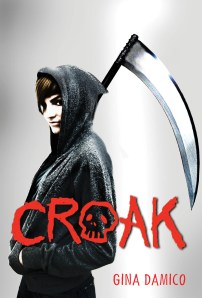
Lex Bartleby’s parents send her to live with her Uncle Mort for the summer in the hope that hard farm labour will help her with her anger issues. It turns out that Uncle Mort isn’t actually a farmer, but a Grim Reaper, and he is going to train Lex to be a Reaper herself. Gina Damico’s Croak has a funny premise and a cast of colourful characters. It starts off very weak, in my opinion, but the story gets better as it goes on, and I loved the ending.

My main issue with Croak is that Lex’s anger issues were just overdone. The book begins with her in the principal’s office for having bitten (literally!) a classmate because he’d called her a vampire. She’s sixteen. She’s also been a straight-A model student until a couple of years ago, when, for no apparent reason, she starts beating up practically everyone she meets. Her parents take her home and say they need to talk. “Are restraints really necessary this time?” Lex asks. I thought it was just another snark until I read that the mother really did bring out jump ropes to tie Lex to a chair, just so she won’t punch her parents when she learns she’ll be spending the summer with Uncle Mort.  Lex’s twin sister Cordy wonders if the ropes amount to child abuse, and by this point, I’m already picturing Lex as a rabid, foaming-at-the-mouth lunatic. I’m also wondering, if her parents are that scared of her, why they didn’t just ship her to a psychiatric facility at any point in those two years. For that matter, why didn’t the school do anything? Just because Cordy is still acting normal doesn’t mean that Lex’s parents are immediately cleared of all suspicion.

Over the next few chapters, Lex throws a shoe at a bus driver, stabs her uncle with a stick and threatens to beat a stranger with his sunglasses. The romance in the book kicks off with Lex giving the boy a black eye and him giving her one back. I’m not generally queasy about violence in books, and to be honest, Lex’s antics are too exaggerated, cartoon-style, to even make her scary. Still, Lex is beyond bratty. When Uncle Mort cuts off one of her rants and orders her to grow up, I wanted to hug him.

Her discipline problems are explained somewhat — apparently, all born Reapers have serious rage issues until they enter Croak, the town where Uncle Mort lives and one of the Grim Reaper centres in the US. Still, I don’t see the connection. In the Percy Jackson series, Rick Riordan explains that demigods are dyslexic because their brains are hard-wired to read Greek, and that they have ADHD because their bodies are designed to react quickly in battle. I love that, because I can understand how such characteristics can signal that one is a demigod. In Croak, however, I have no idea how wanting to beat everyone up is directly linked to being a Reaper, especially since the Reaper’s job is actually one of mercy — freeing the soul trapped a body that’s already dead.

Fortunately, it gets better. Once Lex begins training and realizes how much she enjoys being a Reaper, her anger issues fade a bit, and the book gets much more interesting. Lex and the other junior Reapers have noticed some mysterious deaths, possibly at the hands of someone from Croak, and investigate. It’s an interesting mystery, and it takes us right into the world of Grim Reaping. I really like the other junior Reapers, especially Elysia, whose bubbly personality adds some welcome cheer to the group. The whole world of Grim Reaping is very well fleshed out, and I loved learning details such as their use of jellyfish and their version of alcohol. The story just kept getting more interesting, as the mystery deepened, leading up to a powerful climax. Good on you, Ms. Damico. Brave, emotional twist, especially in what I presume is just the first book in a series, and I admire you for raising the stakes this early.

I also love that Croak raises an interesting moral dilemma. The most important rule for Reapers is that they can only take the souls of their targets. This seems fairly straightforward, but what if they enter the scene of a murder? What if they have to take the soul of an innocent child and see the man who killed her just a few feet away? In my review on Loss, I complained that the author played it safe and kept her protagonist from really exploring his dark side. In contrast, I love that Damico shows how torn up Lex is about letting murderers go. Surely it’s only justice to take the murderer’s soul as well, or at the very least, turn him in to the police. Yet such justice is beyond a Reaper’s jurisdiction, and there are dire consequences for any Reaper who disobeys this law. Lex is torn, and I love that Damico isn’t afraid to explore this subject. It’s a slippery issue, with no straightforward answer, and I enjoyed reading about it.

WIN A COPY OF CROAK!

Win a copy of Croak, courtesy of Thomas Allen.

For a chance to win, just comment on this post and answer the following question:

If you could have one superpower, what would it be and why?

Contest ends April 20th. (Canada only)
Review | Loss (Riders of the Apocalypse), Jackie Morse Kessler

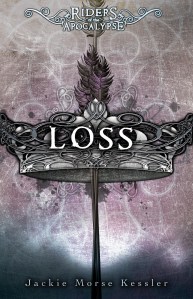
Imagine you’re a fifteen year old boy bullied at school. You take care of your grandfather with Alzheimer’s, you’re secretly in love with your childhood best friend, and you avoid social networking sites because the last time you checked online, you met with a barrage of taunts and insults. Now imagine you find out that, because of a deal you unknowingly made when you were five, you are now destined to become one of the four Riders of the Apocalypse. Specifically, the current Pestilence is unable to Ride, and the power to spread disease and create plagues is in your hands. That’s the choice Billy Ballard faces in Jackie Morse Kessler’s Loss, the third book in her Riders of the Apocalypse series.

What a compelling concept! I was immediately attracted by the tough moral and emotional conflict promised by such a plot. I could see Billy go from playing the victim to possessing immense power, from fear to strength to (and much more difficult) realizing that true strength goes beyond the knee jerk revenge impulse. How far will he take his abilities? Will the bullied become the bully?

Unfortunately, Kessler opts not to delve too deeply into this aspect of the story. The back blurb tells us that Billy is horrified after he makes people sick, and so he decides the current Pestilence should take back his crown. This sets into motion the next part of the story, where Billy needs to track down the current Pestilence — now “completely insane […] poised to unleash a plague” — and stop him. Does this bullied teen have the courage and the strength to face Pestilence and save the world? This is a much more ordinary quest/young-hero type story, and quite frankly, much less compelling than the first part.  I had hoped that the part where Billy has to face his own dark side would take up at least half the book. However, he’s such a good kid that he spends barely even a couple of chapters wreaking havoc before he’s plagued by guilt (sorry) and sets off to save the world.

Kessler plays it safe with Loss, and that disappointed me. This is not to say that I wouldn’t recommend this book to anyone. If you’re looking for an inspirational tale about how a bullied kid can overcome fear and become a hero, Loss has that. It even includes a lesson on how learning someone’s story can help change your perspective about them — Billy finds out about the past of the current Pestilence, and this new knowledge transforms the figure from Billy’s nightmares into an old man who inspires sympathy. Personally, I would’ve preferred more action. Most of Billy’s hunt for Pestilence takes place in Pestilence’s memories and consists of Billy learning about Pestilence’s past. Worse, Kessler includes in these memories characters from literature (names changed somewhat, of course) — they did play important roles in the story, but I just found it too cutesy a device.

I found Loss too preachy, even as an anti-bullying inspirational book. I think the reason it felt so heavy-handed was that Kessler couched the message in fantasy/adventure terms and that part fell flat for me. Not enough adventure. Death, incarnated as a pale, blond street musician, is the most fascinating character in this story, and Pestilence in the past is certainly a tragic figure. Billy is definitely sympathetic, and I love the scene where he stands his best friend up because the bullies are also in the pizza parlour and he doesn’t want to face them. They just weren’t given much to do for most of the book. Kessler also reminded us several times that Billy wasn’t used to fighting back. That would then be followed with either “so he curled up into a ball and took a beating” or “but this time he’d had enough.” Good in terms of message, but also too obviously trying to get that message across.

There were several scenes I liked, particularly the one where the grandfather stands up to death and the one where Billy makes the bullies sick. I also like the idea near the end of white blood cells fighting disease; I thought that was a cool spin, and wish Kessler had done more with it. Loss had several interesting snippets, but not much of an overall impact.

To be fair, I’m not the book’s intended audience. I do think it will resonate more with a younger reader (tween/teen). Personally, I prefer books that really explore a character’s dark side (e.g. Hunger Games trilogy, or Stuart MacBride’s crime novels), and I thought this tale provided the perfect opportunity. That being said, Loss does offer a bit of hope for kids who are bullied, or who may have been conditioned to think of themselves as losers — Loss shows that they have the potential to be heroes.

Out of curiosity, have you read any particularly amazing anti-bullying YA novels?

WIN A COPY OF LOSS!

Want a copy of Loss? Thomas Allen has kindly provided a copy for one of my readers!

Comment on this post for a chance to win. Just answer this question:

What’s the most inspirational book you’ve read as a child? 

Contest ends April 18th. (Canada only)

Creating Art Stories

True story: I was once asked to teach a group of kids karate, and was so bad at maintaining order that a parent had to call the head teacher over to rescue me. In my defence, I did get better at teaching karate. I also taught a couple of non-karate-related workshops that went pretty well. Still, every time I have to teach anything, that experience always comes to mind. I don’t have a problem with public speaking, especially in front of adults, but the thought of getting up in front of a group of young people and making them actually care about what I’m saying? Some people are naturals at it, and others, like me, quake in our boots.

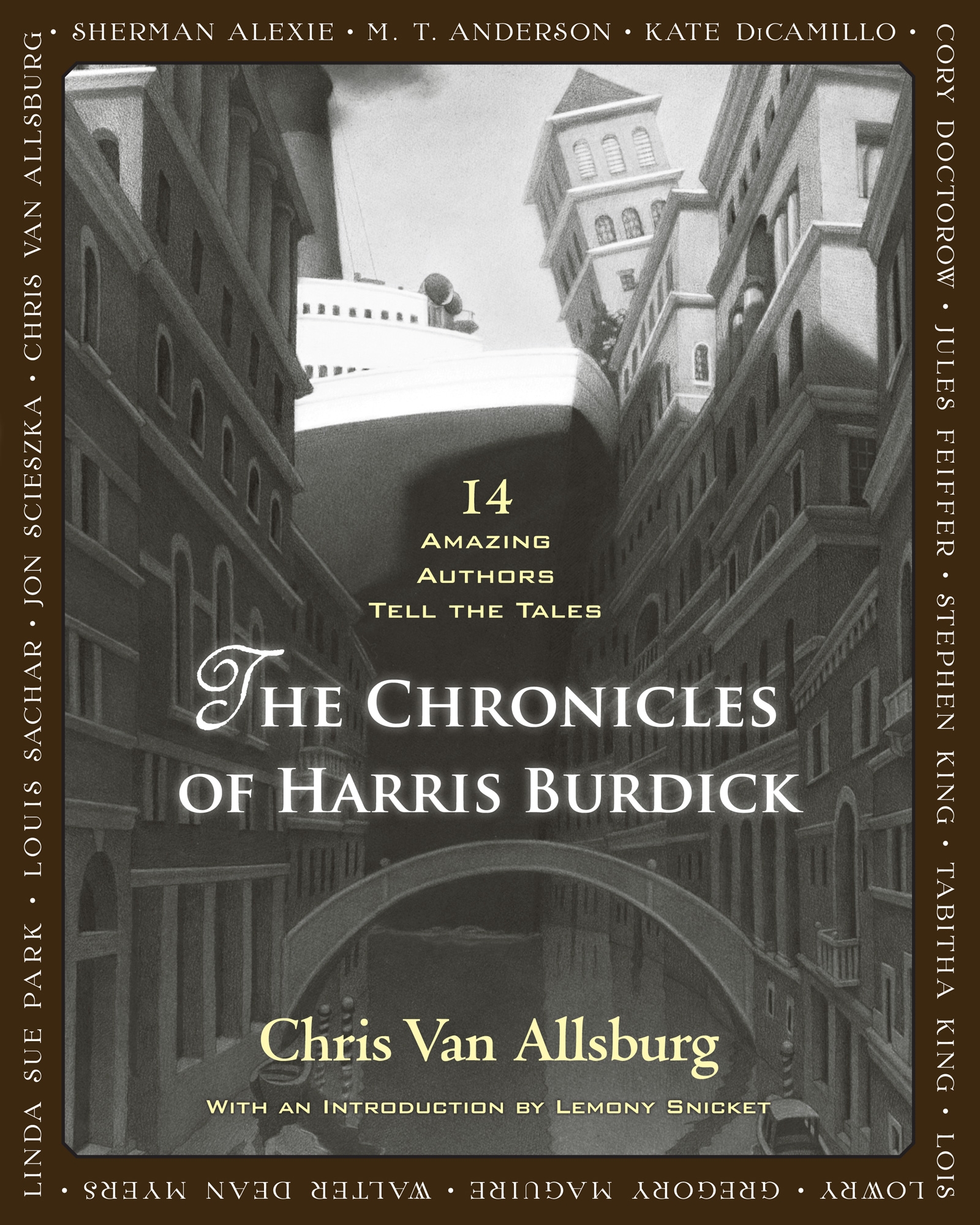
So when I pitched Tell Me A Story, a Harris Burdick-inspired creative writing workshop to my boss, I wasn’t really thinking about how I’d soon have to stand in front of a bunch of kids and talk. I only knew that I love the Harris Burdick books, and that I think Chris van Allsburg’s concept would be a lot of fun to adapt for the gallery. Confession: I’m a wee bit in love with the whole idea behind Harris Burdick. I gush about it here, include it in my Twelve Books for Christmas post and recommend it to practically anyone who asks me for a great kids book. Quick background: the Harris Burdick books present illustrations with unexpected captions and challenge young readers to finish the stories the captions begin. In The Chronicles of Harris Burdick, van Allsburg posits the challenge for writers like Stephen King, Lois Lowry and Cory Doctorow, and collects all these amazing stories in a single, beautiful volume.

I work for the Art Gallery of Mississauga and thought that van Allsburg’s concept is a perfect fit for an art gallery. What if we asked kids and teens to create short stories inspired by works from the AGM’s permanent collection? I often hear people chatting about the works in the gallery exhibits and wondering what the artist was trying to say. I thought asking people to actually create their own stories would inspire them to go beyond that conventional approach towards viewing visual art. I wanted participants to take the art beyond the canvas and surprise the heck out of us.

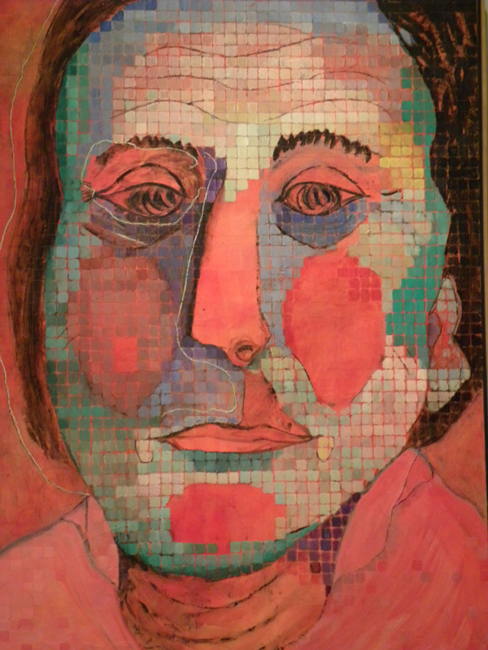
Carol Martyn, Unknown Woman, from the Art Gallery of Mississauga Permanent Collection; image used in the workshop promo material

The AGM has also recently launched a partnership with the Mississauga Library System, so I figured it was the perfect time for an arts + book type activity. I pitched my idea to Stuart Keeler, the AGM curator and director of programmes, and he loved the idea. He was so supportive in fact that he turned my idea of a casual weekend workshop into the official AGM March Break activity — with two sessions, even! One of the best things about this whole process, to be honest, is how supportive people have been. My friend and fellow blogger Steph posted about the workshop in her LitBits, and helped proof the press release. Since the workshop was inspired by Harris Burdick, I told Canadian Harris Burdick distributor Thomas Allen Ltd about it and asked if they could perhaps donate a couple of copies of the book to give to participants. I could hardly believe my luck when they generously provided ten signed copies! The kids were thrilled, Thomas Allen, thank you!

The night before the first workshop, I barely got any sleep. I couldn’t help but think of that karate experience, and I kept imagining Stuart having to step in and tell the kids to listen to the nice bookworm lady. Great news — the workshops went amazingly well! I couldn’t have asked for a more enthusiastic and creative group of kids, and I love how excited they got about writing their stories! Literally, after each workshop, I was positively giddy at the results. I did hope the participants would surprise me with their stories, but couldn’t have predicted how much they actually did surprise me.

I decided to kick off the workshop by presenting this image and asking participants to identify it:

The idea is that book cover or movie poster designs contain iconic images inspired by the contents of stories. In much the same way, we can identify potentially iconic elements within artworks to create our own stories. I showed Stuart this image in our pre-workshop meeting/rehearsal and said that I planned to break the ice by asking students to identify its source. “Harry Potter?” Stuart guessed. (In his defence, he has actually read and watched the entire Harry Potter series.) “It’s just because you’re not a teen,” I said. “Trust me, the people in the workshop will totally get this.” I then confidently presented it at the Monday workshop, only to be met by blank stares. So much for that idea. (Bright side, the Wednesday group did recognize it.)

Lila Lewis Irving, Tristan and Isolde (diptych), 2007, acrylic on canvas, 152 x 305 cm

After a brief introduction, we warmed up with some group story writing exercises. One of the things we did was create a story for Tristan and Isolde, a diptych in the AGM’s current exhibition Lila Lewis Irving: Con Spirito | Retrospective. Because of the original Tristan and Isolde story, I provided the caption “They could never be together.” I was really impressed by the stories the group came up with. In the Monday group, Tristan and Isolde fell in love with a grocery store, but couldn’t be together because Tristan’s family were environmental activists and Isolde’s family made non-biodegradable plastic containers. That story quickly turned humorous, with Isolde attending her prom in a potato sack dress. The Wednesday group noticed that the circle on the left half of the painting looked like a bloodied bruise, while the right half looked much brighter and more peaceful. So they made the man a psychologically scarred soldier, whose girlfriend preferred to keep ignorant of the harsh realities of war, and that was the cause of their romantic tension. That story then developed into adultery (the man finds a female soldier who understands him better), murder, time travel, and a revenge that spanned several lifetimes. All that, in an impromptu, fifteen minute discussion about an abstract, completely non-representational painting. Oh yes, and most of the kids were between the ages of 10 – 16. I couldn’t wait to see what they created when I gave them forty minutes to create their own stories.

Tom Forrestall’s Tide – Ebb and Flow, from the AGM’s Permanent Collection, inspired several stories. It features a car at the edge of a pier on a grey, cloudy day, and I gave it the caption “Every day, at 3 pm, the car was there.” The stories ranged from a family tragedy to a drug deal to the car being alive and so in love with her driver that she disfigures his wife with her air bags. Jorge Correa’s The Watcher especially reminded me of the Harris Burdick images — it has a shadowy house with a figure peeking out from one of the second floor windows. I gave it the caption “The house watched back,” and I was thrilled at the creepy stories that emerged. Participants gave the house specific addresses, which I love, and which reminded me of Andrew Pyper’s The Guardians with its neighbourhood-specific horror.

While the permanent collection works I suggested were primarily representational, I also told them they could write stories about Lila’s abstract works if they felt up to the challenge. A twelve year old saw an ominous shadow is Lila’s Alla Prima, and created a haunting story from that. Another twelve year old took Lila’s piece Wozzeck, an abstract piece featuring broad strokes of various shades of red, and began a story about a time keeper who had the responsibility of caring for a time travelling device that could be used by anyone, but only once in that person’s lifetime. I love the questions that story raised — if you could travel to any time at all, where would you go? And you have to choose carefully, because you’ll never get this chance again. While typing up these stories to feature on the AGM’s blog, I confess that I wish I’d given them an entire week to write their stories — I wanted to read more!

Doing this workshop was an exhilarating experience. I can hardly believe what the participants were able to come up with in less than an hour. More than that, I’m inspired to start writing again, myself. I hope the workshop inspired these participants to continue their own writing, and to continue looking to visual art for inspiration, as well.

Thank you to Stuart Keeler, for this opportunity, as well to James Dekens, Craig Todd-Langille and the Mississauga Library System, who worked with us on this program, and wonderful AGM volunteer Victoria Gunter. Thanks as well to Thomas Allen, for their generosity — the kids who got Harris Burdick books were thrilled! Such a fun experience!

For anyone interested in reading the stories from the workshop, I will be posting them on the Art Gallery of Mississauga blog over the next couple of weeks.