Review | The Widow’s Guide to Dead Bastards, by Jessica Waite

How do you grieve someone when you’ve just learned of all the many ways that they’ve done you wrong? Jessica Waite’s memoir, The Widow’s Guide to Dead Bastards, begins with an arresting image: the author confronted with nine photos of vulvas, arranged in a three-by-three grid “like the Brady Bunch family” (page 1). It’s a tiny subset of her recently-deceased husband Sean’s porn collection, and his secret stash of digital images is the least of his transgressions.

As Jessica processes his loss, and tries to help her young son, Dash, heal, she continues to unearth more of Sean’s secrets: he regularly pays for sex while on vacation, he’s had a long-time affair with a colleague, and his debts put Jessica’s financial security in jeopardy. This memoir may have started with a pointed, darkly humorous observation about Sean’s secrets, but most of the book takes us on Jessica’s raw and rather emotional journey in the aftermath of Sean’s death.

There’s anger: in a moment of petty revenge that Jessica deliberately conceals from friends until it’s too late for them to stop her, Jessica sets out to ruin Sean’s affair partner’s Christmas. Jessica’s barrage of texts and emails are straight-up harassment, and her threats involve not just the affair partner’s holiday cheer, but also her career. So it’s hard to cheer for Jessica in that moment, yet the act alone proves to be enough catharsis without having to escalate, so all’s well that ends well?

Beyond the anger is also a lot of fear. Jessica takes us through her anxieties about getting tested for STDs, and about waiting for all the legal stuff around Sean’s death benefits to come through. Worse is the lingering fear of what else remains unknown; if Sean had succeeded in keeping all this from her till now, what other secrets had he been keeping that could end up ruining the life she’s building?

Jessica deliberately leaves vague her own personal beliefs about the afterlife, or lack thereof, but the memoir also takes us on her deeply spiritual journey in exploring those questions for herself. This, too, rings true. There’s nothing like losing someone to make us wonder where they may be now, and if we’ll ever see them again, and while Jessica’s exploration does stay within particular paths of spirituality, her curiosity and yearning are also very real.

There’s a wonderful metaphor from someone Jessica goes to for counsel: when the day of Sean’s death began, Jessica was at the 12:00 point of an analogue clock, steady, secure, and with an entire clock’s worth of stability beneath her. Sean’s death plunges her all the way down to the 6:00 point in a moment, and suddenly, she’s scrambling to figure out where she can find her footing again.

Jessica’s response rings so true for anyone who’s gone through grief: after a ‘decent’ period of mourning (the length of which differs by person), her loved ones expect her to be back to the woman she was at the 12:00 point. Yet even if she does manage to climb back up there, she’s no longer the same woman. Grief has forever changed her, and it’s tough to quantify how, much less explain it to others. It’s a powerful and heartbreaking message, yet one that reminds me of my own experiences of grief, and makes me feel less alone.

+

Thank you to Simon and Schuster Canada for an advance reading copy of this book in exchange for an honest review.

5 Must-Read Books with Deaf Characters


Ever since I watched Why Not Theatre’s excellent ASL/English Prince Hamlet a few months ago, I’ve been on the lookout for other examples of Deaf representation in arts and culture. As a bookworm, my interest naturally fell on finding books that featured Deaf characters or touched upon Deaf Culture.

I should point out that I’m not Deaf, CODA nor hard of hearing, so I’m in no way an expert on how good or how problematic a book is when representing Deaf Culture. That being said, below are books I’ve recently discovered and enjoyed. Most of my online searches for books on Deaf Culture and about Deaf characters often showed only academic texts or children’s books teaching the ASL alphabet, so I hope compiling this list will help other interested bookworms find their next read.

Finally — I’m always looking for my next great read. If you know of any fantastic titles I can add to this list, let me know!

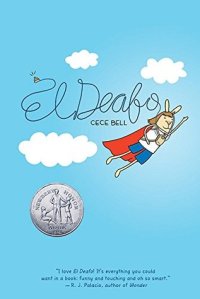
1. El Deafo by Cece Bell

20701984

A birthday gift from a friend, this adorable graphic memoir is by turns hilarious and bittersweet. Based in part on the author’s own experiences of growing up, El Deafo is about a young bunny, Cece, who is the only deaf kid at her new school. Cece creates a superhero persona ‘El Deafo’ to gain confidence when trying to make new friends, and uses the super-powered hearing from her Phonic Ear to help her classmates keep out of trouble. See my full review here.

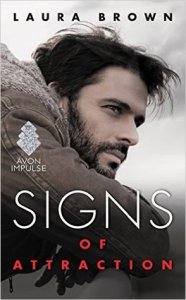
2. Signs of Attraction by Laura Brown

29863612

A deaf/hard of hearing college student falls in love with the hot deaf guy in her class. Carli has hidden her deafness all her life, and I love how her relationship with Reed helps her come to terms with her deafness, feel okay with needing CART services or close captioning, and learn ASL. The story was a lot more intense than the light-hearted romance I expected (content warning: child abuse, violence against women, suicide), and there were plot threads that I wish had been explored more (Reed’s birth father, Carli’s mother and sisters), but overall, I really liked this book.

I also love how signs are depicted in this book – most of the signed conversations are depicted in italics, but because Carli is just beginning to learn sign language, whenever characters use signs that she hasn’t learned yet, the author also describes the gesture. The scenes involving the sign for “falling in love” are particularly squee-worthy.

The author is hard of hearing and her next book Friend (with Benefits) Zone features two Deaf main characters.

3. Five Flavors of Dumb by Antony John

7818683

This funny, hipsterish middle-grade/young adult story is about a deaf teenage girl who accepts a dare to become the manager of her high school band ‘Dumb’ and land them a paying gig within a month. Fuelled mostly by passion, Dumb is great at making noise but horrible at actually creating music together. Piper’s efforts to enforce harmony amongst the members often go hilariously awry, but the novel’s heart lies in the characters’ sincere love for music, and Piper’s realization that being a good manager goes beyond just making the next quick buck.

I also really liked the family dynamics. A decision by Piper’s parents leads to a major turning point in her relationship with them, her rebellious younger brother turns out to be a staunch ally, and she confronts her complex emotions about her baby sister having cochlear implants.

4. Finding Zoe: A Deaf Woman’s Journey of Love, Identity, and Adoption by Brandi Rarus and Gail Harris

20702909

Brandi Rarus came of age at a very exciting time in Deaf history – she was a college student during the Gallaudet University 1988 student and faculty protest for a Deaf President, and ended up marrying one of the student leaders Tim Rarus. I loved learning about her life and seeing this period from her perspective as a deaf woman who grew up oral in a hearing household. For example, she writes about how Tim snubbed her at their first meeting because, having grown up in a multi-generational Deaf family, he viewed her as “too oral.”

The section about Zoe was the final third of the book, and I liked that Rarus featured the perspectives of the multiple people involved in the adoption, including Zoe’s birth parents and the family who had originally intended to adopt her. Rarus’ love for her child and joy over welcoming Zoe into their family is beautiful and heartwarming, but I felt bad for Zoe’s birth father. BJ wanted to raise his daughter and his parents had promised their support, but the birth mother Jess refused to give Zoe up to him (because it meant that she didn’t want her child, whereas giving the child up to a two-parent household meant “giving the child a better life”), and the adoption counselor eventually strong-armed him into agreeing that a traditional two-parent household (“with a mother and a father”) would be best. Even Jess’ decision to give up her child was heavily influenced by her religious mother, who basically convinced her that raising the child herself doomed Jess and the baby to a lifetime on welfare whereas adoption was presented in ridiculously fairy tale-like terms.

5. Seeing Voices by Oliver Sacks

66723

I discovered this book at a local bookstore and thought it was a great introduction to Deaf history. I was fascinated to learn about sign language’s roots in indigenous languages within the Deaf community, which developed as a natural form of communication despite attempts to teach Deaf people speech. I was also horrified to learn about the violence in forcing Deaf children to learn spoken languages, which delays their introduction to education in other areas.

I hadn’t realized that Sign Language used to be viewed by hearing people as only a gestural adaptation of English, until linguist William Stokoe argued about ASL having a linguistic structure and therefore being a language in its own right. I also hadn’t realized that Gallaudet University, which I’ve heard is one of the best post-secondary school for Deaf students, has had only hearing presidents until the late 1980s. Sacks covers the Deaf President Now protests, from a more detached yet detailed perspective than Rarus did, and that was my favourite part of this book.

Review | Gender Failure, Rae Spoon and Ivan E. Coyote

18406194Gender Failure is a beautiful, candid, moving account of Rae Spoon and Ivan E. Coyote’s “failure” to fit into the traditional gender binary. Its roots as a stage production are evident — the tone is conversational, even intimate, and you can almost imagine the authors telling you these stories in person. Photos from the show are interspersed throughout, and I wish I’d seen the production live, as it must have been an even more powerful experience than reading it on the page.

The casual tone of the narration belies the depths of emotion that Spoon and Coyote express. Spoon recounts the experience of a man approaching them after a show and laughing because he’d originally thought Spoon was “a dude,” until they started singing and he then “knew you were a chick.” The man appeared to expect Spoon to share in this hilarity, even grabbing them by the arm in a show of comradeship. Spoon’s response struck me: they walked away, and only then corrected the man that he’d been mistaken both times. The need to walk away before correcting the misconception speaks to Spoon’s awareness of their vulnerability. Not only do they experience “a feeling that I have failed to be seen” every time they are misgendered, they are also all too aware of the dangers in revealing themselves as trans.

Both Spoon and Coyote share their fear of public washrooms. Coyote writes about developing the skill to hold their pee for hours, in the hopes that they may not need to use the wheelchair-accessible gender-neutral stall and potentially inconvenience someone with mobility issues. “[Women] are afraid of men in a women’s washroom, because of what may happen,” Spoon says. “I am afraid of women in a women’s washroom because of what happens to be all the time.” Experiences include being assaulted with a handbag and being dragged out from a stall by security guards, not to mention the less physical but no less violent experience of being glared at in disgust. Spoon’s frustration is evident when they say that they can’t even react in anger, “because if I get angry, then I am seen as even more of a threat. Then it’s all my fault, isn’t it? Because then there is a man in the ladies’ room, and for some reason, he’s angry.”

Coyote writes about their difficulty in trying to get medical approval to have their top surgery funded. Ironically, their difficulty lay in finding a psychologist who could provide an unbiased assessment on whether Coyote was “trans enough” for the procedure, because most of the psychologists had studied Coyote’s work when training to make such assessments. They also speak about the intrusive questions people feel entitled to ask. In one interview, for example, the reporter tried to be coy around the question of sex assignment surgery, and when Coyote told her to just come right out and ask the question, they realized that the reporter didn’t even know what sex Coyote had been assigned at birth. “She couldn’t even be sure what I might want removed or added on to me,” Coyote says. “But still. She had to know. She just had to ask.”

The section about the Trans Day of Remembrance is especially moving. The event honours those who have died by reading their names aloud, but as Coyote notes,

What will be missing are these women’s stories… What will also be missing is a discussion about the difference between excluding someone and actively including them, and intentionally making space. And the day after we are suppose to remember, most of this will be forgotten.

In particular, Coyote remembers their friend Rosie, a trans woman who left town and is presumed dead, and whom Coyote memorializes in this book. “I refuse to reduce her life to nothing more than a name on a list of the deceased,” they say. “I will remember so much more about Rosie than just her absence from my life.”

Gender Failure is such a powerful, beautiful book. Spoon and Coyote have moved me, and I can only imagine the impact their stories can have on transgendered readers, particularly those who are young and still trying to figure things out. I cannot recommend this book enough, and I’ll just end this here, with Coyote’s words:

I realize that the English language is sadly devoid of names for people like me. I try to cut the world some slack for this every day. All day. And the day after that, too. But the truth is that every time I am misgendered, a tiny little sliver of me disappears, A tiny little sliver of me is reminded that I do not fit … I remember that the truth of me is invisible, and a tiny little sliver of me disappears. Just a sliver, razored from the surface of my very thick skin most days, but other times right from my soul, sometimes felt so deep and other days simply shrugged off, but still. All those slivers add up to something much harder to pretend around.

+

Thank you to Arsenal Pulp Press for a copy of this book in exchange for an honest review.