
Review | What We Left Unsaid, by Winnie M Li

What We Left Unsaid is a heartwarming family story, about a trio of adult Taiwanese-American siblings driving down Route 66 to visit their parents just before their mother undergoes a major surgery. The Grand Canyon is as much a character as the siblings themselves; they’d taken a trip to the Grand Canyon when they were children, but something happened at a sketchy gas station that made their parents turn back before they reached it. Their mother’s request that they come visit by car on a route that passes by the Grand Canyon is clearly also a request for healing, not just the strained relationships between the siblings themselves, but the unresolved trauma from whatever happened at that gas station all those years ago.

Li gently peels back the siblings’ relationships layer by layer, revealing the sources of the rifts between them as well as the love that keeps going beneath it all. I love how Li pulls back the curtain on the racism and discrimination that Asian-Americans face, from some of the more subtle micro-aggressions that put Bonnie, Kevin, and Alex on their guard, to the flat-out threats that make them and their parents stiffen in fear. Li sets the present-day scenes post-COVID, and so there’s a lot of additional layers to the racism here that are uncomfortably familiar and real.

I also like how Li explores how each sibling’s role in the family helps shape their respective responses to events: Bonnie as the responsible eldest child and eldest daughter, Kevin and Alex both believing they’re the ones their parents see as the screw-up of the family. All these things are shaped by both parental attitudes and societal ones, and I like how their dynamic shifts constantly throughout the story.

Finally, I love the details about the road trip itself. I’m not American and haven’t driven down Route 66 myself, so while I’ve heard of some of the stops, I haven’t ever threaded them all together in the same way an American reader may. I enjoyed learning about the various stops, their characters, and their histories. But more importantly, I love thinking about Asian Americans who’ll read this, and feel connected to their country’s history through the Chu family’s unique lens.

+

Thank you to Simon and Schuster Canada for an e-galley of this book in exchange for an honest review.
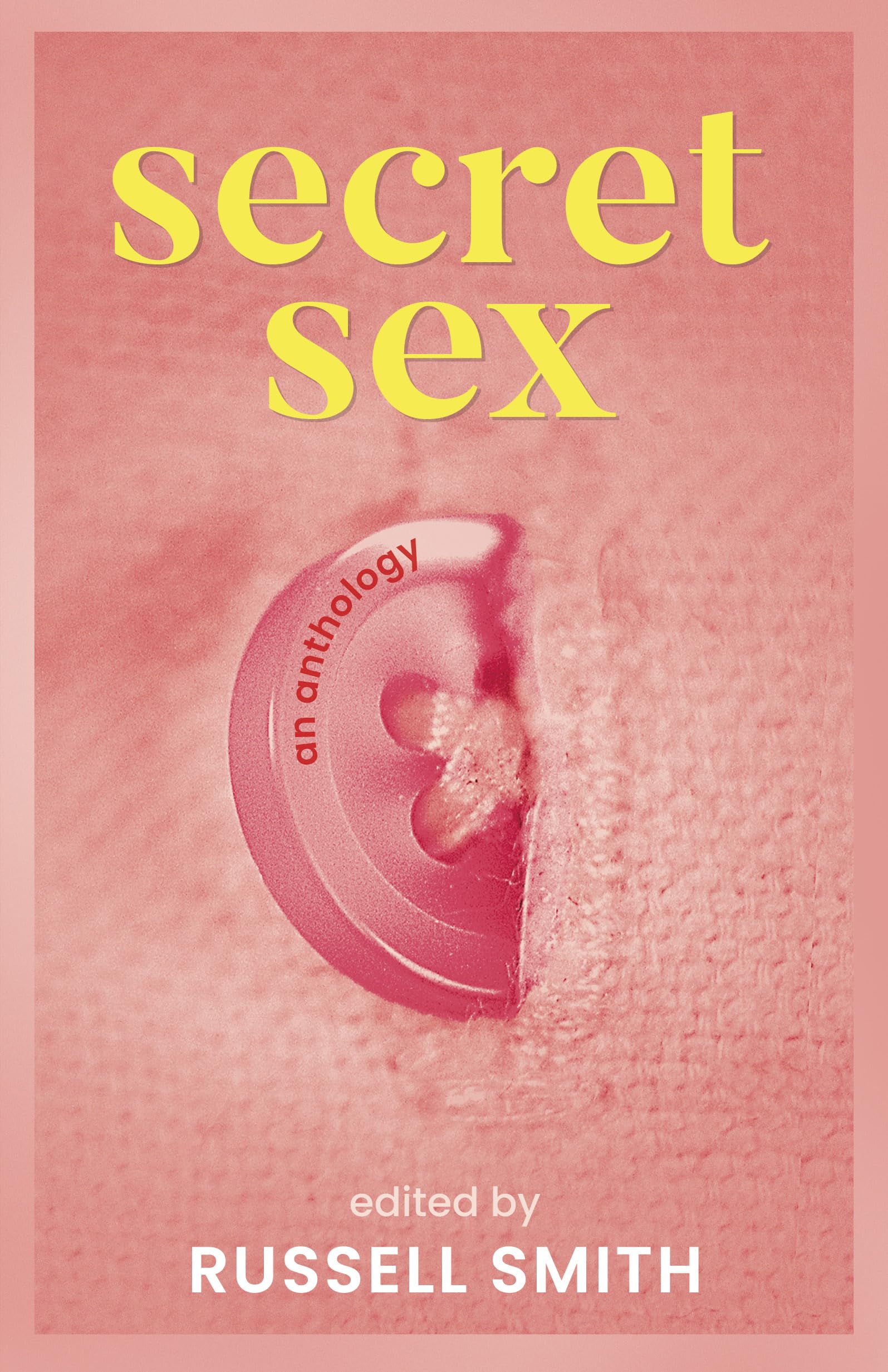
Review | Secret Sex: An Anthology, edited by Russell Smith

SecretSex“New risky fiction — with no names attached.”

What happens when you take 24 of Canada’s most prominent authors, invite them to write sex scenes, and promise them you’ll never reveal which scene they actually wrote? From the cover design (brilliant, by the way), to the anthology title, to the masquerade book launch, the marketing for Secret Sex turns out to be much sexier than the stories themselves.

To be fair, the editor makes it clear in the foreword that this is not a collection of erotica. Rather, it is a collection of sex stories written by literary fiction authors. So the sexiness is more akin to, say, D.H. Lawrence or Marian Engel than Sierra Simone, Sylvia Day, or even Shonda Rhimes’ take on Bridgerton.

So as someone who usually prefers sexy genre romance to literary fiction, and novels to short stories, I was prepared to flip through a few pages of this, figure out it isn’t my thing, and call it a day. Imagine my surprise then when I not only loved the first story (“Sext”), but actually read this all the way through to the end.

Not all the stories were my cup of tea, of course. As with any anthology, there are some hits and misses, and as with any fiction, especially the kind that features sex, your mileage will vary. I will admit that as a reviewer, not knowing who wrote which story also brings a kind of freedom. I can judge each story without thinking of the writer involved, or other books of theirs I may have enjoyed. Which does make my response to each story more candid than usual.

For me, there was a stretch maybe two-thirds through where the stories started to bore me, and I wondered if maybe I should have stretched this out one story at a time rather than try to read it all in a few days. But then a story (“Content Farm Confidential,” about a content ghostwriter who gets with her finance bro boss) revived my interest with its smart commentary on the sometimes soulless nature of sex and love, and remaining two stories (the voyeuristic “Mirror, Mirror” and the vampire story with Henry James undertones “Portrait of a Lady”) held my attention to the end.

My personal favourites:

  • “Politics of Passion” – an Indigenous man and a white woman meet at a conference on treaty issues. I absolutely adore the incisive political commentary and subversion of stereotypes that come through in sly little bon mot descriptions through an otherwise lighthearted, flirty-sexy story. For example, the woman is “colour challenged. Pigment denied.” The man “has a smile that told of strange and desirable secrets. Therefore, he was Anishinaabe.” (The “therefore” in that last quote sticks the landing.) And finally, no spoilers but the last two lines are the perfect ending. Brilliant piece.
  • “Bite” – vampire BDSM erotica. Sexiest story in the collection, IMHO, and the story most like what I would have expected and hoped from the marketing.
  • “Restoration” – this one was probably the most literary amongst my favourites, but I really liked how the author managed to fit an entire novel’s worth of story arc within a few pages.
  • “Watching You Watching Me” – beautifully sad, about a woman dealing with divorce. I especially love this part: “All flings depend on this foundation of fantastic, the relationship with a phantom other who lives only in our head… But marriage is a fantasy too, the most elaborate one of all… The fantasy of knowing an other, of being known,of knowability itself.”
  • And finally, “Sext” (about two adults sexting, one with perhaps more feelings than the other) and “Cloudburst” (about raining cocks, literally) are both punchy and hilarious snippets of fun. Both are made extra special by their surprisingly emotional gut punch endings.

The rest for me ranged from “not bad” to “meh, had to skim.” The only other standouts for me are “Calliope” (about a disembodied brain jealous of its human friend’s human lover) for the originality of its concept, and “Patience” (a fairly straightforward love story and sex scene) for the way it revealed the narrator’s trans-ness through their description of sex: “She is sucking what I have so much, more than enough to be a cock. When I come, my throat reveals itself the way she revealed the cock I know I have…” The narrator of “Patience” had earlier expressed dislike at being called “beautiful,” and it’s only during sex that it becomes clear why.

+

Thank you to Dundurn Press for a copy of this book in exchange for an honest review.