
2023 Recap: My Year with Christie

In 2023, inspired by booktuber emmie’s mission to solve The Murder of Roger Ackroyd, and the dozens of other similar booktuber videos since, I decided to try my own hand at outsmarting the Queen of Crime. Based on my blog recaps, I’ve done 10!

And how did I fare? Ahem…

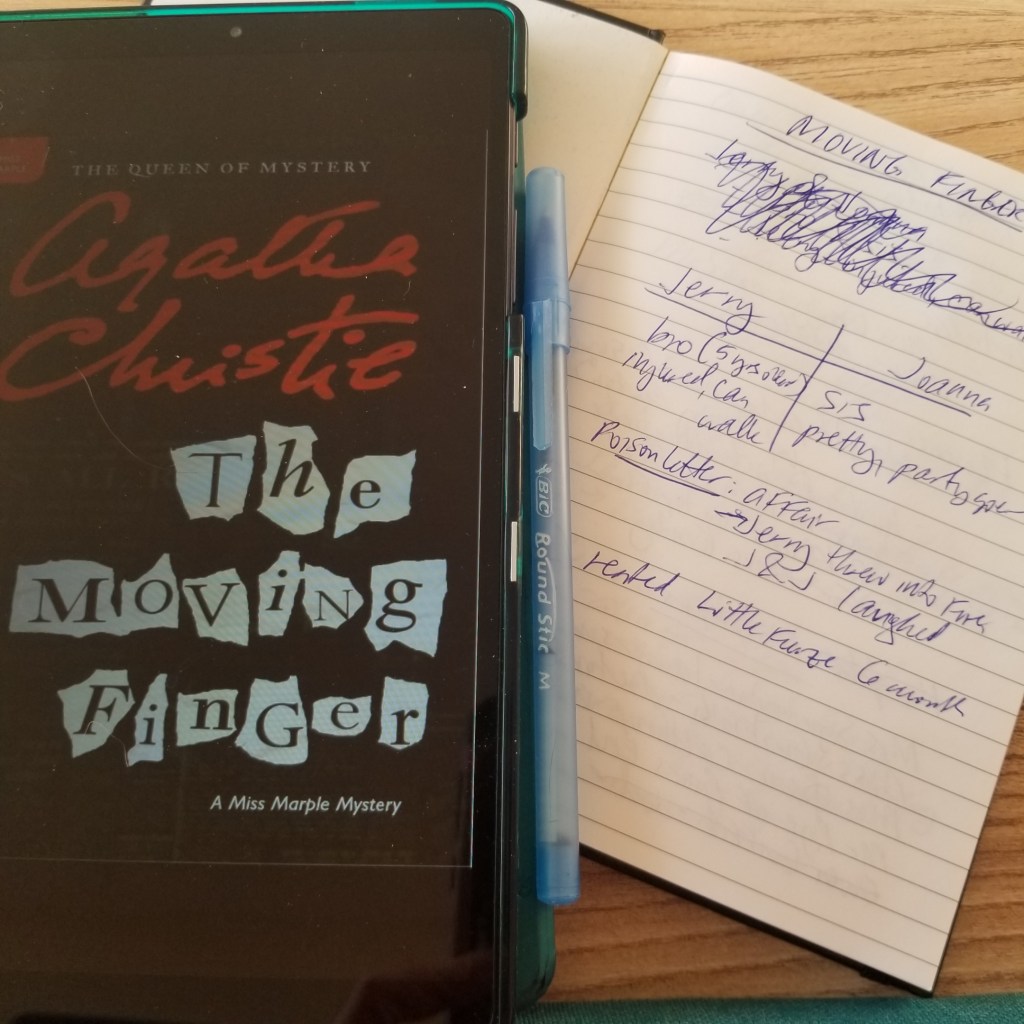
  • The Moving Finger (Miss Marple) – no, not even close, alas
  • At Bertram’s Hotel (Miss Marple) – kinda? I figured out whodunnit, and parts of the howdunnit and whydunnit, so a half-victory rounded up to a win?
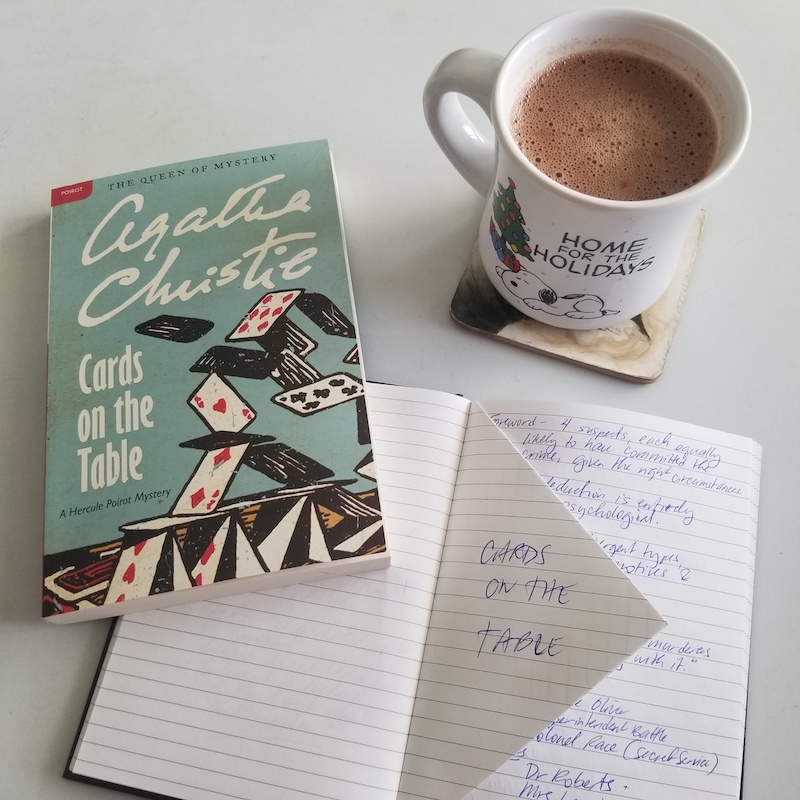
  • Cards on the Table (Hercule Poirot) – LOL no. But at least I was close. And honestly, this was so much fun to try to solve!
  • Murder in Mesopotamia (Hercule Poirot) – LOL, not even close. But kudos to Dame Agatha; this big reveal made me yell so loud I scared my cat away.
  • A Caribbean Mystery (Miss Marple) – nope, and this made me shake my head because the key clue seemed so obvious after the fact. This has also become one of my favourite Marples and overall Christies, because of how deliciously twisty it is.
  • Peril at End House (Hercule Poirot) – YES I DID!!! FINALLY!!! And not even in a half-victory-I-kinda-figured-stuff-out way, but in a full-blown YES I GOT IT victory! Woohoo!
  • Five Little Pigs (Hercule Poirot) – YES I’M ON A ROLL!!!! I must say, solving one of these is such a fantastic high!
  • Evil Under the Sun (Hercule Poirot) – And so my streak ends. No, I was not even close on this. Bah. How the mighty have fallen…
  • Hallowe’en Party (Hercule Poirot) – Yes, but this victory felt more puzzling than victorious for some reason. Poirot turns a bit philosophical in this one, and some of his meanderings threw me off.
  • Honourable Mention: A Haunting in Venice, the movie (very loosely) adapted from Hallowe’en Party – I watched that in the theatre, and I DID solve it before the big reveal. So there! (Maybe that’s why solving the book version felt more puzzling than victorious? Because possibly some of the elements from the movie played a role in my solving the book?)
  • A Pocket Full of Rye (Miss Marple) – kinda, yes. I got the whodunnit and their motive, but the method was all wrong, and my guess about an accomplice was totally off-base. So yet another half-victory rounded up to a win?

And there we have it! Out of the 10 Agatha Christie books I tried to solve, I got 3 fully right, and 2 partially (mostly?) right. Plus I did solve the movie adaptation. And honestly, that’s actually far better than I thought I did! Woohoo!

Christie Finale for 2023

My final Christie book for 2023 was, fittingly, none other than Hercule Poirot’s Christmas. I last read it over a decade ago, and couldn’t remember whodunnit, so I started taking notes to try to solve it. But as I kept reading, I realized I knew a couple of key elements, including the significance a key clue from the crime scene. So I figured I remembered the story more than I thought, likely from seeing the Suchet adaptation, and the more the clues started to point towards a particular suspect, the more confident I became that I remembered the story in full.

Did I Know Whodunnit?

LOL, no, as it turns out, the person I was so sure was the killer turned out to be innocent, and the killer was someone who I never even suspected. So Christie managed to get a final knockout blow in and secure her utter and undisputed dominance as Queen of Crime and mystery puzzler extraordinaire before the end of the year.

But 2024 is a new year! And there are many, many more mysteries for my little grey cells to solve!

Honourable Mentions: Japanese Honkaku Mysteries and Dorothy L Sayers
In an attempt to branch out beyond Agatha Christie (and really, soothe my ego by solving potentially simpler puzzles), I also tried my hand at solving Golden Age-inspired detective fiction from Japan and Christie’s Golden Age contemporary Dorothy L Sayers.

And how did I fare? Well…

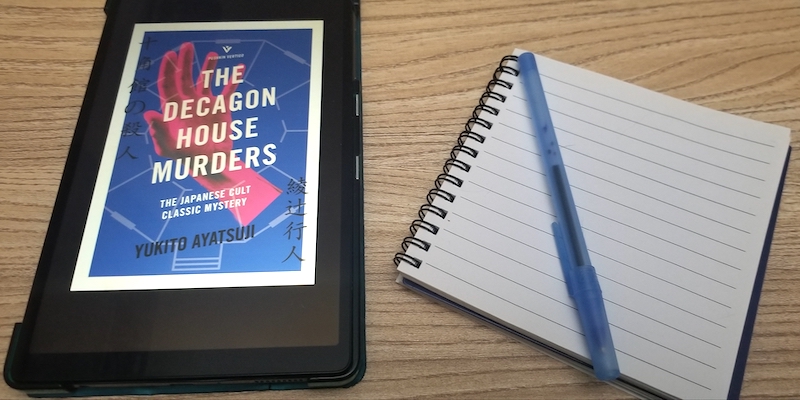
  • The Decagon House Murders by Yukito Ayatsuji – LOL, no. My gut did lean towards the right answer, but my rational mind got in the way. I went with the answer that made sense but turned out to be wrong, so well done, Yukito Ayatsuji.
  • The Honjin Murders by Seishi Yokomizo – no, I didn’t, and worse: this mystery takes pride of place as the first story where I didn’t even realize the reveal was about to happen. I just kept reading and then accidentally learned the big reveal without meaning to. Still a good mystery, and I have a copy of another book in the series, The Inugami Curse, on standby for 2024.
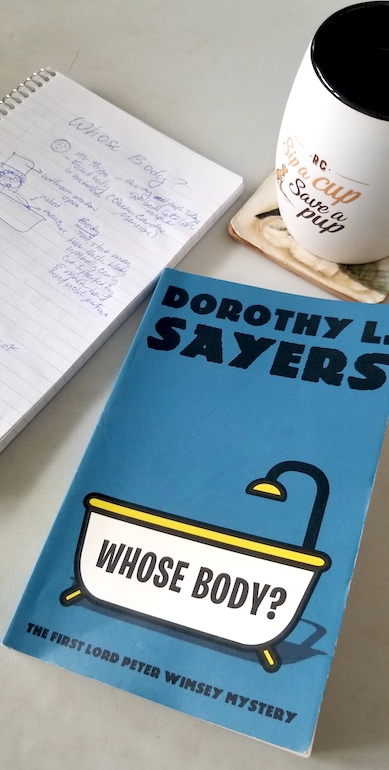
  • Whose Body? (Lord Peter Wimsey) by Dorothy L Sayers.- yes, I did, but it didn’t carry the same thrill as solving a Christie. Sayers is pretty transparent about Lord Peter’s thought processes throughout, including all of his theories, so the big reveal was pretty obvious. That being said, I’ve since learned that Sayers was a very different kind of writer: she was less interested in creating a puzzle to be solved than in exploring / reflecting the social mores of her time. She’s an incredibly skilled writer, and while I didn’t enjoy this as much as Christie’s books, a blog commenter convinced me to try one of the later Wimsey books. So I have Gaudy Night on standby for 2024.

I Try to Solve a Dorothy L. Sayers Mystery | Whose Body? (Lord Peter Wimsey)

WhoseBody

Fresh off my recent victories with Dame Agatha’s work (woohoo!), I decided to give her contemporaries a try. First up: Dorothy L. Sayers, a founder and early president of the Detection Club, to which Christie also belonged, and which set up the whole “fair play” rules for detective fiction in the first place.

Sayers’ best-known mysteries are the Lord Peter Wimsey series. I tried reading the first book Whose Body? over a decade ago, and found it too boring to finish, but I decided to give it a go again this year, and see if perhaps pitting my wits against her sleuth made the story more compelling.

And… it did. It still took me over three months to finish the book — an especially long time considering it’s only 197 pages long. I’m afraid that as great a writer as Sayers is — and there are some sections in the book that are just *chef’s kiss* stylistically — I’m never going to devour her mysteries like I do Christie’s. And I’m not sure why either. Her writing is a bit like Agatha Christie meets PG Wodehouse, and those are two of my favourite authors, but for some reason, I struggled with Sayers’ writing.

Regardless, Whose Body? has an incredible hook for a mystery: a man discovers a dead body in his bathtub. The body of the dead man is naked, except for a pair of pince nez (a kind of eyeglasses) on his face. He bears a remarkable resemblance to Reuben Levy, a wealthy Jewish financier who went missing the night before, yet there are enough differences that the body clearly is not the financier’s. Detectives check the local hospital, and there are no bodies missing from their morgue. Whose body is it, and where is Reuben Levy?

Did I Solve It? (No Spoilers)

Well, yes, but I don’t think it’s as big a cause for celebration as solving an Agatha Christie mystery is. Unlike Hercule Poirot or Miss Marple, Lord Peter Wimsey is pretty open about his thought processes, so the killer’s identity was easy to figure out.

The couple of red herrings that came up were revealed as such fairly quickly, often with Wimsey pointing out how they didn’t fit the physical evidence. Now, with an Agatha Christie book, that wouldn’t necessarily mean the characters are definitely innocent, so I continued to keep them on my suspect list.

But then emerged a suspect who knew Levy, had a motive for getting him out of the way, and had a connection to the man in the tub. At first I thought it couldn’t be this person; they were too obvious a suspect, especially given that the relevant information was revealed only about halfway through the book. But then I flipped back to earlier chapters to see earlier scenes with them, and what I found only confirmed they had the opportunity to carry out the crimes.

And sure enough, it wasn’t long before Lord Peter confirmed my suspicions. I suppose I can feel proud that technically, Lord Peter took an extra chapter or two after I figured it out to reach the same conclusion. But again, I don’t think Sayers was being particularly sneaky about her reveal to the reader, so I think I figured it out precisely when the author intended me to.

My Verdict on Dorothy L. Sayers and Lord Peter Wimsey

She’s an incredibly skilled writer. There’s a wonderful passage late in the book:

When lovers embrace, there seems no sound in the world but their own breathing. So the two men breathed face to face. (page 174)

It’s so masterfully written; you can practically feel the charge in the air as Lord Peter Wimsey makes eye contact with the murderer.

Through Lord Peter’s dialogue, Sayers also shares some gems about detective fiction:

“That’s just what happened, as a matter of fact,” said Lord Peter. “You see Lady Swaffham, if ever you want to commit a murder, the thing you’ve got to do is to prevent people from associatin’ their ideas. Most people don’t associate anythin’ — their ideas just roll about like so may dry peas on a tray, makin’ a lot of noise and goin’ nowhere, but once you begin lettin’ ’em string their peas into a necklace, it’s goin’ to be strong enough to hang you, what?”

“Dear me! said Mrs. Tommy Frayle, with a little scream, “what a blessing it is none of my friends have any ideas at all!”

“Y’see,” said Lord Peter, balancing a piece of duck on his fork and frowning, “it’s only in Sherlock Holmes and stories like that, that people think things out logically. Or’nar’ly, if somebody tells you somethin’ out of the way, you just say, ‘By Jove!’ or ‘how sad!’ an’ leave it at that, an’ half the time you forget about it, ‘unless somethin’ turns up afterwards to drive it home.” (page 117)

It’s a brilliant piece of writing. Light, funny, and with nice comic touches like the part about Lord Peter frowning at the duck on his fork (I love how she phrased that!). It’s also sharp and incisive commentary about some of the conventions of detective fiction and how unnatural it is to have the important clues and evidence laid out so neatly for the reader.

As someone trying to solve this mystery with Lord Peter, it’s also a sly invitation to look more closely at information I may have easily overlooked earlier on, because they may be important. And indeed, when I re-read sections from earlier in the book to confirm details about my suspect, I had to applaud Sayers for how masterfully she sprinkled relevant details into the narrative. There’s good reason I didn’t suspect this person until Sayers meant to reveal them as suspicious, and kudos to the author for that. She also later mentions a highly telling clue that I missed altogether, so that was a nice new bit for me to realize after the fact.

Ultimately, despite my admiration for her writing skill, I don’t think I’ll continue with Dorothy L. Sayers’ Lord Peter Wimsey novels. Her style just isn’t a page turner for me, and the mystery element isn’t enough of a puzzle that I’ll want to keep trying to solve them. Still, I’m glad I read this. Her approach is so different from Agatha Christie’s that this gives me a better idea of what golden age detective fiction was like, and this book in particular gave me a better appreciation for how a mystery like The Honjin Murders is structured.

***SPOILERS BELOW***

Continue reading