
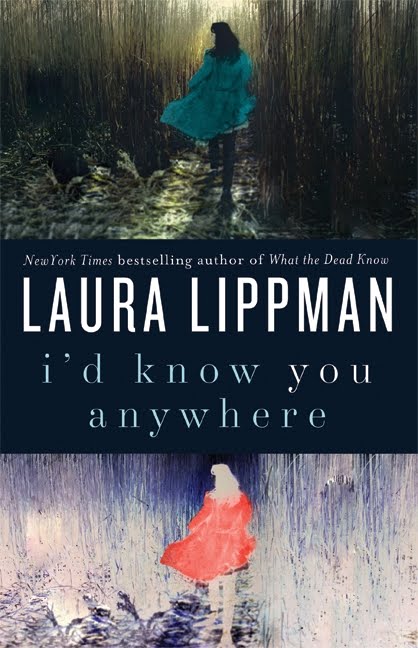
 Eliza Benedict receives a letter from Walter, a man who kidnapped her over twenty years ago, when she was fifteen, and who is now on death row for the murder of another girl. The date of his execution is coming up soon, and he wants to speak to her. His letter was delivered by Barbara, a woman who was herself a victim of violence, but is staunchly against the death penalty, and has taken on death row inmates like Walter as her personal cause.
I haven’t been this emotionally affected by a book in a long time. Lippman does a good job in presenting Walter’s perspective. We see him back in 1985, believing in his own good looks, insisting he’s 5’9 rather than 5’7, and utterly baffled by women’s lack of interest in him. We see him attempt several times to charm girls into having sex with him, and when these attempts fail and he ends up raping them, deduce that it is only practical not to leave witnesses behind. I was utterly disgusted by Walter – he is both arrogant and pathetic, preying only on girls who are noticeably weaker than he is, and justifying his actions by saying all he really wants is a legitimate girlfriend.
While Barbara becomes somewhat more sympathetic as more of her background is revealed later in the book, I actually hated her for the way she was pressuring Eliza to get in touch with Walter. Barbara sees Walter as a victim, imprisoned due to the unreliable testimony of the state’s star witness Eliza, and sent to death row by legal loopholes when he really deserves life in prison at most. She calls Eliza and even shows up at Eliza’s neighbourhood to tell Eliza that she owes it to Walter to hear him out. Again, Lippman does a good job explaining Barbara’s motivations, and hinting that Barbara, despite her constant denials, has actually developed feelings for Walter. But Barbara just pissed me off – as a victim herself, her harassment of Eliza, another victim, is especially harsh.
Eliza is a very interesting character. She’s very passive, and when kidnapped, pretty much did whatever Walter asked. There were instances where she might have attempted to escape, but was too afraid to try. She is in Walter’s truck when he picks up his final victim, Holly, whose murder leads to his death sentence. While Eliza hoped that Holly wouldn’t get in the truck and tried sending Holly that telepathic message, she ultimately followed Walter’s orders and silently let Holly in. The prosecutors later attacked Eliza on that point, and the writer who wrote a book on Walter’s case used instances like that to make the case that Eliza was Walter’s girlfriend and accomplice, rather than victim. Lippman portrays very well how the victim can herself be called to justify her actions and thereby be victimized again, in a different way, by the justice system and by public opinion.
Eliza seems like a character I wouldn’t like. I usually prefer spunkier heroines, and Eliza is extremely shy and passive. But I think it’s a testament to Lippman’s skill that Eliza is ultimately a very realistic, sympathetic character. Eliza’s character develops a lot in this story, and I was cheering her on all the way.
The book deals with the issue of the death penalty at length. It’s not preachy about it in any way, though; it uses various characters – Barbara and Holly’s mother, mostly – to present strong opinions on both sides of the issue. But ultimately, this book isn’t about politics or crime; it’s about people. Lippman does such a great job with her characters that I felt deeply emotional about most of them. Even her secondary characters – Eliza’s teenage daughter, the true crime writer – are wonderfully fleshed out. I could believe these people were real, and that’s probably why this book is such an engrossing read.

 Literary Treats