 Spanning several decades and two generations, Nadia Hashimi’s When the Moon is Low is about an Afghan family forced to flee Taliban rule. Hashimi’s writing is beautiful and evocative, and gently takes us along with her characters’ journey.
When the Moon is Low almost feels like two separate novels in one. We begin with Fereida’s story — a free-spirited schoolteacher, she struggles against the constraints of her society’s codes of propriety for women. I loved reading about her romantic story arc, how what she viewed as true love turned out to be less than idea,l and how she thought an arranged marriage was settling for less, only to find true love within one. The rise of the Taliban threatens her comfortable life, and Hashimi’s depiction of life under Taliban rule is horrific in its strong but underlying current of tension and fear. In a way, I almost wish the story could have ended with Fereida finding love — that segment alone was romantic and beautiful, and spoke to the struggle of being a woman who wanted more than conservative society permitted.
Fereida’s family’s escape to London forms the rest of the book, and perhaps fittingly, feels like a completely different book altogether. The undercurrent of tension has become all too real and all too immediate, and at each step of the journey is a very tangible threat of being sent back home. It is in the second half of the book that Hashimi switches narrative gears and begins to tell the story from the point of view of Fereida’s son Saleem. In a way, I understand the rationale behind this move — Saleem’s story of trying to earn enough money to finish their journey is far more action-packed and reveals far more of their environment than Fereida’s, who has to stay home to care for her other child.
Hashimi doesn’t shy away from violence. A particularly horrific scene at a wedding reveals how suddenly one’s cocoon of safety can be stripped away. Along with other, similar incidents, it reminds us of how each moment can be filled with fear, and how Fereida, Saleem and other characters can barely afford to ever let their guard down.
Saleem’s story is interesting in many ways — he meets other undocumented refugees in Europe and a woman who is helping them find permanent homes — but I wish his narrative hadn’t come at the expense of Fereida’s. As a woman in that particular place and time, Fereida has such a rich, complex role to play, and I would have wanted to hear more of what she had to say. So it was disappointing to see her gradually disappear into the background as Saleem’s story took over.
True to the spirit of her subject matter, Hashimi doesn’t offer any easy answers. The book’s ending is ambiguous enough, but more than that, we’ve spent enough time with these characters and the people around them to know that there is no such thing as a truly safe haven. It’s a sad story, beautifully written, and it will move you.
+
Thank you to Harper Collins Canada for an advance reading copy of this book in exchange for an honest review.

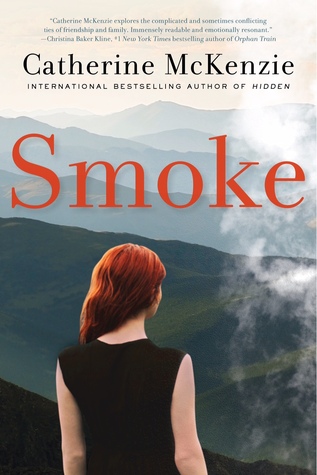 I’m usually a fan of Catherine McKenzie’s work, but try as I might, I just could not get into this book. The subject matter is a bit more sombre than what my previous McKenzie reads — a wildfire threatens a small community, and the story focuses on two women who live in that town. Elizabeth is an arson investigator who has been tasked with finding out how this fire started, and her ex-friend Mindy is drawn to help a man who has lost his home to the fire. The man also happens to be Elizabeth’s chief suspect, and the story presents a mixture of mystery as to how the fire started, and the various domestic dramas of Elizabeth and Mindy’s families and their community.

 Literary Treats