 Jerry Grey, a crime fiction writer with Alzheimer’s, is convinced that the murders he wrote about are real, and that he is the one who committed them. The plot thickens when he learns of other murders not in his novels, ones he may have committed and forgotten about. Is Jerry a killer? Is he guilty of the murders he remembers doing, those he doesn’t remember at all, and those with victims he doesn’t even recognize? When he can’t even trust his own memory, how can he tell what is and isn’t real?
Paul Cleave’s Trust No One is a fantastic page turner that keeps you guessing and second-guessing yourself throughout. We see the story mostly through Jerry’s eyes, and so end up as uncertain as he is about what actually did happen. There’s an added layer of complexity with Jerry’s writer persona Henry Cutter, who isn’t a pseudonym so much as a frame of mind Jerry puts on when he writes his crime novels. The book includes excerpts from Jerry’s journal, chronicling events since he learned of his diagnosis, and whenever a situation gets too emotional, Jerry copes by turning the pen over to Henry. Is it possible that Jerry doesn’t remember the murders because it is actually Henry committing them? Midway through the book, a friend of Jerry’s named Hans steps in to help Jerry find the truth, and I was so caught up in the confusion around Henry’s potential role in the murders that I wondered if Hans was even real, or if he was simply another personality in Jerry’s psyche. (Jerry’s wife mentions not trusting Hans, but never actually talks to him directly.) We’re so entrenched in Jerry’s head that we experience how confusing his reality is, and it’s difficult not to slip into the paranoia and distrust Jerry feels towards everything and everyone around him. To me, that’s the sign of a great thriller, and kudos to Cleave for creating that effect.
The major hiccup for me was the ending, which confused me with all the big reveals. I’m a bit unclear about the motive and logistics behind some of the murders, and about whether or not one of the murders was a pure red herring or actually had a connection. It felt like there were so many twists and turns that they didn’t all quite fit neatly into the truth. The final chapter felt unsatisfying, though inevitable, and honestly I wish some of the characters (the police, the neighbour, the care facility staff) showed a bit more smarts throughout the novel than they actually did.
Trust No One is a heckuva thriller to dive into and immerse yourself in. Set aside a few hours to delve into Jerry Grey’s world and enjoy the ride.
+
Thank you to Simon and Schuster Canada for a (signed!) copy of this book in exchange for an honest review.
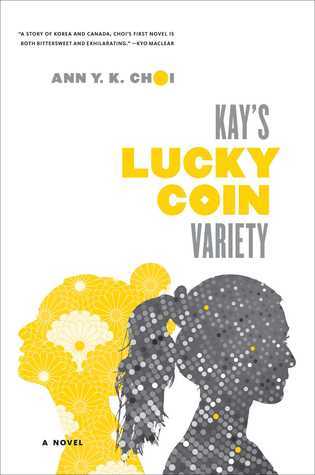 Korean-Canadian teenager Mary is tired of having to manage her family’s convenience store. Part of her wants nothing more than to be modern and Canadian, but another part of her is unable to fully leave behind the expectations of her traditional Korean family. This dilemma plays out in different ways: she uses the name Mary but can’t help that her parents sometimes call her by her Korean birth name Yu-Rhee. She is in love with her English teacher, but her parents want her to set her up with a Korean boy named Joon-Ho. There’s also the unspoken family secret about her mother’s estranged sister, and how that may tie in to Mary’s own struggle.
 Literary Treats