Review | Lost Immunity, by Daniel Kalla

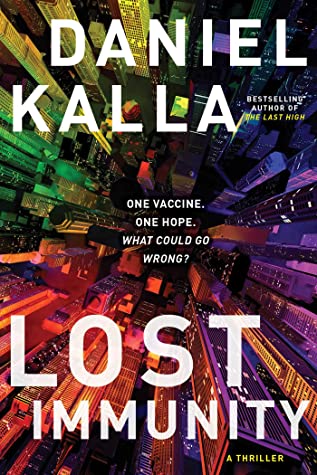
LostImmunityCoverYou’d think that the last book I’d want to read while still in the thick of the COVID-19 pandemic is one about the next big outbreak. But here’s the wonderful appeal of genre fiction, and the reason I’ve been reading so much romance, mysteries and thrillers in the past year: you know how it’s going to end. You won’t know the specifics, and the best stories keep you on tenterhooks throughout, but you know that if you read a romance, the couple will end up together; if you read a mystery, the bad guy will be revealed by the end; and if you read a thriller, the situation will have a resolution.

And that’s why Lost Immunity, by doctor-author Daniel Kalla, is the perfect comfort read for these times. Unlike the current real world COVID-19 pandemic, where I can only wait my turn for the vaccine, and watch helplessly as new, more contagious variants appear, Kalla’s thriller gives me a chance to live vicariously through Seattle’s chief public health officer Lisa Dyer, who is at the forefront of stopping the pandemic in her fictional universe. 

Kalla’s story takes place post-COVID-19, when a meningitis outbreak at a Bible camp results in the deaths of teenagers, and reveals a deadly, highly contagious strain of the disease. Dyer responds swiftly, negotiating the rapid approval of a vaccine on the verge of Phase 4 testing in Iceland, where a similar pandemic had recently been recorded and contained, inoculating campers and their families, and setting up mass immunization clinics around Seattle. She deals with corporate bureaucracy and anti-vaxxers (apparently ‘vaccine hesitant’ is their preferred term), led by a naturopath with an autistic son and a nurse girlfriend working at one of Dyer’s clinics. And she also contends with her own anti-vax family, which becomes rather urgent when the contagion spreads to younger children and Dyer’s own six-year-old niece is endangered. 

Watching Dyer in action, along with Nathan and Fiona from the vaccine development team, is comforting. They’re up against a scary disease, and working hard against time, but early clinical trials have proven the vaccine effective, and despite the urgency of the events, the reader never truly feels the outbreak is out of their control. Perhaps most comforting is that, unlike the current pandemic, Kalla sets his thriller up with a bad guy, someone intent on tampering with the vaccinations, and whose perspective we see in chapter interludes. The results of this bad guy’s plan becomes clear when some of the vaccinated teens fall ill with a really serious, potentially deadly, condition, and while doctors conclude it’s less a side effect than a random, unexpected occurrence (I forgot the technical term they used), the occurrence is still statistically relevant enough to jeopardize the plan for widespread vaccination.

The bad guy’s identity and motives are sadder than I expected, but their very existence is, to me, a comfort. It’s much easier to conceive of a bad guy being stopped than it is to control a worldwide pandemic, and while a similar situation playing out in real life would be terrifying and infuriating, Kalla’s thriller is comfortingly familiar.

I loved this book. Kalla’s writing is crisp, and his pacing brisk. He creates characters we care about: from Fiona the grieving widow, to Lisa’s husband genuinely trying to fix their troubled marriage, to Lisa’s mentor Angela who battled COVID-19 and is now battling cancer, and even to Lisa’s anti-vax sister, who is forced to reexamine her beliefs when her daughter is in danger. His story may be a bit too much, too soon for people on the frontlines of battling the COVID-19 pandemic. But at least for those of us fortunate enough to be able to work from home, and still waiting for a be-all, end-all COVID-19 solution that seems far too slow in coming, Lost Immunity is an entertaining and comforting alternate reality, where outbreaks can be contained, science wins over politics (the government is remarkably absent from this novel, which is unrealistic, but I personally didn’t mind), and where the villain is an individual / group of individuals rather than a virus we can neither see nor control.

+

Thank you to Simon and Schuster Canada for an egalley of this book in exchange for an honest review.
Review | The Girls Are All So Nice Here, by Laurie Elizabeth Flynn

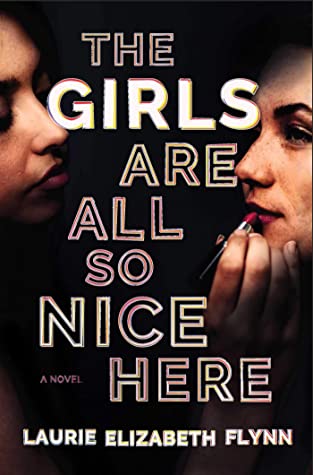
TheGirlsAreAllSoNiceHereCover“The girls are all so nice here,” Wesleyan University students write in their letters home to their families. And it’s certainly true for some of the girls, who do form lifelong friendships and look out for each other. But it’s certainly not the case for the novel‘s narrator Ambrosia “Amb” Wellington, whose desperation to escape her small town roots leads her to team up with Sloane “Sully” Sullivan, a cruel girl who plays with her classmates’ desires and weak points for her own amusement.

Their friendship’s schemes come to a head when Amb has a meet-cute with Kevin, the long-time boyfriend of Amb’s too-nice, too-trusting roommate Flora. Amb decides she and Kevin are better suited for each other, and Sully helps her plan how to win him for herself. Later in the novel, Amb reflects,

 Because it was never just about the boy. It was about the girl standing in the way of the boy. Maybe it had been about her the entire time. [66%]

Indeed, Amb’s fighting for Kevin has less to do with her actual attraction for the boy than with her desire to tear Flora down for being too perfect. The scheme goes horribly, tragically wrong. Fast forward to Amb and Sully’s ten-year college reunion, and an invitation to the reunion comes with the mysterious card in the mail that says “You need to come. We need to talk about what we did that night.” The novel is told in alternating chapters, from Amb’s time in college and her time at the ten-year reunion with her husband Adrian, both storylines coming to a head with a reckoning for what Amb and Sully did all those years before.

The Girls Are All So Nice Here is dark, and not in a gleeful, Gone Girl kind of way, where the horrible heroine is so charismatic that you can’t help but be drawn into her orbit. Rather, the novel just feels bleak, Amb’s downward spiral in college, from spite to cruelty to whatever lies beyond that, is hard to stomach. Her friendship with Sully is just plain toxic, and even though we’re in Amb’s head for pretty much the entire novel, it’s hard to truly feel sympathy for her.

That being said, it’s hard to wish for her to be punished either. The author sows just enough doubt throughout the novel that we don’t actually find out what happened until later in the book, and even then, it’s tough to know just how complicit Amb actually is in what happened. Her present-day struggles with her husband Adrian straddles an equally delicate line where she’s so miserable in her life that it’s hard to hate her, but Adrian’s also so nice and she’s treating him so shoddily that it’s hard to sympathize with her either.

I read the book pretty quickly. It’s a taut, exciting page turner, and the mysteries, with all the twists, turns, and revelations, kept me hooked from beginning to end. Flynn is a good writer, and there’s no doubt she crafted a really good thriller.

But the book is bleak. We do get a big reveal at the end, and a kind of justice, but by that point, all the major players are just so toxic and consumed by hatred that it’s hard to cheer them on, or feel any sort of release.

Amb’s roommate Flora is depicted as a too-sweet, too-nice person who wholeheartedly trusts people and considers Amb her best friend, despite all the crap Amb says and does behind her back. In a way, she is the nicest of the girls, and there are parts where the book seems to show us that Amb is wrong in her assessment of Flora. Despite her niceness, Flora is a regular girl, not some perfect paragon, and her kindness means something important to their other classmates. It’s what many of the other characters seem to believe, and certainly what I want to hold on to.

But ultimately, and to me, sadly, the book seems to embrace Amb and Sully’s more cynical outlook of the world. “She’ll have me to help her grow the armor she’ll need,” a character thinks about a baby girl at one point in the novel. “I’ll make damn sure she wears it.” It’s a heart-breaking sentiment to have to think about a three-month-old child, but that’s the point the book seems to hammer into us throughout, and the thought it leaves behind when we turn the final page.

It’s a good book. Just: take some time to care for yourself after reading it.

+

Thank you to Simon and Schuster Canada for an egalley of this book in exchange for an honest review.

Review | You Have a Match, by Emma Lord

YouHaveAMatchCoverThe Parent Trap with fewer hijinks and more teen angst, You Have a Match is ultimately a sweet, feel-good book about sisterhood and friendship. When a mail-in DNA test reveals that avid photographer Abby Day and Instagram influencer Savvy Tully are sisters, both teens are understandably upset that their families have lied to them all their lives. Family photos reveal that Savvy’s mom used to be friends with Abby’s parents, and the girls decide to go to the same summer camp to get to know each other better and try to suss out the truth.

I love the relationship between Abby and Savvy, and the way their sisterly bond developed over the novel. Abby’s 17 and Savvy’s 18, which means both girls have almost two decades of trying (and failing) to live up to parental expectations to fuel a sibling rivalry. The novel is told through Abby’s perspective, so we get a strong sense of how much pressure she feels from her parents to improve her failing grades, and how little she feels they care about her photography. Her jealousy over Savvy — by all appearances the rule-abiding, academically inclined daughter her parents have always wanted — is relatable, and it isn’t until later in the book that we learn Savvy has her own insecurities about living up to her parents’ expectations for her.

One of my favourite passages is from when Abby realizes she no longer feels weird hearing Savvy refer to her as ‘sister’:

Maybe it’s hearing it like this, mid-rant with a tinge of annoyance, that finally makes it fit — she throws out the word sister like I throw out the word brother, with the carelessness of someone who’s allowed to be careless because they know that sister or brother isn’t going anywhere. [79%]

I love this, because it encapsulates so perfectly the secret ingredient that signifies the deepest relationship: the ability to be careless because you know the other person is always going to be there. What better way to sum up sisterhood?

The novel also has a couple of best friend / mutual pining type romances that were sweet, but not as prominent a feature of the story as I’d expected them to be. There was also a couple random attempts at love triangles that, to me, felt shoehorned in, and weren’t really necessary. And there’s a rather selfish act done by one of the side characters to their two best friends, which I thought should have been dealt with a bit more than it was. (We see this character apologize to one of the friends, and that friend accept the apology, but given what was done, I feel like bringing all three friends together to hash it out would have been more fitting, and a more meaningful apology.)

Beyond that, I love the characters of Leo and Mickey, who are both Filipino, and both avid chefs. Leo and his bio-sister Carla are adopted, and it’s Leo’s search for his birth family that sends Abby to doing the DNA test in the first place. Leo’s DNA test is a bust, but he manages to find family anyway with Mickey and her parents and cousins, which was just really sweet. I love how Leo and Mickey bond over food, and particularly Mickey’s skill at cooking Filipino dishes (her parents own a restaurant). There’s a fun scene where Mickey’s cousins teach Leo Tagalog and trick him into saying “eat shit” instead of “good morning”. It threw me off at first, because the Tagalog phrase used was a literal translation of “eat shit” instead of an actual Tagalog colloquialism. But on the other hand, I can also imagine kids doing it as a prank, since the joke isn’t to get Leo to actually curse but to say something silly.

I also love the Filipino food featured! Leo and Mickey cook up dishes like turon, pochero, and mechado, which I absolutely love, because these aren’t dishes I see often in North American media. The few times I’ve seen Filipino food onscreen or on the page, it’s typically lumpia or adobo, so the fact that Leo and Mickey make other dishes got me excited. That being said, Leo put crushed Hot Cheetos into the mechado, which okay, gives it a nice kick, and I appreciate that the author did put thought into the flavour and colour of the dish. But also: as big a fan I am of Leo himself, I’m less keen on his cooking. 🙂 

+

Thank you to Raincoast Books for an egalley of this book in exchange for an honest review.