
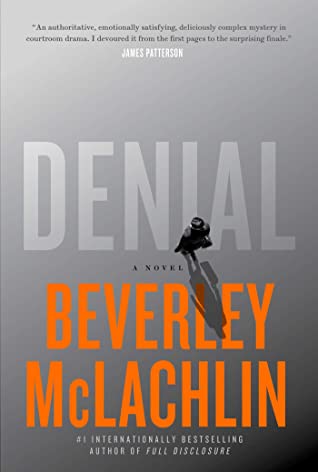
Review | Denial, by Beverley McLachlin

DenialCoverI love legal thrillers — John Grisham was my entry into adult novels — so when I saw that a former Chief Justice of Canada had written one, I was eager to check it out.

Criminal defense lawyer Jilly Truitt is hired to defend Vera Quentin, a woman accused of killing her chronically ill mother. Vera’s mom is on record as having requested medically assisted death from her daughter multiple times, and the general consensus is that Vera finally gave in. Vera’s husband thinks she should just go for a plea deal, but Vera refuses to confess to the crime.

As a legal thriller, Denial is a solid novel. The court case at the core of the story was interesting, and the author’s experience in the courtroom offers interesting glimpses into how court cases unfold in Canada. I also like the insights into lawyers’ strategies, and how moments that, to my layperson brain, seemed fairly innocuous, may actually impact legal matters. The mystery itself was also nice and twisty. The reveals, as they unfolded, took me by surprise, and it was nice to look back at the end, and see events with the truth in mind.

That being said, I found the writing a bit dry, and as much as I liked the glimpses into the Canadian legal system during the courtroom scenes, the book never quite hooked me. Part of it was that there was too much going on beyond the main story, but little room to establish the emotional heft necessary to make these subplots mean anything. I was honestly surprised to find out that this was only the second novel in the Jilly Truitt series, since these subplots and their respective payoffs all felt like the culmination of multiple novels’ worth of build-up.

We get a glimpse of some of the other cases that Jilly’s working on, and how they intersect with her personal life in some significant ways. There are also some truly dramatic moments that would create lasting impact on Jilly’s life. But while I understood on an intellectual level why these storylines are urgent, they never quite pulled me in. Which is a shame, because I think there’s rich material in the storyline about Jilly’s second chance romance, and also in the drama between her and the prosecutor, which is tangentially connected to a past story about her biological father. There was also a subplot about a criminal Jilly defended, and a young woman in danger, which keeps Jilly up at night, and also intersects tangentially with the central case because of its timing. All of this has the potential to be fascinating, but the execution fell flat for me.

With the central case, I also found the focus on denial to be somewhat tiresome after a while. Jilly muses several times about the possibility that Vera is in denial about having killed her mom, but that felt thin to me. Why jump through so many psychological hoops to come up with the possibility that Vera’s in deep denial, when there are other, easier, and more logical conclusions to draw? While I can appreciate that Jilly’s job does require her to jump through all those mental hoops, it just felt implausible, and it was a struggle to keep suspending disbelief just to stay in sync with the Jilly’s mindset. All to say — denial as a motif felt like a stretch to me, and having it come up so often felt forced.

Denial unfortunately fell flat for me, but I did enjoy the glimpse into the Canadian legal system, and Canadian courtrooms. And like I said, I didn’t predict the big reveal behind the crime, and, while I wish the novel had delved a bit more into the complexity of the ethics around medical assistance in dying, I liked that it tackled such a complex topic in the first place.

+

Thank you to Simon and Schuster Canada for an e-galley in exchange for an honest review.
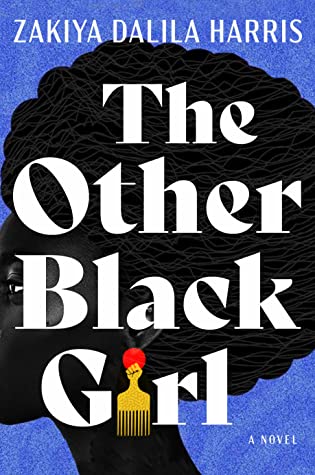
Review | The Other Black Girl, by Zakiya Dalila Harris

OtherBlackGirlBrilliant book. Like the best kind of horror, The Other Black Girl takes what may be too big for words and turns it tangible. I’m not Black and can’t speak to how this will resonate with Black readers, but as an Asian woman working in a mostly-white arts and culture sector, I related hard to Nella’s need to play the game in order to succeed, while still staying out and proud about her Blackness.
The author does a good job in exploring the various ways Black women need to compromise just to survive in the workplace, which all seem miniscule at first but add up. Nella’s epiphany at the end hits hard, particularly in how it extends far beyond the fantastical horror elements that frame the story.

There’s a great passage where Hazel is massaging conditioner into Nella’s hair. The sensation reminds Nella of her mom doing the same to her as a child, and she muses on how such moments centered on hair are unique to Black mothers and daughters. The significance that hair plays in the story therefore takes on even deeper resonance. And if it hit me hard as an Asian woman, I can only imagine how much more it would strike Black readers who may have similar associations from childhood.

The only snag for me is that I wish the horror subplot had been fleshed out more. Without giving too much away… Who started it? How far does it extend? What’s the resistance group’s long-term game plan? And the reveal about a powerful white person involved – what’s their game plan? I feel like there are all these loose threads that I wanted to know more about, but just as that part of the novel’s world began expanding, the story narrows back towards its ending.

That being said, the ending still packs an emotional punch, and left me, at least, troubled and thoughtful.

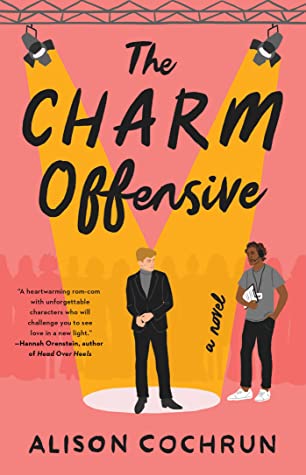
Review | The Charm Offensive, by Ashley Cochrun

CharmOffensiveThe Charm Offensive is an adorable, feel-good romance that invites us to expand our notions of happily ever after. More, it invites us to dare to dream of achieving it for ourselves, regardless of the cis-heteronormative, conventionally ‘attractive’, and white ‘ideals’ often touted on mainstream media.

Ever since getting hooked on reality dating show Ever After (a very thinly veiled stand-in for The Bachelor) as a child, Dev Deshpande has believed in fairy tale romance. He gets his dream job of actually working on the show, but after breaking up with his boyfriend of six years, Dev has come to accept that a fairy tale romance may not be meant for him. This season’s prince, tech wunderkind Charlie Winshaw, is more anxious and awkward than charming. He joins the show to rehabilitate his professional image, but physically recoils whenever a contestant tries to touch him. As one of the show’s handlers, it’s Dev’s job to turn Charlie into the kind of prince viewers will swoon over.

From the moment Dev opens the door to Charlie’s limo, and Charlie literally comes tumbling out to land at Dev’s feet, it’s obvious where the story is going, and it’s an absolute delight to follow Dev and Charlie on their journey. There’s even a fun meta-wink at the audience when Dev asks his fellow producer Jules to take Charlie on a pretend-date to make him more comfortable around the contestants, and Jules jokes that because she isn’t hot, rom com convention dictates that Charlie will likely fall in love with her instead. To head off that risk, Dev takes Charlie on the pretend date instead, and as they get to know each other over a 1500-piece puzzle and the sci fi show The Expanse, Charlie begins to realize why he isn’t at all attracted to any of the beautiful women vying for his affections.

Dev and Charlie’s romance is tender, slow burn, and filled with all the feels. I absolutely love how their mental health conditions come into play, and how part of their romance involves how much they give each other the space and understanding to be fully themselves. I also love how much they push each other to be better — Dev by encouraging Charlie to step out of his comfort zone and actually let loose once in a while, and Charlie by calling Dev out on how he loves the idea of love but really pushes away the real work and risk of actually being in love. By working with and through each other’s discomfort, they give each other the support they need to grow as individuals. And the ultimate message — that you’re worthy of love no matter how much family, friends, and society may tell you otherwise — is beautiful.

I also appreciate the diversity of approaches to, and experiences of, love represented amongst the side characters. Even purported ‘villains’ like Dev’s ex-boyfriend and the contestant viewers will love to hate are treated sympathetically, and provided with enough complexity in their motivations that they’re not truly evil. That being said, the novel does have its full-out villains — Charlie’s ex-business partner, who stigmatizes Charlie’s mental health needs, and the Ever After showrunner, who takes a narrow, homophobic approach in maintaining a particular version of a happy ending for the show. One can perhaps explore sympathetic motivations for these characters as well, and their need to conform in order to achieve success, but the novel deliberately withholds its sympathy. In doing so, its message is firm: intolerance is intolerable. The ways in which this ultimately plays out, particularly for Ever After, is perhaps fairy tale-ish in its improbability, but it’s certainly a happily ever after to aspire towards, and one can only hope that mainstream media is indeed beginning to catch up.

Overall, this is a beautiful and sweet fairy tale of a love story, that is deliberate about incorporating into the fairy tale realities such as mental health, uncertainty about where one fits on the LGBTQ2SIA+ spectrum, the social stigma that is often encountered with both, and the recognition that such stigma hits particularly hard for women and BIPOC folks.

+

Thank you to Simon and Schuster Canada for an e-galley of this book in exchange for an honest review.