
Review | Greenwich Park, by Katherine Faulkner

GreenwichParkWhen Helen meets Rachel at a pre-natal class, the two women strike an immediate friendship. Except the friendship seems much stronger on Rachel’s end, and even when Helen tries to set stricter boundaries, Rachel somehow always seems to be where Helen is. Before Helen realizes it, Rachel’s staying over at her house, and finagling invitations to various family events, and Helen’s beginning to suspect that there’s more to Rachel’s interest in her than she realizes.

Greenwich Park has an interesting hook, and a big reveal with a villain and a motive I admit I didn’t see coming. But overall, I found it more slow-moving and less thrilling than I anticipated. It also required major suspensions of disbelief — like, why on earth would an adult woman like Helen let Rachel take over her life so easily? Or, even if I could accept that Helen was really that spineless, why on earth didn’t she ask her sister-in-law Serena, or her other brother’s girlfriend Katie (the two other narrators in this novel) for help in setting boundaries? As good as Rachel was at manipulating Helen’s emotions, she was in many respects an unpleasant, stalkerish kind of person, and it’s hard to believe a woman with such a solid support network would be so unable to keep her away.

There’s also a subplot about someone constantly calling Helen about a mortgage she’d never actually applied for. Upon her husband’s advice, Helen mostly just dismissed it as telemarketing, at least until something happens super late in the book that leads her to call her financial adviser for, well, advice. That all ties into her inability to set boundaries, but I don’t understand why she wouldn’t have blocked the person’s number in the first place. Or tracked down the company and reported them for unsavoury business practices. Or, heck, even called her financial adviser earlier on, since it was causing her so much stress. And on the flip side, if the call was legit, why wouldn’t the company have conducted an investigation as to why the person who’d supposedly filed for the mortgage was now denying all knowledge of it?

The novel also had a bunch of plot threads — some red herrings, and some actual clues — that often felt semi-half-baked for most of the story. For example, Helen finds a note in her brother’s bathroom that makes her suspect Rory is cheating on Serena. We get chapters from Serena’s point of view, but little actual insight into her marriage to Rory, so that plot thread just kinda lies there without really going anywhere. It does end up having some significance at the end, but overall, it just felt under-utilized as either red herring or clue.

Similarly, there was a big deal about how Katie and Helen’s brother Charlie rekindling their relationship, and some hint at tension between Katie and Helen. But most of Katie’s chapters were about a rape trial she covered as a reporter, and about her eventual investigation into the mystery surrounding Rachel. So again, while Katie does play a large part in the mystery itself, she seems underdeveloped as a character. And apart from a minuscule reference to her being jealous about one of Charlie’s exes, I don’t think the story would have changed at all if she and Charlie weren’t romantically involved, either in the past or in the story’s present.

The story does pick up near the end, and as I said, the big reveal was an interesting surprise. I just wish the build-up had been more deeply developed.

+

Thank you to Simon Schuster Canada for an egalley of this book in exchange for an honest review.
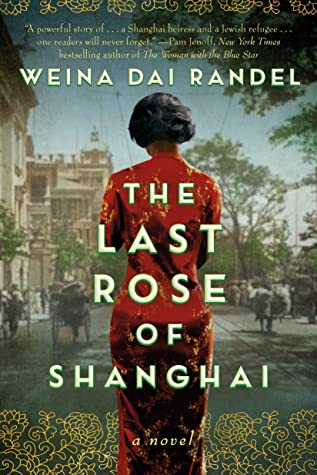
Review | The Last Rose of Shanghai, by Weina Dai Randel

LastRoseOfShanghaiEven before I turned the first page, I was already in love with this novel. As a book blogger, I must have seen one or two World War II novels with each promo email from a publisher. And I like them well enough; I enjoy historical fiction, and losing myself in a different place and time. Still, when this caught my eye in the Thomas Allen catalogue, my immediate thought was: finally.
In the midst of shelves full of World War II stories about white people in Europe and North America, finally, here’s one set in China. Finally, here’s one that stars a Chinese woman instead of a white one with blond hair and blue eyes. Finally, here’s one that talks about the Japanese occupation of China, and the intra-Asian racism and cruelty during the war, alongside the horrors of the Nazi regime.

Finally, here’s a World War II novel that talks about that period of history in my part of the world. The publisher’s choice of cover art is, to me, just as powerful. I’ve seen dozens of World War II novels with the brave heroine standing in the centre, her back turned to the viewer. But I can’t remember the last one I’ve seen where the woman wasn’t white or blond. Covers of Asian historical novels published in North America seem to have a certain aesthetic: East Asian women with partially concealed faces, pastel-coloured flower petals, possibly some soft lighting. With this cover, the book seems to declare that it’s not so much an “Asian historical novel” as it is a “World War II” novel, that has an Asian lead and an Asian setting. It’s a powerful, long overdue, message, and one I hope to see a lot more of.

The Last Rose of Shanghai is about the forbidden love between Aiyi Shao, a wealthy heiress, nightclub owner, and business mogul in Shanghai, and Ernest Reismann, a penniless Jewish refugee from Germany, whom Aiyi hires to play the piano at her club. The romance between them is sweet: I love how much they care for — and take care of — each other. And while the obstacles between them did get a bit much towards the end (a scene featuring a tank stretched the limits of even my suspension of disbelief), I do like how the core reasons they couldn’t be together were very true to their characters’ unique circumstances.

For example, there’s the usual barrier of Aiyi being engaged to another man. But more important than that is the fact that Ernest is also on the run from Japanese soldiers, who suspect him of killing one of their own, and the powerful Japanese commander has threatened to shut down Aiyi’s beloved nightclub unless she turns him in. Thus, Aiyi’s motivation for staying away from Ernest has only a bit to do with the usual barriers of family honour and duty, and much more to do with who she is as a person who values her financial independence, and takes great pride in what she has accomplished with her night club.

And from Ernest’s perspective, there’s all the usual stuff about how he can’t really offer Aiyi much in terms of a stable future, but even more central to his character is his devotion to his younger sister, and his desire to give her a good life despite their current circumstances. His relationships with Aiyi and with his sister come to a head in a single, tragic moment, and the resulting rift between him and Aiyi afterwards feels both heartbreaking and totally understandable.

In fact, I’d say that it’s Aiyi and Ernest’s own story arcs that really make the novel shine, even more than the romance between them. The love story aspect began to feel a bit episodic after a while, when just as things seem headed for a happy resolution, something new happens that keeps them apart again. After a while, the obstacles themselves began to feel a bit convenient, like a TV writer stretching out the story over an entire season’s worth of episodes. The ending to this plot line, with the big reveal in the final few chapters, was satisfying, though I wish there had been more of an emotional payoff.

In contrast, Aiyi and Ernest’s respective story arcs are really strong. I loved watching Aiyi fight to maintain her power and financial independence at a time when women still dealt with bound feet and social expectations about their role being limited to the home. I enjoyed watching her negotiate with the powerful Jewish magnate Sassoon, and seeing her outwit Japanese soldiers and her domineering oldest brother, all to hold on to the business she’d worked so hard to build. I was especially captivated by the tension between how much she was willing to sacrifice for Ernest’s sake, because of her love for him, and how much she’d refuse to give up to ensure her own future. I found Aiyi to be a complex, compelling heroine, and I was totally into seeing her story unfold.

Ernest, as well, is a sympathetic character. From the tragic backstory behind the scar on his right hand, to his determination to play through a more recent injury just to keep his sister in school, he’s very much a heroic figure. Perhaps most powerful for me was a scene where his sister’s host family — who housed her while she went to school — decided to go back to America. Their departure forced Ernest to make a near-impossible choice about his family’s future, and while the scene where Ernest makes that decision is probably the most heartbreaking in the entire novel, the aftermath of the decision he makes imbues the scene with even more layers of emotion. It’s a beautiful moment, and one that both shows the kind of person Ernest is, and shapes the kind of person he becomes.

+

Thank you to Thomas Allen Ltd for a copy of this book in exchange for an honest review.

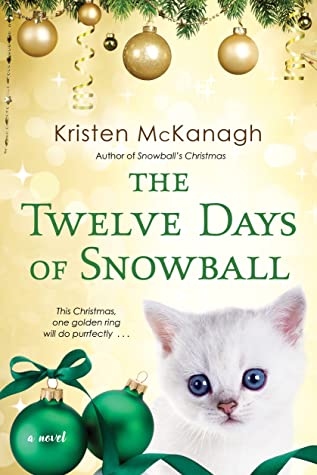
Review | The Twelve Days of Snowball, by Kristen McKanagh

TwelveDaysSnowballI was so prepared to fall absolutely in love with this holiday romance. Small town scene, likeable leads, an absolutely darling matchmaking cat, and a series of cute romantic scenes structured around the 12 Days of Christmas — it has a lot of elements I love! The opening scene even featured a starring role for Snowball the cat, and a daring rescue attempt by the hero, Daniel, which goes hilariously wrong in front of the heroine, Sophie. From that first scene, I was hooked, and ready to lose myself in this romance.

Unfortunately, the story somewhat fizzled for me afterwards, and didn’t quite manage to hook me until about the halfway point. I can’t quite pinpoint why, and am open to the possibility that it’s simply a case of wrong timing for me, but it took me over a month to finish this, which for an animal-themed holiday romance is surprising.

I do like the leads, and I do buy the conflict between them — Sophie’s the new manager of the Weber Haus Inn, and Daniel owns the construction company doing renovations before Christmas. Both are take-charge Type A personalities who care deeply about their jobs but suck at collaborating. So when they have to work together — or at least around each other — to get the inn ready for the Christmas Market, they naturally butt heads.

I also like that Sophie’s backstory totally explains why she’s so prickly: her ex-boyfriend / former co-worker used her ideas to take her dream promotion for himself, so she naturally bristles when Daniel inadvertently circumvents her authority as manager. Daniel’s background is a little less clear-cut — he’s guilty over being unable to save his brother from dying when they were kids, so he now wants to solve all the problems he can. Perhaps I missed why he feels so responsible for his brother’s death? Either way, it’s a sad backstory, but the connection to his behaviour wasn’t quite as clear. I do also like the communication between the leads. They tell each other clearly what their professional boundaries are, and when the other has stepped over the line. And I love how the first scene with rescuing Snowball after the cat gets stuck chasing a partridge up a pear tree turns into an inside joke between Sophie and Daniel. Their banter about completing the 12 days of Christmas could have easily tipped over into too-cutesy territory, but the author makes it work. The scene with the five gold rings was super sweet, and by the time we got to five gold rings, I was eager to find out how the rest of the days were going to play out.

And of course, Snowball is an absolute darling from beginning to end. I absolutely love how she starts out loving Sophie and hating Daniel, and then reluctantly decides to play matchmaker to make them both happy. I also love how she struts around the inn like she owns the place, and how she apologizes with the cutest meows when one of her matchmaking schemes goes horribly awry.

Still, overall, I didn’t fall as much in love with this as I thought I would. There’s a minor plot thread about a business rival of Daniel’s that never really went anywhere — perhaps that rival turns out to be a major villain who’ll re-appear throughout the series before getting his just desserts? And there’s a minor plot thread involving a snobby mean girl who’s totally flirting it up with Daniel, which mostly just annoyed me. To be fair, I’m not a huge fan of stereotypical mean girl rivals in general — I prefer when the romantic rivals are also decent people, just not the right fit for the hero — and particularly when ‘mean girl’ is their only defining characteristic. Unlike even Sophie’s mean ex, Gisele barely even gets a backstory or motivation beyond just wanting to date Daniel.

Overall, this book was okay. I do think it’ll make a great Hallmark/Netflix holiday romance — the medium will move things along more quickly, the cute Christmassy encounters around the 12 Days of Christmas will play beautifully on screen, and of course, Snowball will be absolutely adorable on film.

+

Thank you to Kensington Books for an e-galley of this book in exchange for an honest review.