Review | With Prejudice, by Robin Peguero

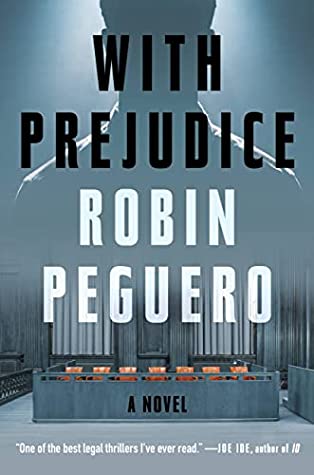
WithPrejudiceWith Prejudice is a complex legal thriller about a murder trial: Gabriel Soto is accused of murdering Melina Mora. Her hair is found in his home, traces of bleach stain his floors, and a witness says she saw them arguing at a bar the evening Melina was killed. Through the trial, various bits of evidence collide with the prejudices of the people involved, and Peguero takes us into the minds and hearts of witnesses, jury members, even the judge and lawyers. Deliberately, Gabriel’s mind remains obscured until the very end, leaving us to deliberate along with the jury whether or not Gabriel is indeed guilty of this crime.

The courtroom drama was fascinating. I loved seeing Sandy and Jordan butt heads, and I especially love Sandy’s strategic choice of the soft-spoken, rumpled Nate as her second chair. I would totally read a sequel starring Nate on a case. Peguero’s background as a prosecutor is evident, with the various legal details dropped in, and the way the reasoning behind the judge’s decisions are outlined.

However, i found the story much weaker outside the courtroom. The detours into the juries’ stories was confusing and often felt unnecessary. Peguero sometimes slips into a somewhat florid narration in these scenes, and with so many side characters who matter only for a chapter or two, it takes a while to figure out what’s going on and how it relates to the story. Worse, Peguero begins these chapters with the side character’s real name, and their lives outside the trial, only revealing them to be juror number one or whatnot after the detour into their past is over, which often leaves me wondering for most of the chapter why on earth I should care about this random person. These bits of their past are interesting insofar as they show their biases, but a late reveal in the novel makes so much of this part of it moot for the purposes of the main plot. Peguero also switches between the juror’s name and their number throughout the chapters, which just adds to the confusion.

The side stories about the lawyers and the judges are also underdeveloped. Sandy’s relationship with a reporter is interesting, but then it’s mostly shunted aside for the trial. Jordan’s depiction as a vain pretty-boy with a gorgeous wife holds promise, but we never (or maybe only briefly?) meet this wife or his family. And the second chairs — Nate, whom I found most fascinating as the quiet man who’s often underestimated, and Jordan’s second chair, a woman fresh out of law school who makes an intriguingly rookie mistake while examining a witness– aren’t even given back stories at all. The detective, Sterling, probably gets the most nuanced back story, if only because his biases are a bit harder to tease out, and when revealed, turn out to have complex reasons behind them. But in the mass of mini-glimpses into many characters’ lives, Sterling’s back story feels frustratingly underdeveloped.

Still, the courtroom drama kept me hooked, and I was ready to call this a fun, if a bit scattered at times, book. But I absolutely hated the ending, and the major reveal at around the 75% mark that led up to it. I’ll allow that the ending is (unfortunately) realistic, witnesses and evidence being as they are. I’ll also allow that Peguero set up the twist solidly — looking back, there’s no reason why things couldn’t have unfolded in that way, and Peguero used quite a few clever techniques to keep it under wraps. But as someone who was super invested in the trial and its outcome, I hated it. I didn’t get that thrill of “OMG I didn’t see that coming!” Rather, I felt cheated, and wish that things had turned out differently.

+

Thanks to HBG Canada for an e-galley in exchange for an honest review.

Review | The Change, by Kirsten Miller

TheChangeCoverThe Change is a fun, fast-paced, feminist revenge fantasy starring a trio of powerful middle-aged women. The three protagonists all came into their powers after menopause, and in a market filled with feminist fiction often starring younger women, how absolutely incredible is it to add this title to that list?!

The three protagonists are a delightful trifecta of women who’d kept quiet and ‘good’ for far too long. Nessa, a widow and former nurse, heard her first spirit when she was twelve; now that her daughters are away at college and menopause has begun, she begins to hear the voices again. Jo, a former high-powered executive with a playwright husband who supports her career, has opened up a women’s only gym called Furious Fitness, for women who want to burn off their rage through exercise. Her hot flashes turn out to be fuel for super strength, channelled through her hands. And Harriet, a former advertising director, lets her inner wild woman out when her husband leaves her for a younger woman; her neat suburban home becomes overgrown with plants, and women in the neighbourhood soon know to go to her for help with all sorts of situations.

Nessa, with her gentle nature and her subplot romance with a police detective, is the one I related to and enjoyed reading about the most. But Harriet’s experiences in advertising, where her most useful skill was getting her great ideas through by making her less talented but more powerful male colleagues think they’d come up with the ideas themselves, hit hard. One of my favourite scenes is when a former colleague begs her to lift the curse she’d put that prevented him from coming up with great ideas, and she tells him, truthfully, that there’s no curse; the great ideas were never his in the first place. He doesn’t believe her, and in the midst of the more supernatural plot points, that moment feels incredibly realistic.

Nessa, Harriet, and Jo team up when they discover the dead body of a teenage girl on a beach, and the ghosts of two other teenage girls by the water, and realize there’s a serial killer on the loose who preys on young girls. The killer’s identity is revealed fairly early on, and he is brought to justice long before the book is over, which then opens up the floor to the more important questions Miller and her characters want us to contemplate: who else is complicit in crimes such as these, and how are systems and structures set up to support these crimes going on unchecked for so long?

As a rage-fuelled revenge fantasy, The Change is both deeply satisfying and deliberately discomfiting. There were moments when I found myself thinking that Harriet, the enforcer of the trio, had gone a tad too far, that there are surely gentler ways to get her point across. And when Nessa is confronted with a choice between her police detective boyfriend’s offer of support within legal forms of justice, and Jo and Harriet’s invitation to explore quicker, more effective, yet more violent means to justice, I found myself wanting her to choose her boyfriend — not because I cared so much about the law, but because the boyfriend’s appeal to pacifism appealed to me.

The Change prompts me to reflect on my response — as women, we’re so conditioned to be gentle and soft, yet when so many young women are treated so brutally, killed, and discarded like garbage, where do we draw the line and declare that enough is enough? More importantly, how loud and forcefully are we willing to make that declaration? For Nessa, Jo, and Harriet, they’ve reached their tipping point, and taken a big, confident stride right over that line. And their story invites other women to do the same.

+

Thank you to Harper Collins Canada for an advance reading copy of this book in exchange for an honest review.

Review | Counterfeit, by Kirstin Chen

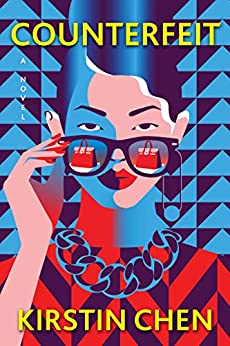
CounterfeitA pair of Chinese-American women team up to launch a manufacturing and distribution business for counterfeit luxury handbags. Counterfeit is a highly entertaining crime caper novel, filled with complex get-rich schemes, shady mob-like bosses, and a pair of anti-heroines who would fit right in with Thelma and Louise and the women of Oceans 8. I want the Netflix adaptation of this novel, and even though Ava Wong and Winnie Fang are in their 30s, I’m totally already fan casting Sandra Oh and Michelle Yeoh in this buddy dramedy. How incredible would that movie or mini-series be?!

Former corporate lawyer, wife of a wealthy doctor, and mother of a son about to begin pre-school, Ava is a fairly typical, slightly bored, suburbanite. When her old college roommate, Winnie, reappears in her life with an invitation to join her lucrative counterfeit handbag business, Ava declines at first. Until a fight leads her husband to freeze her credit cards while Ava’s in China, and smuggling counterfeit handbags seems much more appealing than admitting to her gossipy relatives that she needs help.

We learn all this from Ava herself, who, when the novel begins, is in an interrogation room telling a police detective how she managed to get roped into Winnie’s criminal enterprise. Winnie’s the mastermind whom the detective is after, yet she has gone MIA, leaving Ava behind to face the consequences. As the story unfolds, we see the scheme get more elaborate and ambitious, and the story is just an absolute delight of a crime caper romp.

I absolutely love how much Chen reclaims, challenges and subverts Asian and Asian American stereotypes, not just by presenting more nuanced depictions, but also by having her characters use these stereotypes to their advantage. For example, the stereotype of Asian women being meek, submissive, and, well, harmless, plays a key role in the success of Ava and Winnie’s tactics. In one subtle yet brilliant moment, Ava walks into a department store to request a refund on a (counterfeit) luxury handbag, and immediately heads to the white saleswoman instead of the Asian one. A story Ava tells the detective about the factory in China they use to manufacture the counterfeit bags — cramped, humid, with a net at the top of the staircase blocking the elderly workers from escaping — plays into stereotypes as well, as does Ava’s absolute horror as a woman who’d been born and raised in America, Asian heritage notwithstanding. Ava’s story includes an encounter with a tween girl with missing fingers who works at that factory, and the way that detail is subverted later in the novel is just masterfully executed.

Even the scheme at the core of this novel — counterfeit luxury goods! — is itself an industry very much associated with China. Winnie’s scheme is both realistic (in this case, there’s truth to the perception), and a sly wink at anyone who may think it’s too on-the-nose to be believable. Of all the cons they could have pulled, counterfeit handbags are probably the most obvious choice, and that makes the satire particularly incisive and effective.

+

Thank you to Harper Collins Canada for an e-galley of this book in exchange for an honest review.