
Review | Redshirts, John Scalzi

Okay, this book is just awesome. I started reading John Scalzi’s Redshirts before work one day, and almost instantly regretted my decision. Tip: Start it on a weekend, or after work, whenever you have a few free hours, because you will not want to put it down. That evening, watching me walk around with my nose stuck in this book, my sister observed that I was going through it pretty quickly. Yes I was, and it’s because, in my sister’s words, Redshirts hit all my geekspots.

I am a huge geek. I fangirl over Leonard Nimoy (Mr. Spock from Star Trek, for those who don’t know). When I saw this book in the Raincoast Books catalogue, even before reading the description, I immediately thought of Star Trek redshirts and was momentarily embarrassed that I may have confused a serious thriller with a Star Trek parody when I realized I right. Now, if like me, you know why you should never wear a red shirt on an alien planet, stop reading this review right now and find yourself a copy of this book.

Redshirts, as any self-respecting Trekkie knows, are the characters killed off before the first commercial break in the 1960s Star Trek series. Deaths usually occur when the crew beams down onto an alien planet, and they are usually pointless, put in only for some dramatic tension right before the opening credits. But what if the remaining future redshirts realize that there’s something fishy going on? What if they band together and decide to do something about it? In Redshirts, when Ensign Andrew Dahl joins the crew of the Intrepid, he finds out that a low-ranking crew member dies in every Away Mission, and that his more senior co-workers go into hiding every time a high ranking officer enters the room.

The first part of the book is a total send-up of Star Trek, and I suppose, other cheesy 60s science fiction shows. Scalzi’s observations about logical inconsistencies in Star Trek are spot-on, and he mercilessly undercuts them with biting humour yet also with an insider’s wink at the reader that belies the affection of a die-hard fan. To clarify: Redshirts is not just a Star Trek parody, in that it’s not an episode rehash with different names and caricatured details. The book is very much aware of how ridiculous some of its situations are, but there is enough underlying menace that even as we laugh, we realize how serious the situation is for the poor redshirt in it, and we genuinely want him to survive.

On an Away Mission in the first scene, Science Officer Q’eeng reveals that pulse guns are ineffective against Borgovian Land Worms, that in fact, pulse guns send them into a killing frenzy. Ensign Davis, who had just fired a pulse gun at an attacking worm, wonders why Q’eeng didn’t just reveal that very important bit of information during the mission briefing. The scene is hilarious, and we can just see it happening in a Star Trek episode, but we also can’t help but wonder why, indeed, Ensign Davis wasn’t provided with information that could save his life. Along with the hilarity comes the sobering realization that characters you come to care about are indeed treated as alien fodder. Because the story is told from the perspective of these redshirts, they become real to us, and, even as we laugh, we are struck by the unfairness of their situation.

The story takes an unexpected turn when Ensign Dahl and his friends discover the reason behind the redshirt phenomenon and make it their mission to change things. It’ll be difficult to discuss my reaction to the rest of the story without giving away any spoilers, so please excuse my vagueness. (Or, conversely, if what I write makes you guess something spoiler-y, I’m sorry — I definitely don’t want to give anything away.) Personally, with all the mystery and menace built up in the first part of the book, part of me wishes Scalzi had taken it in a different direction, a more straight up, mystery/thriller angle. That being said, I see how his choice actually makes even more sense for this story. While still keeping us on a crazy, hilarious ride, Scalzi’s twist introduces a philosophical angle, and offers us a new train of thought to ponder. I enjoyed the rest of the book — I laughed perhaps a bit less, but the plot remained compelling, and it was an interesting shift in reading experience. As with the first part, however, what kept me reading were the characters — I’d come to care for Ensign Dahl and his friends, and I wanted them to have much more of a life than redshirts usually do.

Minor quibble: You know how jokes have a point where, if you push it just that teensy bit over, it stops being funny? I personally thought Scalzi crossed that point in the last couple of chapters. He was coy enough about it, and smart enough not to belabour the point, so that it wasn’t annoying. As well, in fairness to him, it did fit with the rest of the story. Still, part of me went “meh” at that bit of development.

The novel ends with three codas. I hated the first one, mostly because if the last couple of chapters toyed with pushing the joke a bit too far, the first coda takes the joke all too seriously. I found it tiresome and just tad too self-aggrandizingly clever, and at that point, I wished the book had ended with just the novel. The next two codas, however, are brilliant. The second coda took the novel’s philosophical themes and expanded them by offering a different perspective. The “moral lesson” near the end was a bit too pat, a bit too neatly tied up, for me. It involved a message being delivered, and I wish the contents of the message were just less obvious. Still, other than that “moral lesson”, I loved the perspective provided by the second coda, and the new questions it raised.

The third and final coda, however, totally made the book for me. It took a funny, sometimes philosophical, other times exciting, novel and made it real. The characters felt real enough to care for — as I’ve said, I really wanted Ensign Dahl to change the redshirts’ fate — but the third coda took it to another level entirely. It gave a fully fleshed out story to a minor character, and in doing so, added texture and depth to the story of another secondary character in the novel proper. Definitely one of the best parts of the book.

Redshirts is as hilarious and thrilling as you would expect, but it works because Scalzi takes it far beyond that. Trekkies and fans of cheesy science fiction shows in general will find much to recognize and laugh at in this novel. Non-fans may not have as many knee-jerk laugh out loud moments, but I’d say it’s worth flipping through anyway, just to see if it’s for you. I had such a blast reading this book, and highly recommend it to fellow geeks everywhere. Trust me: it’ll hit all your geekspots.

+

Thank you to Raincoast Books for an ARC of this book in exchange for an honest review.
Thanks Mom! From a Bookworm for Life

How did you fall in love with reading? Do you remember the first book you read or the first book that was read to you? I grew up on Disney movies, and the Disney princess I’ve always identified with the most was Belle, from Beauty and the Beast. This song from the movie probably best explains why:

I don’t know if I’ve ever actually walked around with my nose literally in a book — being naturally clumsy, I’d be a hazard to everyone around if I did — but certainly, for as long as I could remember, I always had a book with me when I went out.

I can’t remember what the first book I ever read was, but I do know who to thank for my lifelong love for reading. My mom loved books. Beauty and the Beast was her favourite Disney movie, mostly because she was a major romantic at heart, but, I like to believe, also because she saw a bit of herself in Belle the bookworm.

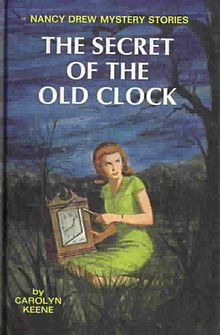
One of my favourite stories about my mom as a child had to do with Nancy Drew. Mom loved Nancy Drew, but her family couldn’t afford to buy a lot of books. She had a classmate who owned the entire Nancy Drew collection — this was back when the series only had the fifty-six yellow hardcover books — so my mom would borrow the books from her classmate. Mom would hurry to finish each book in a day, usually reading late into the night under the covers, just so she could return it to her classmate the next day and borrow the next book in the series. She then promised herself that whenever she began her own family, if she had enough money, she’d buy her own set of Nancy Drew books for her children.

Not only did Mom make sure my sister and I had the entire Nancy Drew series, she also made reading our main treat. Other families took kids to the toy store or the amusement park; Mom made an event out of going to the bookstore. We grew up in the Philippines, where we don’t have the community libraries I discovered here in Canada. So the National Bookstore branch near school became our second home. Mom became friends with the booksellers at that branch. She knew them by name and gave them presents every Christmas. It was a big chain bookstore in a bustling metropolis, and the staff changed often, but they all knew my mom, and the bookstore felt like home.

Mom encouraged me to read, and she didn’t care what I read, so long as I was reading. That’s probably why whenever I hear about schools or parent groups banning children from reading certain books, it just makes me really mad. I can’t dictate how individual parents choose to form their children’s reading habits, but I do know that if I ever have children of my own, I’ll follow my mom’s method: let the child decide what he’s old enough to read. Chances are, the books he’ll be interested in are books he’s mature enough for, and those that he finds difficult to understand, he can come to the parent for help. I remember the very first adult novel I read: John Grisham’s The Firm. I was around ten. I remember mostly being confused — how do people keep so many characters and so many stories straight? I struggled through it, mostly because I wanted to say I finished an adult novel, and that eventually led to me becoming a big Grisham fan and reading his other books. But mostly I found it confusing, and a little boring. Granted, Grisham is nowhere near as racy as other adult novels, but still, I’m grateful that my mom never interfered with my choice of reading material.

Growing up, I was probably more a Sweet Valley or Baby Sitters Club kid than a Nancy Drew one. Even with Nancy Drew, I much preferred the newer, paperback mysteries to the yellow hardbacks. My mom couldn’t understand it, of course — she thought the original series far superior. Nowadays, when I see the new, even more modernized, Nancy Drew books, I can understand how she felt. Still, perhaps it’s because of my mom that I not only grew up with memories of Nancy Drew, but I also fell in love with mysteries in general. Agatha Christie is my all-time favourite, of course, but I love so many other mystery writers, from so many mystery genres, that it’ll be impossible to list them all here. And all that, because Mom grew up loving Nancy Drew.

Mom passed away last year. Beside her grave is a little glass cabinet. It was meant to be an altar, for a crucifix and a rosary, but since it turned out to be pretty big, we had enough room to put small mementoes in as well. Among the things we placed was our copy of The Secret of the Old Clock.

My sister and I became readers because of Mom. If I ever have children, I know I want them to fall in love with reading as well. There are so many books I want to pass on to them — Lois Lowry’s The Giver, for one, and many other books that have been such a big part of my childhood. Above all, however, I definitely want to pass on the Nancy Drew series, all fifty-six of the original hardcovers. They may end up preferring whatever version of Nancy Drew is being published in their childhood (at least I very much hope there will always be new Nancy Drew books being published), but the original fifty-six are important in a way newer books won’t be. They’re a link to the past, to at least two generations of readers. Mom left behind so much more than Nancy Drew books when she passed. But a love for Nancy Drew is part of Mom’s legacy, and it’s one that I, as a lifelong bookworm, will definitely be passing on.

Review | Wayworn Wooden Floors, Mark Lavorato

There’s a reason this is my first poetry review on this blog: I don’t know much about it. I’ve studied some in school, of course, and I’ve bought a few books by poets I like (off the top of my head: Byron, Cohen, Layton and Purdy), but given a choice between prose and poetry, I almost always go for prose. So I love what Mark Lavorato says in the publisher’s page for Wayworn Wooden Floors:

But I would also love to have someone who has never bought a collection of poetry before pick it up. I would love for someone to be turned onto poetry because of it. I know that’s asking a lot. But I think that the poems throughout are really quite accessible, and for that reason, unintimidating. And I would love for that person to read Wayworn Wooden Floors, and in doing so, see that poetry — arguably the world’s oldest art form — is something that has been around forever for a reason.

Lavorato’s poetry is certainly accessible; his language is simple and straightforward. When I like poets, it’s usually because the sense of rhythm in their words is so strong that it propels me through the piece, or because their imagery is so unusual that it captures my imagination. I didn’t quite get that experience with Lavorato’s poetry — I liked his poems, but they didn’t transport me.

That being said, there are some poems and some parts of poems that really struck me. I really liked “This World,” the first poem and the source for the book’s title. “This World,” Lavorato writes, “is the sprawling attic / of an abandoned building / murmuring to its own musty heights.” The comparison appealed to the romantic and the mystery lover in me, and I love the melancholy, heavy, almost oppressive imagery — “the moon heaves,” for example, and “Wayworn wooden floors lie / as if in wait for the dust to settle.” The overall sensation is fatigue; Lavorato’s imagery calls up the notion of a world longing for release. My favourite verse:

Dried wasps coil on the windowsills,

endowed, still, with a sting

for a tidying hand.

I love that final, futile bit of defiance, and I just love the phrase “sting for a tidying hand.”

I also really liked “Maps of Antiquity,” mostly because I love the first two lines: “Back when the world had edges / and was fringed with tentative shores,” I just love the sound of those lines, the unexpected idea of the world having edges, and the idea of “tentative shores” forming a fringe. The poem goes on to a more ordinary ending, in my opinion, and so fell flat for me overall, but the beginning really stuck with me.

Finally, I also liked “Fingerpaintings,” where Lavorato seamlessly integrates into his verses lyrics from nursery rhymes. Part III for example, my favourite in this poem, begins: “It was Einstein said we’d fight / the Fourth World War with / Sticks and stones.” The section goes on to talk about war, integrating within the lines the children’s ditty “Sticks and stones will break my bones but names with never hurt me.” Other than the clever conceit of including the saying so seamlessly, there is also the irony of the line “names will never hurt me,” given the historical context of war. In World War II, for example, being called a Jew can most certainly hurt you, and on so many disturbing levels. Lavorato also includes a sly description of “that mushrooming / knowledge of perfect decimation,” clearly referring to the atomic bomb and its genesis in Einstein’s theory.

Most of the poems, however, didn’t really stand out to me. I mostly found them okay, though I fully admit people who read a lot of poetry may appreciate it better. Take for example “A Handful of Seeds.” It had a beginning that I found promising: “My father teared at movies. / His hobby, though, / was taking life.” It turns out that the speaker’s father is a hunter, until he injures his leg and makes friends with birds. It should be a touching scene, the injured hunter feeding birds seeds, but I just found it sappy. The description of birds, “Light feathered bodies / dainty with hollow bones, / hovering like spectators in a gallery” strikes me as a fairly standard description of birds. I like the unexpected metaphor in poetry, as in fiction, the phrase that makes me sit up and pay attention.

Still, it’s a beautiful book, as all Porcupine’s Quill titles are. I also like Lavorato’s idea about poetry: “I would like to impress upon readers that their lives are filled with as much poetry as any other. It is simply the magnification and the Petri dish that make it verse.” (from the publisher’s website) If you’re interested in checking out Wayworn Wooden Floors for yourself, Lavorato has a couple of upcoming appearances:

Tuesday, June 19, 6 pm
Paragraphe Librairie/Bookstore. Mark will be reading from this new collection.
Located at 2220 McGill College Avenue, Montreal

Thursday, June 21, 6 pm
Nicholas Hoare Books. Reading and Celebrating.
Located at 45 Front St. E., Toronto
www.nicholashoare.com

Want to want to win a copy of this book? I’m giving my copy to Nicholas Hoare Books to give away on or before their event with the poet. Follow them on Twitter (@NicholasHoareTO) for an upcoming contest to win the book, and drop by their event to get it signed!

+

Thank you to Porcupine’s Quill for a finished copy of this book in exchange for an honest review.