
 This is not an easy read, but it rings with truth. Trigger warnings abound, and I wouldn’t say this is a must-read as it may be too difficult for some readers, but it is an important read for anyone interested in an unflinching look at rape culture.
The story is about eighteen year old Emma O’Donovan, a a beautiful, popular Queen Bee, until she is raped at a party. She can’t remember what happened, but there are explicit photos all over Facebook, and comments about her being a slut, bitch, whore, about her “asking for it.” When charges are pressed, residents of her small Irish town are either unable to look her in the eye or are accusing her of ruining the lives of “nice boys.” Media pundits are either holding her up as a feminist icon or judging the outfits and behaviour of girls these days. In brief, it is exactly like the stories that play out all too often on the media, and all too often in many women’s lives. There are statistics about how few rapes are even reported to the police (32% according to this website, and only 7% are arrested) and how few rapists even spend a day in jail (2% according to the same website). (Probably worse, when I checked Google for that statistic, the top suggested searches included questions of how many rape accusations are false, which goes to show how much the onus of proof is placed on survivors rather than perpetrators.)
Part of me wishes Asking for It had been an upbeat, rah-rah, #IBelieveWomen type of story. I wish that Emma had railed fiercely against the crime and that Detective Olivia Benson (Mariska Hargitay’s character in Law and Order: SVU) had been in Ireland to take Emma’s case and nail those boys on all charges. But another part of me is grateful that the author has chosen to tell this story as she has. So many women don’t have an Olivia Benson to take their case, and even those who do may still not get justice.
I love how O’Neill sets up the character of Emma. Leading up to the party, she actually comes off as somewhat bitchy, making snide remarks about a friend who may be prettier and smarter than she is, stealing from another friend who’s rich, and flirting with a third friend’s boyfriend just because she could. Worse, she advises a friend not to report her own experience of sexual assault, since it’ll raise too big of a fuss, which is highly . The whole point of course is that even if you aren’t a typical “good girl,” you still weren’t “asking for it,” and Emma’s transformation after the assault is heartbreaking.
Asking for It is a stark look at an experience that is all too real and all too common. Its ending is realistic, if perhaps not entirely cathartic. Decide for yourself if you can and want to read this given the trigger warning; all I can say is that it seeks to discomfort, to make us look the reality of rape culture in the eye and refuse to look away, and in that, Louise O’Neil does an excellent job.
+
Thank you to Hachette Book Group Canada for an advance reading copy of this book in exchange for an honest review.
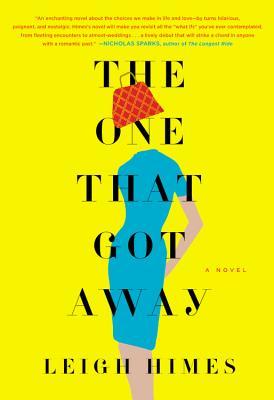 Have you ever wondered what would have happened if? For harried working mother Abbey Lahey, a tumble down a Nordstrom escalator lands her in an alternate reality, where she is the pampered wife of Alex van Holt, a handsome blue blood running for Congress. At first, she is dazzled by the closet full of designer bags, the team of stylists who keep her beautiful and well coiffed, the gold credit card and husband with washboard abs. Rather than struggling at a dead end job to make ends meet and arguing with her out-of-work landscaper husband Jimmy about whose turn it is to pick up the kids from school, she has a nanny to care for the kids, a calendar booked solid with teas and parties, and a husband who could go all the way to the White House. As she admits on a TV interview in her new life, she is living a fairy tale.
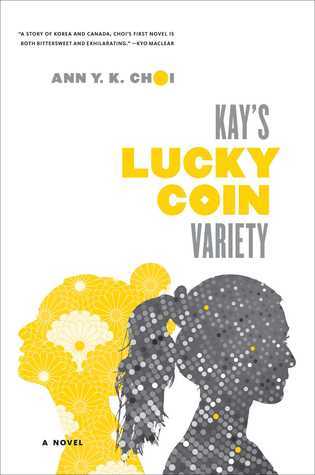 Korean-Canadian teenager Mary is tired of having to manage her family’s convenience store. Part of her wants nothing more than to be modern and Canadian, but another part of her is unable to fully leave behind the expectations of her traditional Korean family. This dilemma plays out in different ways: she uses the name Mary but can’t help that her parents sometimes call her by her Korean birth name Yu-Rhee. She is in love with her English teacher, but her parents want her to set her up with a Korean boy named Joon-Ho. There’s also the unspoken family secret about her mother’s estranged sister, and how that may tie in to Mary’s own struggle.
