
Review | Here’s to Us, Elin Hilderbrand

27161845An Elin Hilderbrand Nantucket novel has become for me one of the hallmarks of summer. Always entertaining and lighthearted, with some heartfelt emotions, Hilderbrand’s novels are perfect for staycations, beach reads and sitting on your porch / balcony with an icy drink.

Her newest book, Here’s To Us, is no exception. Three women, all in love with the same man — the passionate, temperamental celebrity chef Deacon Thorpe — are drawn to his Nantucket house after he dies. All three women hate each other, and maintain a love/hate relationship with the man they all married and eventually divorced/planned to divorce. Adding to the drama, as Deacon’s best friend and executor Buck is reluctant to reveal, Deacon died heavily in debt so instead of splitting an inheritance or fighting over the proceeds from the Nantucket house, the women instead will need to figure out how to shoulder / split the financial burden he has left behind.

The novel appears ripe for a sitcom or a soap opera-ish drama, but Hilderbrand manages to balance both tones while keeping it all fairly lighthearted. I especially love the characters of the women, how richly drawn each of them is, and how much we glimpse into their lives with Deacon and beyond their relationship with him.

Laurel, Deacon’s childhood sweetheart and first wife, is probably my favourite, or at least the character I could most relate to. Supportive of her husband up until he left her for an actress, Laurel is a wonderfully rich character. A social worker, she is ironically (and tragically) unaware of her own son’s struggles with addiction, and she is understandably reluctant to begin a relationship with Buck, who has secretly held a torch for her for years. I love how, even if she is the oldest among the wives, she is also described as “effortlessly beautiful,” and her low-key beauty is viewed as more impactful than Belinda’s more glamourous style.

Belinda, the second wife, is a Hollywood actress who snapped him up at the height of his celebrity. She appears easy to hate, but on the other hand, is touchingly vulnerable as well. Her relationship with her daughter Angie is strained, and she is ever increasingly aware that she is getting older, and that this is particularly bad in the career she’s chosen.

Deacon’s third wife Scarlett, former nanny to Angie, is mostly portrayed as vapid and spoiled, a bit of karma for Deacon’s womanizing and drug use. Still, I love that she ends up choosing the safety and well-being of her child over a comfortable and wealthy life with Deacon, and also that one of her most extravagant purchases turns out to be an attempt at helping Deacon with his finances.

Angie, Deacon and Belinda’s daughter, is another really vivid character. A chef who apprenticed with her famous father, she is struggling with how best to continue his legacy, and to build her own life. Adding to the complication is that she is in love with a married man, and having to navigate a weekend with her estranged mother and the women her mother hates the most.

Hilderbrand’s strengths have always been her characters, her descriptions of Nantucket, and the relationships that bring all the elements together. The women are crafted so vividly that I can almost imagine being friends and having conversations with them, and urging Laurel in real life to go ahead and find a second chance at love with Buck.

Even Deacon manages to be a sympathetic character. Even if he was a jerk to the women he loved and not much of a father to two of his three kids, he was still a wonderful father and mentor to Angie, and in fact appears most sympathetic and likeable when we see him through Angie’s eyes. We also get a glimpse into his childhood, one of the happiest days of his life which turned into the day his father pretty much destroyed all of his childhood illusions. Deacon’s love and desire for Nantucket are rooted in that childhood incident, and for all his faults, you can’t help but feel for him and wish that for his sake, he is able to recapture the magic from that one day.

Nantucket, as always, is as much a character as the people in Hilderbrand’s stories are, and the elegaic tone of parts of this novel make me long to visit this place all the more. Here’s to Us is a bit heavier than some of Hilderbrand’s other beach reads, but it’s still a wonderful book, and a thoughtful story about love and family.

+

Thank you to Hachette Book Group Canada for an advance reading copy of this book in exchange for an honest review.
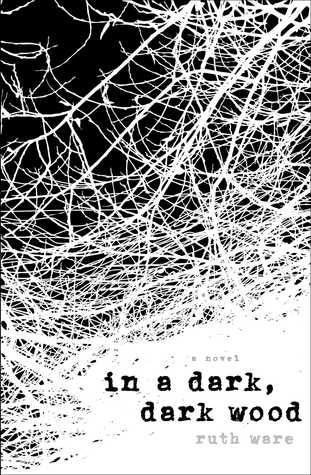
 

Blog Tour | In a Dark, Dark Wood, Ruth Ware

23783496Within the first few chapters, I knew I was going to absolutely love this book. The stage is set for a classic Agatha Christie-style mystery: a group of strangers is brought together in a house deep in the titular dark, dark wood where there is no cell reception, no easy way to escape, and where the characters are all bound by dark secrets from their past.

In Ware’s take on this classic trope, the characters convene for a bachelorette party organized by a rather obsessive perfectionist maid of honour named Flo for her BFF Clare. The main character is Leonora “Nora” Shaw, who is surprised to be invited since she hasn’t spoken to Clare since a falling out years ago. She decides to attend anyway, and as any mystery lover can attest, this cannot end well. What follows is a hilariously awkward weekend with people who mostly can’t seem to stand each other, and then someone is murdered. The novel opens with Nora in a hospital bed, trying to piece together what had happened.

In a Dark, Dark Wood is a classic mystery thriller. I couldn’t put it down, and I felt compelled to keep reading not only to find out what actually happened but also to find out how the various relationships develop. There are some aspects that stretch belief somewhat, for example that a bad breakup when Nora was just 16, could still have this much effect on her ten years later (why hasn’t she moved on yet?!), and also some twists and revelations that felt more convenient that believable. The motive behind the crime also felt odd, and I almost wish Ware had set it up a bit more like Patricia Highsmith’s Ripley character, which will possibly help us understand better how someone’s psyche can be so messed up that murder seems a sensible response to this motive.

That being said, I absolutely loved this book. I’m a sucker for classic Agatha Christie whodunnits and I think Ware captures this feel wonderfully. The house in the woods is a perfect setting for such a creepy mystery, and I absolutely love the twisted interlocking webs of messed up relationships that drove this story forward. Finally, I think the cover is just beautiful.

+


Author Q&A with Ruth Ware

  1. I love the classic Agatha Christie whodunnit feel. How much was And Then There Were None an influence on this book, and how much is Agatha Christie herself an influence in your writing?

I loved Christie as a teen – well, classic crime full stop, really – so it’s definitely something that was there in the back of my head. However it wasn’t really a conscious decision to channel those influences into In a Dark, Dark Wood, but when I’d finished writing it I handed it to my agent who immediately said “you know, this has a very Agatha Christie-ish feel” and I realised she was right, and Christie’s influence had definitely seeped through into the text. The reference to And Then There Were None in the text is my little acknowledgement of that!

  1. What inspired this story? Where did the idea come from?

The original seed was a conversation with a friend who said she’d never read a thriller set on a hen night and would love to read one. And I realised in that moment that I’d never read a thriller on a hen night either, and would love to write one! On the tube on the way home I couldn’t stop thinking about the idea, and eventually it became In a Dark, Dark Wood.

  1. Why do you think the name change (from “Lee” to “Nora”) is so important to Leonora? Why is Clare so insistent on calling her “Lee”?

Well, one of the themes of the book is identity and self-image, and the way we choose how we to appear to others. Often the person we are at school is radically different from the person we are when we grow up – and Nora’s name change is a way of her owning that, I suppose – acknowledging that she’s more than Clare’s best friend (Clare was the person who bestowed the “Lee” nickname on Nora and it’s something she’s ambivalent about.) I suppose for Nora, making people use her grown-up name rather than her teenage nickname is a way of asking them to acknowledge that she’s not the same person she was back then, whereas Clare is maybe trying to do the opposite – remind Nora of who they used to be to each other.

  1. Will you be involved at all in the motion picture adaptation? How well do you think your story will translate to screen?

I know that some writers adapt their own books for screen, but I can’t imagine doing that. I’m not sure I’d know how! I think (I may be biased!) that it could be a great film, it’s certainly very visual and I think the dark woods and the glass house could make a great setting. A lot of the action takes place in Nora’s head though, and the tension comes from inside her. You’d need a good actor and director to convey that.

  1. Clare pretty much ends up having the bachelorette party from hell. What has been your most memorable (good, bad or simply hilarious) bachelorette party experience?

I’ve not had any really hideous experiences myself, but I did have a lot of friends unburden themselves to me after they read the book. I think the worst anecdote I heard was a party where the stripper failed to turn up, so the bar tender offered to make a few calls and find a replacement. Eventually a guy turned up, but the first clue that all was not quite well was that he folded his clothes neatly as he removed them! There followed an excruciating quarter of an hour as he got naked. When he had finished he turned and put them all back on again and quietly left. It turned out that he was the bar tender’s nephew or something, and an accountant and had never stripped before!

+

Thank you to Simon and Schuster Canada for a copy of this book in exchange for an honest review, and thank you to Ruth for participating in the Q&A!

+

Blog Tour and Contest

This review is part of the Simon Schuster Canada Perfect Pairing Blog Tour. Check out the full schedule below.

Also: nothing pairs up better with a book than a cup of coffee, so heads up on an awesome contest: Simon and Schuster Canada is giving away a set of books AND one year of free coffee from aroma espresso bar! Enter at readchillrepeat.com.

Summer Fiction Blog Tour

Review | I’m Thinking of Ending Things, Iain Reid

28450159I absolutely loved Iain Reid’s memoir The Truth About Luck, about a road trip with his grandmother, and I was really excited to read his debut novel I’m Thinking of Ending Things. Reid is a wonderfully talented writer, and the way he subtly builds up the suspense and dread throughout this book is masterful.

A young woman goes on a road trip with her boyfriend Jake– their first trip together. They’re on their way to meet his parents, and she is thinking of ending the relationship. Talk about awkward. The tension increases with the revelation that the woman has been receiving calls from an anonymous man, sometimes as many as twelve calls in one night, and as if that wasn’t creepy enough, the calls all appear to be coming from her number. The caller appears interested only in leaving her messages; whenever she picks up the phone, the man hangs up.

“There’s only one question to resolve,” the caller says in her voicemail. “I’m scared. I feel a little crazy. I’m not lucid. The assumptions are right. I can feel my fear growing. Now is the time for the answer. Just one question. One question to answer.”

What that one question is, the caller never says, and that mystery just about drove me mad while I was reading. Often, I wanted to scream at the mysterious caller myself, just ask the f*cking question already! The caller also leaves a second voicemail, one that reveals he knows her inside and out, and ends with the chilling proof: “You shouldn’t bite your nails.”

Interspersed with this woman’s story are chapters of dialogue between unnamed characters, discussing an unnamed “horrible,” “scary” and “disturbing” act committed by a man who was “standoffish” and “kept to himself.” Sadly, many current events can help us imagine what this “horrible” act of violence could have been, and as we read on, the mystery deepens as to how Jake and his girlfriend are about to become involved in whatever had happened.

After the initial creep factor of the mysterious caller, and the introduction of the two main sources of tension (the mysterious “horrible” incident and the girlfriend’s intention to leave Jake who doesn’t seem like the type to handle it well), the story slows down a lot. I was bored for a bit because nothing seemed to be happening, and it’s only later that I appreciated all the little bits and pieces that Reid has so carefully set up.

The story picks up again once Jake and his girlfriend arrive at Jake’s parents’ farmhouse. There’s a vague feeling of rising disquiet, of encroaching dread, in those scenes, and Reid’s mastery lies in the fact that I could never quite put my finger on why. I just know that something feels off, that Jake’s parents aren’t acting quite right, and that something bad is going to happen, though I had no idea what. The story gets progressively better (read: odder) from there, and with the big reveal, all the puzzle pieces fall into place.

I closed the book and sat for a while, unable to move, just absorbing what I’d just read. It was a slow burn throughout and ended with a wallop, and I just felt like applauding the author for what he’d accomplished.

I’m Thinking of Ending Things isn’t my favourite Iain Reid book — nothing, but nothing and no one can compare to his absolutely loveable grandmother and the story of their road trip. As well, while I imagine there’s a pleasure in picking up the clues in the details Reid has so carefully scattered throughout, I’m not sure how well this book will hold up in re-reads, now that I know how it turns out. But still, bravo Mr. Reid. Well done.

+

Thank you to Simon and Schuster Canada for an advance reading copy of this book in exchange for an honest review.