Review | Murder at the House of Rooster Happiness, David Casarett

28449133A few pages into this book and I already knew that Ladarat Patalung would become one of my favourite series detective characters, and that I’ll be keeping an eye out for further titles in the Ethical Chiang Mai Detective Agency series.

Nurse ethicist Ladarat Patalung, who works at a hospital in Chiang Mai, Thailand, is pulled into three different cases. In the main mystery, a woman’s husband dies in Ladarat’s hospital and someone recognizes her as having taken a different husband to another hospital and that other husband also dying. Detective Wiriya Mookjai needs Ladarat’s help to investigate the potential of a serial killer.

The other two cases have more to do with Ladarat’s job as a nurse and an ethicist rather than with murder. In one, an American tourist is on the brink of death after an accident with an elephant, and Dr. Suphit Jainukul, the director of the ICU, needs Ladarat’s help in breaking the bad news to his family. In the other, a man mysteriously appears each day in the hospital waiting room, yet runs away whenever someone tries to talk to him. Who is the man, what does he want, and, more importantly for Dr. Jainukul, how can Ladarat get him to leave the hospital in time for an upcoming major inspection?

I love the character of Ladarat, a middle aged woman who genuinely cares about doing the right thing and who is positively geeking out over discovering her talent for detective work. She’s a modest, unassuming woman who concurs with her late husband’s assessment of her “coat hanger” figure, and notes that her “oversized glasses and hair pinned tightly in a bun admittedly did not contribute to a figure of surpassing beauty.” [p. 5] She works long hours, owns a cat named Maewfawbaahn (does anyone know if this means anything?), and, having no talent or time to cook, often orders her meals from a corner stall. In other words, she is an ordinary woman, not super brilliant so much as super empathetic, and it’s her genuine interest in people and ability to place herself in their shoes that helps her solve her cases.

I also love the developing attraction between her and Wiriya, who is described as “solid and comforting, with close-cropped graying hair, a slow smile and gentle manners that would not have been out of place in a Buddhist monk.” I love the quiet nature of their chemistry, and the fact that much of their attraction to each other is built on respect for the other’s abilities. Wiriya often comments on the acuity of Ladarat’s observations, and Ladarat clearly admires Wiriya’s skills as a detective. Even their physical attraction to each other isn’t built on Ladarat suddenly wearing better fitting clothes or applying makeup, but rather on features that perhaps other people wouldn’t pay attention to.

The mysteries as well are intriguing character studies and explorations into human nature. The motivations of the various characters whom Ladarat encounters are all so richly textured. They feel real, for lack of a better word, and I think it’s Ladarat’s perspective that makes it so. The story of the man in the waiting room is particularly intriguing, and we find this out mainly thanks to Ladarat’s willingness to, literally, see things from his perspective. The story of the murderer in the main story could have been fleshed out a bit more, in my opinion, particularly the involvement of a particular figure in their crimes, but I think that’s just because Casarett does such a good job in fleshing out other characters that, like Ladarat, I end up wanting to understand even more.

Casarett also provides a lot of detail about Thai culture, particularly customs and cuisine. It’s an intriguing glimpse into a culture I’m not too familiar with, and kudos to the author for explaining customs like the wai greeting ritual without presenting it as exotic. Casarett travels to Chiang Mai often, and his love for Thai cuisine is very much apparent in this book. He describes Ladarat’s meals with the same level of loving detail as Carolyn Keene described Hannah Gruen’s feasts in the Nancy Drew books, and I often became hungry for Thai food while reading this.

Empathy is under-emphasized as a super-skill in detective fiction, and in that, Ladarat Patalung stands out. I thoroughly enjoyed spending time with her and seeing her tease out the various threads in people’s stories. Murder at the House of Rooster Happiness is a strong start to a new mystery series, and I can’t wait to read more.

+

Thank you to Hachette Book Group Canada for an advance reading copy of this book in exchange for an honest review.

The FOLD 2016 #DiverseBooks Reading Challenge, Part 2

FOLD-logo

Earlier this month, I’d posted about taking The FOLD‘s #DiverseBooks Reading Challenge, with some awesome reads by FOLD 2016 authors (See Item # 8).

The FOLD’s 2016 Reading List

  1. A book you’ve had for more than a year.
  2. A book outside of your ‘favourite genre’.
  3. A book you buy at an indie bookstore.
  4. A book by a person of a faith (different from your own).
  5. A book by an Aboriginal author.
  6. A book by a Canadian LGBTQ author.
  7. A book by a Canadian person of colour.
  8. A book by a FOLD 2016 author.

Today’s read comes courtesy of Item # 7:

# 7 A book by a Canadian person of colour

The Translation of Love by Lynne Kutsukake

I took this book to the beach on a scorching summer day, and it was so captivating I almost ended up reading all afternoon without going into the water. (Key word: almost. But if you’ve been in Toronto this summer, you know how much that ‘almost’ means.)

In post-World War II Japan, thirteen-year-old Fumi, with the help of her classmate Aya, a repatriated Japanese-Canadian, writes to General Douglas MacArthur for help in finding her older sister Sumiko, who had left home to be a dancer at a nightclub frequented by American GI’s and never returned. Their stories interlock with that of Matt, the Japanese-American GI who translates letters to MacArthur from Japanese people asking about his promise of a brighter future; Kondo, a schoolteacher who translates love letters for the Japanese girlfriends of American GI’s; and Sumiko herself, whose story echoes that of so many Japanese women in that era.

Translation of Love is such a beautifully told story of interwoven narratives that resonated with me because I could imagine my own home country, the Philippines, after the war, and how my family must have felt when General MacArthur gave them a similar promise of liberation and hope. It feels a bit odd to feel that connection to a story about Japan, since a lot of the atrocities Filipinos suffered during World War II were at the hands of Japanese soldiers, but like Katsukake’s characters, Filipinos also looked (and many still do today) to America for the promise of a better life.

Most palpable in Translation is the desperation mixed with hope in Japanese women looking for an American to fall in love with them enough to take them back to a life of comfort and relative luxury in America. I can’t remember which of the characters said that the women of Japan showed the most courage after the war, but the sentiment certainly felt true while reading this book.

Contrasted with their hope is the harsh reality of life as a person of Japanese descent in North America. Along with Aya and her father, who lived at a concentration camp before being kicked out of Canada, we also read of Matt’s co-worker Nancy, a Japanese-American who happened to be in Japan when war broke out and was unable to return home. Translation is moving and complex, and the characters all feel so real. A beautiful book.

The Illegal by Lawrence Hill

Keita Ali is an elite runner from Zantoroland who escapes to Freedom State when his journalist father is killed for his activism against the government. It’s a tough life for an undocumented immigrant in Freedom State, where the government is cracking down on immigration and deporting numerous illegals back to Zantoroland. When Keita enters a major race for money and wins, his newfound notoriety catches the attention of the Zantoroland government, which captures his sister Charity and demands an exorbitant ransom. Keita’s story intersects with that of a brothel in poverty-stricken Africtown when a USB that incriminates the Prime Minister ends up in Keita’s bag.

The allegories to real life are very thinly veiled, yet also very relevant. This book was published in 2015, when thousands of Syrian refugees were trying to enter Canada, the US and other countries, and the Canadian government promised to resettle 25,000 Syrian refugees within a year.

It seems odd to say about a book that tackles such real-world issues, but once we move into Freedom State, the violence in the story almost feels…sanitized? In an early chapter, set in Zantoroland, a young Keita is called upon to pick up his father’s body from the so-called “Pink Palace,” where political dissidents are summoned and few are able to leave. There’s a chilling bit about the government’s requests for ransom, and how to tell if there’s any hope at all of getting your loved one back alive. The violence in Freedom State stands in stark contrast to this — for example, the major threat is a bounty hunter who can shoot off a finger without harming the rest of the body, and while this is certainly menacing, it feels almost stylized compared to the Pink Palace segment.

Possibly, after the threat of the Pink Palace and a phone call suggesting a young boy bring a fruit cart to take his father home, the more familiar image of a hired gun just doesn’t have the same impact, though I wouldn’t discount the similar degree of danger. I wonder if this dichotomy is a personal response from me or a deliberate narrative move on Hill’s part, to highlight the many different types of violence and danger refugees and illegal immigrants face, from whatever they were escaping in their country of origin to the more subtle yet equally inescapable source of fear in their new home.

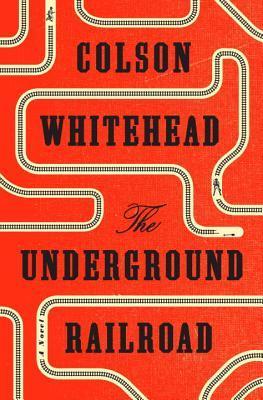
Special Mention: Underground Railroad by Colson Whitehead

30555488

Colson Whitehead is not Canadian, but Underground Railroad is absolutely amazing. I highly recommend it.

Next Up…

#6 A book by a Canadian LGBTQ author.

I loved Jeffrey Round’s Endgame (punk rock riff on Agatha Christie’s And Then There Were Noneand I’m excited to read Lake on the Mountain.

#5 A book by an Aboriginal author.

Any suggestions?

+

Thank you to Penguin Random House Canada for an advance reading copy of Translation of Love in exchange for an honest review.

Review | Nutshell, Ian McEwan

29752912A fetus observes from his mother Trudy’s womb as she schemes with her lover Claude to murder her husband, his brother John. Ian McEwan’s Nutshell has a clever conceit, a loose re-telling of Hamlet told from the point of view of an unborn protagonist. There are shades of Macbeth in there as well, with Claude and Trudy’s dynamic very similar to Macbeth and Lady Macbeth. There have been quite a few Shakespearean re-tellings lately (the Hogarth series in particular of which Nutshell is not a part), and McEwan’s novel stands among the best and most clever riffs on the Bard’s legacy.

McEwan pays homage to his source material from the start. The book opens with an epigraph from Hamlet and the early passages provide some knowing winks to anyone familiar with Shakespeare. “Seems, Mother? No, it is. You are,” the narrator says on page 2, echoing Hamlet’s response to his mother Gertrude in Act I, scene 2: “‘Seems’, madam? Nay, it is. I know not ‘seems.'” Just a page later, the narrator ponders his will to be born, and his phrasing echoes Hamlet’s iconic “To be or not to be” soliloquy on his desire for death: “So getting closer, my idea was To be. Or if not that, its grammatical variant, is.” There is just enough similarity to twig recognition in Shakespeare fans, and just enough difference in context to make it wholly original. Throughout the book, McEwan maintains a playful touch with language, teasing with hints of Shakespearean phraseology or planting bits of story recognizable from the play, but keeping these touches light enough that they never feel stale, nor trying too hard to be clever.

There are moments when the prose gets a bit unwieldy, the narrator waxing on with as much melodrama as, admittedly, Hamlet was wont to do, and I find myself tempted to skim ahead. That being said, there are also times the florid descriptions work, as with this masterfully vivid passage: “Between his weakness and her deceit was the fetid crack that spontaneously generated a maggot-uncle. And I squat here sealed in my private life, in a lingering, sultry dark, impatiently dreaming.” [p. 34] How beautiful is the phrase “lingering, sultry dark”?

While a riff on a classic, the story itself feels fresh and original. It’s mainly a story of murder, the plotting thereof and the aftermath of the decision. McEwan’s comedic talents and ear for dialogue come to the fore, particularly in the scene where Trudy and Claude attempt to implement their plan. One can almost imagine the actors in this murderous plot turned farce, and much of the comedy comes from the choreography of the conversation.

Or take as well the bawdy comedy of a sex scene as told by a fetus, likely enough to make any pregnant reader blush. “Not everyone knows what it is to have your father’s rival’s penis inches from your nose,” the narrator comments wryly. Then: “This turbulence would shake the wings of a Boeing.” [p. 20] He compares the experience to that of an amusement park ride, and his mother “[arriving] to take her place on the Wall of Death.” [p. 22] As George Takei would say, oh my.


The novel is a masterclass in craftsmanship, and the language finely tuned. The story itself seems like a pretty straightforward one of murder and betrayal, but the execution is brilliant. Bravo, Mr. McEwan.

+

Thank you to Penguin Random House Canada for an advance reading copy of this book in exchange for an honest review.