Review | Second Night Stand, by Karelia and Fay Stetz-Waters

SecondNightStandKarelia Stetz-Waters’ Satisfaction Guaranteed was one of my favourite books in 2021, so when I saw she had a new romance coming out this year, this time co-written with her life partner Fay Stetz-Waters, I immediately wanted to read it.

Second Night Stand is a sexy-sweet romance between two dancers competing on a reality show with a $1M cash prize. Lillian Jackson is a super talented ballet dancer and head of an all-Black ballet company. The company is losing their sponsorship, so she needs to win in order to keep the company going. Izzy “Blue Lenox” Wells is a curvy burlesque dancer who leads a group of gender-diverse and body-diverse performers. She’s purchased a fixer-upper theatre to use as a community gathering and performance space, and needs the cash prize to make necessary repairs.

The romance between Lillian and Izzy is sweet, and just as with Satisfaction Guaranteed, consent and mutual respect play prominent roles in their relationship. I like that they both shared a strong sense of responsibility for the welfare of their respective chosen families, and how they both had to deal with complex relationships with their families of origin. And I especially like how their relationship with each other helped them learn valuable things about other aspects of their lives, and grow both as individuals and as a couple.

Where the book fell flat for me was in the set-up itself: the dance competition. I get a strong sense of why Lillian’s group is a contender at the competition, but I was never quite convinced about how Izzy’s group stayed on for so long. The depiction of their first performance was just messy. The whole point of their group is to provide a space to belong for all peoples, regardless of identities and performance interests, and while that’s a wonderful goal from a community-building aspect, it doesn’t make for a cohesive performance.

The book tries to explain this away by saying that the producers put them on as an amateur sacrificial lamb, so to speak, destined to be knocked off in the first round. Even Lillian, watching the group members perform one after the other, is certain that they’re about to be eliminated. The book, and Lillian, then try to make us believe that Izzy’s performance is so charismatic and captivating that she single-handedly convinces the audience to vote them in to stay. Unfortunately, as likeable as Izzy the person is, whatever magic she worked on-stage to get her group past Round One does not translate well on page. I was unconvinced, and the longer they stayed on, the more convenient it felt, as there was often one competitor or another who messed up so badly they had to be sent home. With a $1M prize at stake? Puh-lease.

I also tend to not be a huge fan of overly detailed descriptions, especially of background characters, so this is a rare instance when I actually wanted to see more of the dance competition. The front runner for the prize is a hip hop group that pretty much all the competitors agree is amazing and tough to beat, but we never actually get to see them dance. I don’t even remember meeting the dancers in this group at all, even though we meet a random assortment of other dancers. For a book centred on a dance competition, there isn’t much of it.

Speaking of competition, there’s also a chapter where the producers try to provoke Lillian, Izzy, and their dancers to trash talk each other, and both groups flat-out refuse to do so. Lillian and Izzy’s attempt quickly turns flirty, so the producer swaps them out with other performers on their respective teams, but then those performers seem incapable of doing anything but compliment each other. And I get it. Manufactured competition is silly, the producer was pushy, and kudos to the characters who refused to call their competitors the B-word, because it’s such a gendered insult.

But honestly, as over-the-top and sometimes mean as those scenes can sometimes play out, not engaging in it at all just feels very killjoy-ish. And however much the performers may respect their competitors’ talents, there is very little sense at all that any of them consider this competition important. Part of that is on Lillian and Izzy for not being open with their respective groups about their real motivations to win the competition. (It’s not just for funsies! It’s to save the ballet company / community theatre!) But even when the truth comes out, the competition takes second place to the characters’ morals and values. Which, okay, good for them. But if the characters themselves don’t care about winning the competition, how am I, as a reader, supposed to care about either of them winning? Despite the real futures at stake, the story takes a very gentle approach to the competition driving the story forward, and that in turn blunts much of what gives the story edge.

Overall, this is a sweet and feel-good romance, with lots of body positivity and love within found families. It’s a bit of a let-down for me after the brilliance that was Satisfaction Guaranteed, but it’s a good story nonetheless, and a fun way to spend a weekend.

+

Thank you to Forever for an e-galley of this book in exchange for an honest review.

I Try to Solve an Agatha Christie Mystery | Murder is Easy (Superindentent Battle)

There’s a BBC adaptation of Murder Is Easy coming to BritBox in March that looks pretty good, so I wanted to try my hand at solving the case myself before checking it out. The ebook was fortuitously available at the library, and its cover just as fortuitously matched with my recently-purchased ube keso Selecta ice cream. 

The set-up is fantastic: retired detective Luke Fitzwilliam meets fluffy elderly lady Miss Pinkerton on a train to London. Miss Pinkerton is from a sleepy little village, and she’s headed to Scotland Yard because she’s convinced one of her neighbours is a murderer. And not just any murderer, but one who has already killed several people, and seems to be on course to kill their next victim. 

Luke gives Miss Pinkerton a kindly smile, wishes her luck, and thinks nothing more of it, until he reads in the paper that shortly after their encounter, she is killed in a hit and run. He also learns of a death in her village: Dr Humbleby, the very person she’d identified as the murderer’s next victim. His curiosity piqued, Luke heads to the village himself, posing as the visiting cousin of a young woman his friend knows, and sets out to find the identity of the killer.

It’s a fantastic setup, and the puzzle aspect of the story is pretty well-constructed. Luke is a methodical investigator, and we meet each suspect and learn about each victim in turn. Yet for some reason, the story isn’t quite gripping me like Christie’s books usually do. I’ve enjoyed some Christie stand-alones, so it can’t just be the absence of my beloved Marple or Poirot. Possibly, it’s just my mood, and if I were to re-read this again another time, I may enjoy it more. As it is, I do really want to watch the BBC adaptation (Miss Pinkerton is played by the Dowager Countess’s best frenemy in Downtown Abbey!), so I’ve kept going on to figure out whodunnit.

There’s also a romantic subplot, which should come as no surprise to any long-time Christie fan the minute we meet Luke’s host Bridget. She is young, more arresting than beautiful, clever enough to see through Luke’s cover story almost immediately, and engaged to her wealthy and much older employer for purely pragmatic reasons. In a mystery by another writer, she would’ve been my immediate prime suspect, but I’d already made the mistake of forgetting Christie’s romantic streak in The Moving Finger, so I’m going to guess she’s innocent.

Since Bridget is not on my suspect list, there’s honestly only one person I think it can be. A case could be made for a secondary suspect, and more than likely, the murderer turns out to be one of the many other suspects I don’t think did it. But I feel pretty strongly about my first choice, so I’m going to lock it in at the 81% mark, and see how I do.

As an aside, I’m almost done with the book, and Superintendent Battle still has not appeared? Perhaps he’ll show up in the final chapter for the big reveal? And perhaps we’ll learn that Miss Pinkerton did manage to share her suspicions with him after all before she died. Perhaps the case would have been solved even without Luke’s involvement, but with a couple or so extra victims, because Battle had to deal with more pressing matters before getting to this one.

Did I Solve It?

Yes I did. I figured out whodunnit, and I kinda figured out the motive, even though I saw it all sideways. (I figured out the driving force behind the killings, but I got the emotions behind it all wrong.)

This isn’t quite as exciting for me as other Christies I’ve read. It was fine, and I’m not used to Christie’s books being just “fine.”

I do appreciate Christie’s commentary here about the importance of paying attention to women’s instincts. Other than Miss Pinkerton, there were two other women characters who had an inkling whodunnit, but because they lacked proof beyond a vague feeling, they kept quiet and doubted themselves. For at least one of the women, Luke’s certainty about a particular aspect of the killings made her decide her suspicions were totally off the mark. But as it turns out, as methodical as Luke’s investigative methods are, and as logical as his reasoning may be, he ultimately is a bit of a bumbler.

So, to learn from Dame Agatha: trust your gut, ladies. You do know things you don’t even realize you know.

***SPOILERS BELOW***

Continue reading

Review | The Still Point, by Tammy Greenwood

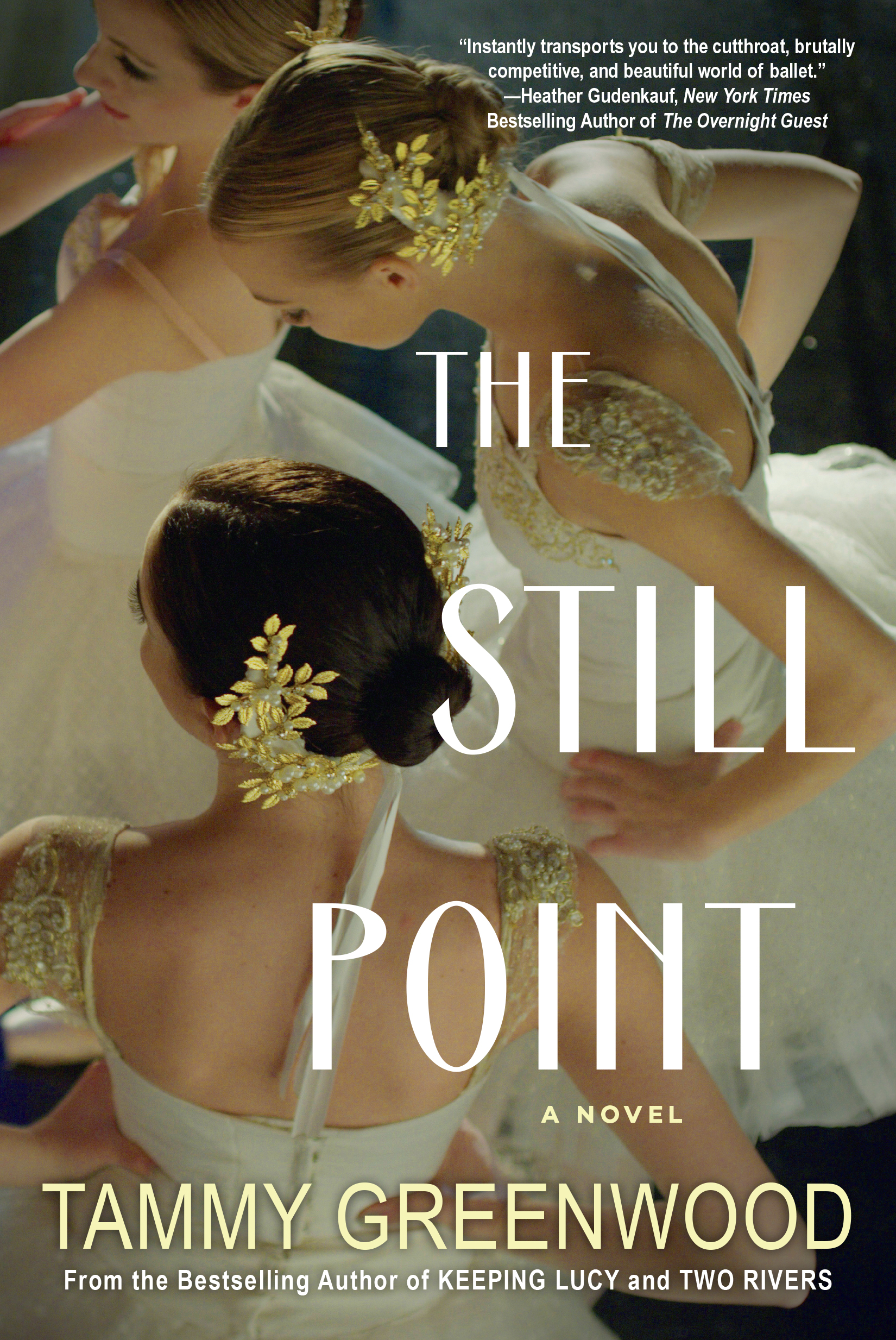
TheStillPointThe Still Point started out as deliciously soapy drama about the dancers and dance moms (and one dad!) at a Southern California ballet school, but by the end of it, much of the soapy fun now felt real, and I was legit heartbroken about how things turned out for one of the moms. Alas, due very much to her own choices, which makes it all even more tragic.

The drama starts when famed dancer Etienne Bernay comes to teach at the ballet school. He brings with him a documentary filmmaking team and the promise of a full scholarship to Ballet de Paris for one lucky dancer. All the students are sure the scholarship will go to perennial star pupil Savvy, but from the day Etienne arrives, he seems to have eyes only for Bea, an ethereal and vulnerable natural talent. Drama!

Adding to the popcorn fare is that Bea’s lifelong BFF and fellow dancer Olive no longer speaks to her, all due to an incident on the beach that Bea barely remembers and we only learn the details of much later in the story. Instead, Olive seems to have found a new BFF in Savvy, and neither girl seems inclined to invite Bea to join their social circle.

Then come the moms: Bea’s mom Ever and Olive’s mom Lindsay are BFFs who wish they could fix their daughters’ friendship but have no clue about the reason for the split in the first place. Savvy’s mom Josie is secretly hosting Etienne in her guest house, and worried that Savvy’s chances at the scholarship aren’t quite as set in stone as she initially thought. All three moms have their reasons for believing their daughter needs the scholarship more than the other dancers, but of course, at least two of them will have to deal with the disappointment. The set-up is utterly delightful, and honestly, if this were turned into a mini-series on Prime or Hulu, I would totally be there with my popcorn, devouring all the episodes in a single weekend.

But like I said, the story turned more complicated than I expected; the more I got to know the characters, and especially the moms whose perspectives narrate most of the book (Bea is the only dancer who gets her own chapters), the more I got pulled into their respective worries. Ever is the most obviously sympathetic — her husband (Bea’s father) died a year ago; he was the sole breadwinner and now she has to figure out how to resurrect her short-lived career as a novelist to pay the bills and all the expenses for Bea’s ballet career.

But I found myself more drawn to Lindsay and Josie’s stories. Lindsay has been feeling the distance from her husband Steve for a while, and when she finds a bump ‘down there,’ she fears Steve may be having an affair. As her story unfolds, her fears over Steve cheating eventually shift to her fears about her own emotional responses to the possibility. It’s a gripping exploration of a marriage, and a fantastic depiction of just how subtle the signs of a decline can be.

I also love how their marriage troubles play out in their approaches to Olive’s ballet career. Lindsay is fiercely supportive: she believes in Olive’s potential regardless of what Etienne has to say, and she’s ready to devote as much of her time and energy as Olive needs to go to the auditions and dance schools necessary to make it as a professional dancer. Steve is more pragmatic: Olive is never the lead at her current ballet school, and Etienne’s presence aside, the ballet school doesn’t have a strong track record of churning out superstars. He doesn’t believe Olive has a chance at the scholarship, and wants to make sure she takes the SATs and has a solid backup plan for a different career. Lost among all of this is what Olive herself wants. She seems to be losing interest in ballet, but then Etienne says she dances “like a slug,” so it’s unclear for a lot of the book if she really is losing interest or just her confidence.

Josie’s story starts with having to deal with her husband (and Savvy’s stepfather) leaving her for his much-younger dental hygienist. He owns the house she and Savvy live in, and when he finds out that Etienne is staying at the guest house, he threatens to sell the property the moment Savvy turns 18, never mind where Savvy and Josie go to live afterwards. Selling the property is his legal right as owner, but it’s a horribly cold gesture to his ex-wife and stepdaughter, especially since he’d previously promised to let them stay in the house until Savvy graduates, and then split the proceeds of the sale with Josie.

As Josie’s story unfolds, we learn about her history of being used and betrayed by the men in her life: the modelling scout who dropped her when she got pregnant with Savvy and refused to abort, her first husband who only married her because of Savvy, and now her most recent ex. Her desire for Savvy to win the scholarship is fierce: she wants Savvy to become a ballet star, so she doesn’t have to rely on men for financial stability, like Josie herself has had to. And honestly, I realize that my rooting for Savvy was very much not about Savvy at all; rather, I’m rooting for Josie, and her very real desire to protect her daughter from her own mistakes.

The results of the scholarship competition aren’t much of a surprise, nor are the ways the various characters’ stories unfold. My one bone to pick has to do with how Josie’s story plays out, and this has nothing to do with bad writing and all to do with how much the author has succeeded in making me feel invested in this character. See, Josie’s love for Savvy leads her to make choices that, well, aren’t great, and a particularly selfless act (undeserved by Savvy, IMHO) turns into an object lesson for “no good deed goes unpunished.” And there’s a truly heartbreaking moment near the end where another character’s kindness makes Josie happy; as readers, we know that the character’s motivations are not at all altruistic, and honestly, Josie deserves so much more kindness in her life. If I were to write a fan fic epilogue to this, I would have her join Ever and Lindsay’s friendship circle, and just find comfort in other women’s support.

+

Thank you to Kensington Books for an advance reading copy of this book in exchange for an honest review.