
Review | Bella Figura: How to Live, Love and Eat the Italian Way, Kamin Mohammadi

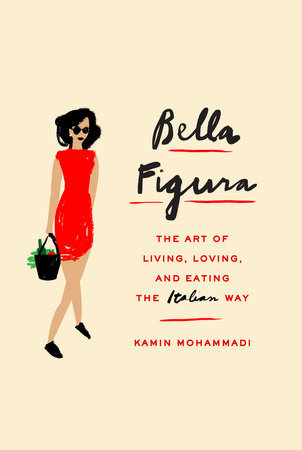
36076549After reading Bella Figura, I prepared myself a dinner of pasta with olive oil and fresh basil. Kamin Mohammadi’s book will make you want to drop everything, move to Florence and live life la bella figura, just as she had. She paints such an absolutely breathtaking picture of the city and the lifestyle she had while living there that you simply can’t help but wish you were living this life right along with her.

According to Luigo, the bartender Kamin befriends in Florence, ‘bella figura’ simply means making everything look as nice as possible. So even if you’re making dinner only for yourself, treat yourself to some linen napkins and a glass of quality wine. Even if you’re only going to the grocery store, put on a beautiful dress and some lipstick. Even if you live alone, surround yourself with beautiful furniture and keep your apartment tidy. Living with a ‘bella figura’ mindset means living beautifully for no one else but yourself.

Mohammadi sets the stage for her book by talking about her lifestyle in London, which sounds pretty dreary and feels depressingly familiar. Work, walk fast to get to where you need to be, get coffee on the go, and so on. Mohammadi writes about how she goes on one fad diet and workout plan after another, and yet still manages to gain weight and get acne.

When she loses her job, she decides to move to Florence for a year to work on a book. I’m sure the reality of having to live off savings for so long isn’t as idyllic as this book makes it sound, but overall, I think she receives some really good advice that we’d do well to keep in mind even while in our real lives. Some examples include:

  • Walk slow. Why be always in a hurry?
  • Don’t take your coffee to go. Actually sit down in the cafe and enjoy your cup.
  • Buy best quality olive oil, even if that means you can only afford a smaller bottle.

Mohammadi closes her book with a list of such advice, and oddly enough, the list feels a bit reductive. I think so much of the experience of reading this book comes from taking the journey along with Mohammadi, and cannot be distilled into a bullet point list.

Mohammadi also talks about the men she dates in Italy. I love the man she eventually ends up with, and while some of the men she dated broke her heart, they still made for interesting stories, and all added to her experiences of the place.

Bella Figura is such a beautiful, wonderful book. I highly recommend for anyone looking for a break from the bustle of urban professional life. Mohammadi also includes some truly delicious sounding recipes in the book, so I’d recommend trying them out for yourself.

+

Thank you to Penguin Random House Canada for a copy of this book in exchange for an honest review.
Review | Lac / Athabasca, Len Falkenstein

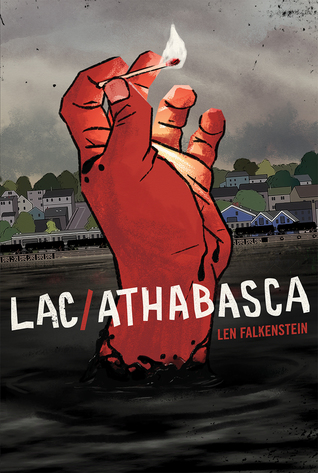
38712213Lac / Athabasca is inspired by the 2013 derailment of a train carrying crude oil in Lac-Megantic, Quebec, which resulted in fires and explosions that killed 47 people and destroyed part of the city’s downtown. The play follows a cast of characters spanning several time periods — a pair of nineteenth century fur traders pursued by an unseen monster, a pair of biologists in the present day investigating water pollution downstream from the oil sands, an oil sands worker who discovers a body, a train engineer who makes a fatal error and a group of townspeople who live with the consequences of a disaster.

Falkenstein’s play has a clear environmental message, showing how Canadians are complicit in the environmental damage from the oil sands, even if we don’t directly work with the oil, and also showing how the far reaching the effects of the damage can be. There are monsters both amorphous and real (a bear) in the story, and all serve to heighten the sense of unease that permeates throughout the play.

My favourite scene features the two biologists studying pollution on behalf of the oil sands company: Janice says the water meets the 50% minimum standard of cleanliness set by the Ministry, and when her colleague Peter argues that’s nowhere near good enough, and that there are three-eyed fish in the water, Janice responds that their jobs depend on them towing the party line, and then defiantly drinks the glass of cloudy water. It’s a heart-stopping moment that I can imagine playing very well onstage (I gasped out loud when I read it on the page), but it’s also a sad dose of reality, that data can so easily be manipulated to please whomever is paying for it.

+

Thank you to Playwrights Canada Press for a copy of this book in exchange for an honest review.

Review | Landwhale, Jes Baker

35605491Landwhale is a deeply personal book about Jes Baker’s experiences as a fat woman. Each chapter reads like a blog post, and Baker has a breezy conversational style that reads well on the page and may be even better on audio.

Some of my personal highlights from this book include:

  • Baker looking at childhood photos and realizing that even though she’d always thought of herself as fat, she actually was a thin child until age 12 — this is so relatable and so true
  • Baker realizing that a lot of her body image issues stem from her own father having similar issues with his own body — rather a difficult chapter to read, as I imagine it was difficult for the author to write. Most striking was a passage where the father said he wanted to challenge her to not be a lazy child, and Baker realized he equated laziness with fatness, because she was actually a driven, ultra-responsible child and straight-A student.
  • Baker testing out the Harry Potter ride at Universal Studios to see if she’d fit — actually one of the most hard-hitting chapters for me, because the details made it feel so real
  • The Bulletproof Fatty – probably my favourite of all the chapters. Baker raises a great point that we’d like to mythologize fat people as ultra badass, because it feels empowering. In contrast, acknowledging that fat people are also vulnerable and prone to self-doubt and body image issues seems to conform to the stereotype of fat people being somehow weaker. But the truth is that fat people do have vulnerabilities, and they shouldn’t be pressured to pretend otherwise.

The book started off slow for me — the first chapter (This Was All Just a Big Mistake) was full of self-aware, self-deprecating humour that was just a bit too self-conscious about its funniness to be effective. But I’m glad I stuck with it, because the rest of the book was much stronger. (Or, possibly, I just fell into the stride of Baker’s humour.)

My main takeaway from this book comes from the Bulletproof Fatty chapter, where Baker quotes Ijeoma Oluo as saying, “If somebody comes off as bulletproof, they are either lucky or lying.” [p. 243] Which is just so true.

Baker goes on to say:

None of us are the Bulletproof Fatty, because none of us are indestructible. Of course we ultimately know that, but none of us act like we do. We are beautifully, imperfectly, gorgeously, terribly human. And the goal of our work to embrace our bodies shouldn’t be to be happy and confident all the time. The goal should be to allow ourselves to just exist.

As simple as it sounds, that’s the hardest goal for many of us. Allow yourself to just exist, and work to create space for fat people to just be people. Messy, imperfect, kind, mean, resilient, delicate, happy, depressed, conflicted people. [p. 243]

Yes! So much yes!

+

Thank you to Hachette Book Group Canada for an advance reading copy of this book in exchange for an honest review.