
Review | The Exes’ Revenge, Jo Jakeman

37678656I started The Exes’ Revenge expecting a bit of a thrillerish take on The First Wives Club, but soon realized we weren’t just looking at a cheating, womanizing jerk of an ex-husband. Instead, The Exes’ Revenge takes on the story of three women who’ve been involved with the same violently abusive man, who happens to be a police officer and therefore often protected from punishment by his colleagues.

The main character, Imogen, is the second wife. She’s experienced Philip’s temper firsthand one too many times, and is grateful when Philip falls in love with another woman and asks for a divorce. The problem is that Philip wants Imogen and their son Alistair to move out of their house by the end of the month or he’d sue for sole custody. In the middle of an argument, Imogen ends up locking Philip in her basement until he agrees to give her custody of their son and more time to move out of the house. Unfortunately, she forgets to remove his car from her driveway, and ends up attracting the suspicion of his new girlfriend Naomi (who has recently experienced his violent outbursts and mostly just wants his money before she leaves) and his ex-wife Ruby (who has experienced Philip’s controlling nature but never his violence, and feels a somewhat maternal protectiveness towards him). The three women end up somewhat uneasy allies, as Philip does his best to manipulate them to turn against each other and do what he wants.

The Exes’ Revenge is a dark and fast-paced thriller that made me cheer on the Imogen and the other women the entire time. I don’t know if I’d go so far as to say it’s an empowering story for women (I feel like that moniker sets up a LOT of expectations for a book), but it does feel satisfying to see the tables turned on an abuser. Jakeman does a great job of showing how, despite the physical and emotional abuse, the women still feel conflicted emotions about Philip and their respective relationships with him. In a lot of ways, the revenge in this book is even more satisfying than the revenge in The First Wives’ Club, because Jakeman paints such a clear picture of how much of a controlling asshole Philip is, and how he systematically gaslights these women and tears them down. Unlike the husbands in First Wives Club, who were just unlikeable jerks, the husband in this story is a full-on criminal, who appears untouchable by the law because of his job, and so it’s satisfying to see him get his just desserts.

I also like that the entire story isn’t just about revenge. In fact, Jakeman makes it clear that Imogen isn’t interested in revenge so much as in security for her son. While she does derive some satisfaction in switching the power dynamic on Philip, she’s also a victim of circumstance and sometimes seems more trapped in the sequences of events she has set in motion (e.g. keeping Philip locked up because of fear of retaliation against her and her son) than actually just being vindictive. There are also multiple times when Imogen and the other women try to let Philip go and move on, but then he responds by turning on them. So even though this is touted as a revenge story, in a way, it’s also a story about self-defence, and making the best of bad circumstances.

Finally, the last few pages of this novel are incredibly satisfying.

+

Thank you to Penguin Random House Canada for an advance reading copy of this book in exchange for an honest review.
Review | Happily Ever Esther, Steve Jenkins and Derek Walter

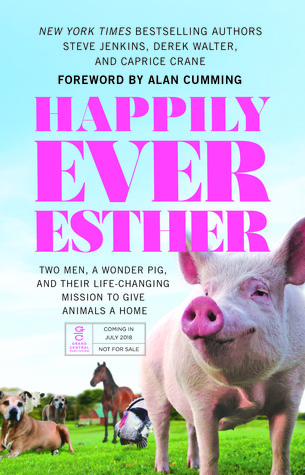
36547129Two men adopt a pig and move to a farm that they convert into an animal sanctuary. How could I resist this book? In Happily Ever Esther, Steve Jenkins and Derek Walter write about their misadventures in starting up the Happily Ever Esther Farm Sanctuary, which include: realizing they don’t have a vehicle to transport a pig to a vet, seeing the male sheep on their farm fighting for dominance, confronting rabbit rights activists who think their outdoor enclosure for their rabbit is animal cruelty, Esther’s rebellious teenage years, and so on.
The book is told in Steve’s voice, who admits he can get a bit dramatic over the animals in his care. As a somewhat dramatic cat mom myself, I can totally relate to the emotional roller coaster he goes through whenever one of the animals (especially Esther!) gets sick or hurt. One chapter where he stays overnight at a vet clinic while Derek drives home to care for the other animals at the farm really hit home, and I love how much he and Derek clearly love the animals on their farm.

The book talks about how steep their learning curve was, and how they’ve sometimes had to make difficult choices, such as letting go of a wonderful volunteer whose disregard for instructions led to potential tragedy. They also talk about their visit to a place touted as pig paradise, and how difficult it was for them to see the reality of the circumstances the pigs were in. There was no shelter, so the pigs were pretty much in the hot sun all day, and some had moles and spots that looked cancerous. And in a horrifying scene, visitors are given hot dogs to feed the pigs — thankfully, they turned out to be made of chicken, not pork, but still!

They also talk about the cruel conditions that animals in commercial farms are often subjected to. Like how cows are artificially kept pregnant so they can keep lactating and giving milk, and how chickens are kept in tiny cages and kept fat and inactive so their meat is tasty. Both Steve and Derek are vegan, and I can see how knowing all these things can make one choose that lifestyle. The book also includes lots of great recipes that are ‘Esther approved’, including meat-free bacon (made out of rice paper and spices) and eggz on toast (using wheat and stuff to mimic egg yolk).

The book as a whole is charming and sweet but the chapters feel a bit random, and the narrative thread tying it all together isn’t that strong. As a result, it feels a bit slow at times, and despite being a fairly short book, it took me a while to get through it. I’d personally love a Netflix series about the Happily Ever Esther Farm and the animals who live on it. I’d totally binge on that.

+

Thank you to Hachette Book Group Canada for an e-galley of this book in exchange for an honest review.

Review | Sofie and Cecilia, Katherine Ashenburg

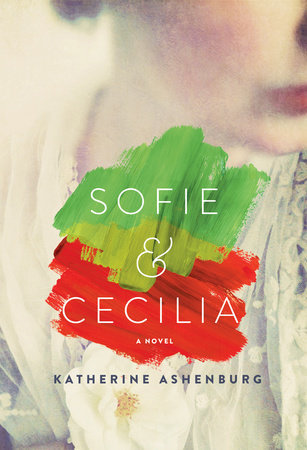
35926484Sofie and Cecilia is such a lovely, languid novel, about the friendship between the wives of two prominent Swedish painters in the early 20th century.

Sofie is a talented artist who has to downplay her own skills in order to soothe the ego of her arrogant husband Nils. As may be obvious, I absolutely loathed Nils, even though I realize he was very much a product of his time, and even though Ashenburg does a good job of showing why the changing arts landscape makes him so insecure about his own work. Still, I loved it every time another character compliments Sofie’s work and Nils gets his hackles up. Even though Sofie is careful not to take the spotlight away from Nils, she does write letters that she never sends, where she reveals her true feelings, and the snappishness in these letters are a welcome touch.

Cecilia is a fiercely private woman who mostly enjoys independence in managing her husband’s professional life. She also mostly tolerates his infidelities, and in a rather easily foreseen twist, ends up finding an unexpected love of her own. Her story was interesting, though I found myself more drawn to Sofie’s struggles, and Cecilia’s half of the book paled somewhat in comparison for me.

Cecilia and Sofie’s friendship is punctuated by discussions around classic literature, which totally thrills the bookworm in me. They use book characters (e.g. Dorothea from Middlemarch, Becky Sharp from Vanity Fair, Jane Eyre and Mr Rochester from Jane Eyre, the characters in Virginia Woolf’s Mrs Dalloway and To the Lighthouse, and so on) to talk about the complex feelings they have but can’t quite express directly about their own lives. Through their discussions about books, we see all the little things that add up to their dissatisfaction about their lives and marriages, and about the limitations around women’s roles in society during their time. As a plot device, I absolutely loved it. I remember my own experiences of reading these books, and how my responses may be similar to different to theirs. In a way, I almost felt like engaging in dialogue with these characters myself, and talking about how a lot of the things women faced in their time are still things women face in the present-day, and how maybe women’s fiction is a bridge that connects women across variances in lived experience and time periods.

Sofie and Cecilia is a beautiful book, with a lovely cover, and I’d recommend it to bookworms or anyone looking for a languid read on a quiet afternoon.

+

Thank you to Penguin Random House Canada for a copy of this book in exchange for an honest review.