Review | Mindfulness Meditations: Discover a more vivid and connected life, by Anna Black

MindfulnessMeditationsWork has been rather hectic lately, and it’s made me want to get back into a mindfulness practice. For those who aren’t familiar with mindfulness, the basic premise is to be fully in the present moment. You’re not trying to adopt a more positive attitude nor reduce feelings of unpleasantness. Rather, you’re taking notice of the sensations you’re experiencing across all five senses at that very moment, simply taking notice of them without judgement.

My workplace offered a mindfulness meditation course a few years ago (pre-COVID, a.k.a. The Before Times), and while I usually grouch if I have to come into the office before 9 am, I did so almost happily during those few weeks. I found the practice transformative, and it soon became a daily ritual for me to start my work day by making my coffee in a mindful way. I found it a soothing ritual, and a good way to start off my days with a shot of calm.

Fast forward a few years, and the pandemic, and while I still grab mindful moments here and there, mindfulness is no longer a daily practice for me. And when I saw Anna Black’s Mindfulness Meditations on the Firefly Books spring catalogue, it was a timely, perhaps even fateful, reminder of what I now realize I miss very much.

TableofContents

Mindfulness Meditations is a good introduction to the practice. It includes a bit of an introduction to mindfulness itself — what it is, how it came about, and what are some common misconceptions about it. As someone who tends to skim when I read, I appreciate how this book is formatted for easy reading: the practices themselves are in italic font and between brackets, and important info in the introductory paragraphs are highlighted with bigger and bolder font.

My favourite part is the artwork. The ink and watercolour illustrations of nature (for example leaves falling down the side of a page) or elements from the practices (for example a chair, or a sudsy sink of dishes to be washed) add a lovely touch of whimsy to the practices, and make it all just that much more accessible and appealing.

I also appreciate how Black organized her content. First, she begins by giving us exercises to help us become better attuned to our body, then she moves on to exercises to help us co-exist more mindfully with people around us. I like how she offers practices where we can focus on a particular part of our body, for example our hands, and also practices where we mindfully pay attention to multiple body parts. Depending on where my stress feels on a given day, I can imagine finding one or the other of those exercises more helpful.

Some of the exercises made me laugh. For example, she suggests that when we shower, we consider who is in the shower with us. She means who is occupying our thoughts and taking our attention away from the showering experience, but the phrasing came off a bit like a horror movie jump scare for me.

She also suggests that when our phone rings, we stop to consider the emotions coursing through us as we listen to it ring. She suggests taking stock of those emotions and bodily responses before answering the call. While I understand where she’s coming from and a petty part of me likes the idea of making people wait before I answer their call, doing this will just increase my stress. And if I do this in public, it will also increase other people’s stress at having to hear my phone keep ringing. So that’s not feasible at all.

I do like the “Seeing-Drawing” exercise, which is based on the Blind Contour Drawing developed by Kimon Nicolaides. I was recently at a workshop where the instructor did this exercise, and it’s indeed very relaxing. I also like the exercise of “Offering Kindness to Yourself,” where you basically take a moment to wish yourself well. It’s a soothing, and much-needed practice.

How do I see myself using this book? It’s not portable — it’s full-size and won’t fit in my purse — so it won’t work well as an easily accessible on-the-go guide. At the same time, some of the practices work best while on the go, for example, there are practices to do while waiting for the bus, or dealing with a red light on your commute. I thought of leaving my copy in the office, since that’s where I will probably find myself most often reaching for a mindfulness practice, but then there are exercises that can only be done at home, so that won’t work either.

What I may do instead is pick a practice I want to focus on, perhaps once a week, and then focus on doing that practice throughout the week. I may start with “Offering Kindness to Yourself” for this week, see how that goes. And over time, I imagine, some of these practices will become second nature.

+

Thanks to Firefly Distributed Lines for a copy of this book in exchange for an honest review.
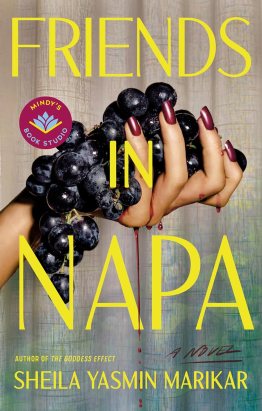
Review | Friends in Napa, by Sheila Yasmin Marikar

FriendsInNapaWell, this novel is a bit of a mess, and not in a fun way.

The premise had potential: wealthy couple Raj and Rachel invite old friends from college to Napa Valley to celebrate the opening of their new winery. As the weekend unfolds, relationship problems start to surface, old crushes are rekindled, and old rivalries reignited.

The thing is, for most of the novel, nothing really happens. Raj decides to flirt with Anjali, whom he semi-almost-dated back in college until he met Rachel. Anjali is stressed over her daughter’s vaping (medical, for anti-anxiety, but she keeps needing to increase the dose) and is also disappointed in her husband David’s gullibility and lack of critical thinking skills, so she decides to indulge. But just a bit, and never too far.

Hari starts sending out romantic feelers to Rachel, since she’s clearly unhappy with Raj, but she demurs. Raj yells at Rachel for breaking a glass, because it embarrasses him. He’s clearly a social climbing jerk, and at a few points, Rachel reflects that she’s never good enough for him, and that the fancy trinkets he buys her as apology aren’t enough anymore, but she never quite does anything about it.

And then there’s a sixth character named V, a social media influencer who’s boosting her ego post-divorce by being extra gorgeous online and letting randos pay her to do stuff online. She’s also an old friend of Rachel, but isn’t really part of the other characters’ drama, so honestly, she just felt superfluous.

There are clearly tensions running amok amongst the friends, and there are certainly moments of tension throughout. But there never quite feels like an escalation to the tension, and as a result, there is never quite a build-up of momentum instead. So when things do explode — like a random fist fight partway through that was maybe / maybe not fuelled by magic mushrooms? — it feels unearned. Worse, it doesn’t even really go anywhere. The big takeaway from the fist fight scene was a boxing pun by a side character influencer, but like, no one seemed to notice or even care that they were drugged without their knowledge?

All this comes to a head with a sudden and totally out of nowhere plot by three of the characters to take down another character. The motivation of at least one of the plotters was crystal clear, a second plotter maybe had some motivation, and the third plotter …just seemed part of the ride? Their target was certainly unlikeable, but their plan was way out of proportion. What exactly were they hoping to achieve? Possibly revenge, but then the plotter who’d want that would presumably be more concerned with setting things right. Possibly freedom, but the plotter who’d be motivated by that surely had other options at their disposal. And perhaps the third plotter wanted success, but again, there was no direct link between the plan and that goal.

Part of the challenge is that we never actually hear from the characters what their plan is. We just see them decide to do it, and then watch as it unfolds. Which would be fine if the plan made sense in the first place, but it doesn’t.

Also, at some point while the plan unfolds, the author seems to have decided that the target character wasn’t just unlikeable; they were downright evil. And so we see this character unveil an off-the-wall evil scheme of their own. Now, this character’s motivations make more sense than the three plotters’, but having them suddenly reveal all of this during that particular scene did not make sense at all. It just felt like random exposition, some final Hail Mary to justify the three “good” characters’ actions.

Finally, the ending just confused me. Shouldn’t there have been more consequences for these characters’ actions? The novel tried to hand-wave past all that with some lines about image management and online intrigue, but I don’t buy it. Or rather, I may be willing to suspend my disbelief on that, but the novel didn’t quite do enough to convince me.

I really wanted to like this book. Old friends, a gorgeous vineyard, lots of drama, and (what I thought would be) a locked room mystery. But this just felt like a bit of a hodge-podge of plot points, and while I did finish it, I never quite got fully hooked into the story or its characters.

+

Thank you to Firefly Books Distributed Lines for an advance reading copy of this book in exchange for an honest review.

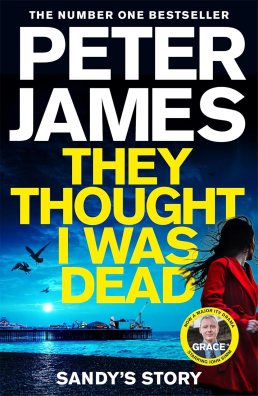
Review | They Thought I Was Dead: Sandy’s Story, by Peter James

SandysStoryLong-time fans of Peter James’ Roy Grace mysteries know his tragic backstory: his wife Sandy disappeared without a word years ago, and he’s been dealing with the heartbreak since.

In They Thought I Was Dead, Sandy finally gets the chance to tell her story. And it turns out to be both gripping page turner and tragedy. Sandy’s a compelling and complex anti-hero: smart and resourceful, yet seeming cursed to make one terrible choice after another. We want very badly for her to succeed, yet we can only keep reading as she digs herself out of one hole only to land in an even bigger one.

Her story begins when she meets a wealthy woman in Pilates class, and realizes she wants more out of life than her comfortable but staid existence with Roy. This leads to some risky choices that soon put her on the wrong side of Roel Albazi, an Albanian career criminal who becomes the catalyst for Sandy running away.

To Sandy’s credit, as much as she tries to justify her decisions and blame others for her situation, she’s also self-aware enough to admit, even to herself, that others weren’t to blame for her choices. Tamzin may have tempted her towards a more glamorous lifestyle, but then her desire for an exciting and glamorous life began all the way from childhood, when she vowed not to turn out like her ultra-thrifty working class parents. Roy’s career may have led to much loneliness and many cancelled date nights, but Roy did not cause her to have one night stands with other men. Sandy’s gambling may have landed her in a mountain of debt she could not even begin to pay, but she would somehow figure something out.

And you know what? Kudos to her. For all the mistakes Sandy makes and all the downward spirals she has to deal with, she consistently takes responsibility for her actions. She also undergoes tremendous growth throughout the story. Her story may involve moments where she gets mired in one serious addiction or another, but it also involves many moments where she makes choices to free herself from those addictions and truly work towards a better life. So even when she stumbles once or twice, we are fully on her side cheering her on to pick herself back up again.

That’s why it’s so hard to read the chapters from Roel Albazi’s point of view. Even though he ceases to be a majorly visible figure in her life partway through, his chapters tell us that he’s never forgotten her, and that he continues to be obsessed with causing her harm. And while he remains a nightmare figure in Sandy’s subconscious, she’s much more focused on the villains and misadventures in her present-day. Honestly, I just wish she’d told Roy about him. I don’t know how much Roy would have been able to help, but I hated that Albazi remained a threat even as Sandy continued to work her way back up.

The last few chapters are particularly tough to read: Sandy has finally achieved some sort of happiness, and yet can’t help but long for the life with Roy she’s left behind. Unfortunately for her, he’s already moved on, and is in a serious romantic relationship with a forensic pathologist. This leads Sandy to doing things that she herself admits to her psychologist she’s not proud of. (From my past blog posts, there seems to be some overlap with events in Roy Grace Book 10, Want You Dead.) And honestly? It’s tragic. We want her to be happy, and it’s hard to see her making all-new bad choices that jeopardize that.

Sandy’s story is a fast-paced and page-turning read, but it’s not an easy one. Peter James turns this shadowy figure from Roy Grace’s past into a captivating anti-hero on her own merit.  I would have loved to read more stories from her, but I’m glad we have at least this one book. As Sandy says in the prologue, referencing the dash between the year of birth and year of death on a person’s gravestone: “I’m just fleshing out the dash a bit on my odd little life.”

+

Thank you to Publisher’s Group Canada for an advanced reading copy of this in exchange for an honest review.