
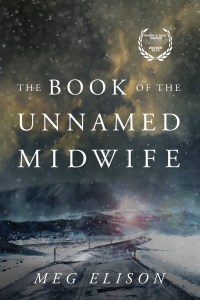
Author Q&A | The Book of the Unnamed Midwife, Meg Elison

elison-bookoftheunnamedmidwifecover

When the publicists for Meg Elison’s The Book of the Unnamed Midwife reached out and called the book “a modern-day look at women’s equality and access to reproductive health,” I was immediately intrigued. I think it’s a particularly timely and relevant topic, and I love seeing it explored in fiction.

SYNOPSIS

Philip K. Dick Award Winner for Distinguished Science Fiction

When she fell asleep, the world was doomed. When she awoke, it was dead.

In the wake of a fever that decimated the earth’s population—killing women and children and making childbirth deadly for the mother and infant—the midwife must pick her way through the bones of the world she once knew to find her place in this dangerous new one. Gone are the pillars of civilization. All that remains is power—and the strong who possess it.

A few women like her survived, though they are scarce. Even fewer are safe from the clans of men, who, driven by fear, seek to control those remaining. To preserve her freedom, she dons men’s clothing, goes by false names, and avoids as many people as possible. But as the world continues to grapple with its terrible circumstances, she’ll discover a role greater than chasing a pale imitation of independence.

After all, if humanity is to be reborn, someone must be its guide.

Its sequel, The Book of Etta, comes out February 2017.

Q&A with Meg Elison
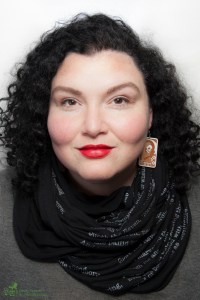
megelison_authorphoto

Meg Elison is a high school dropout and a graduate of UC Berkeley. Her debut novel, The Book of the Unnamed Midwife, won the 2014 Philip K. Dick Award. She lives in the San Francisco Bay Area and writes like she’s running out of time.

In your own words, can you tell us about The Book of the Unnamed Midwife?

I began with a burning injustice in birth culture and misogyny, and I read the entire canon of post-apocalyptic fiction because I wanted to end the world, over and over. The books delivered that, sometimes sadly, sometimes angrily. But even the best ones scarcely dealt with women at all. I was at Berkeley when I began it, and I remember asking one of my professors if the main female character in Hemingway’s The Sun Also Rises was meant to be read as barren, as an analogue to the protagonist’s castration. The professor, who had spent twice my lifespan behind the podium, blinked and told me he had no idea; the question had just never come up. Science fiction and post-apocalypse fiction was the same. Very few writers seemed to consider that all these furtive sex scenes might end in pregnancy, or that these refugees from the end of the world might need tampons. With a few exceptions, like Atwood’s The Handmaid’s Tale and P.D. James’ Children of Men, the genre seemed barbarously ignorant of women’s lives. So the book began to take shape because it needed to exist.

In The Book of the Unnamed Midwife, birth control and a woman’s right to bodily autonomy are central to the plot, what inspired you to write about this subject?

I’ve watched the War on Women rage on and on, with the rollback of abortion rights from state to state and an insidious slide back into casual misogyny in common rhetoric and culture. I went through puberty with a copy of Our Bodies, Ourselves in my lap, and the struggle for women’s equality was presented to me as something that had been won, at least in the United States. It didn’t occur to me until it was far too late how easily we could lose all the ground that we’ve gained. Piece by piece, the rights of women are being dismantled. I can’t be at every Planned Parenthood to escort people safely, and I can’t be loud enough to shout down legislation that tries to take our power away. Writing this book was the loudest I could scream my worst fears and hopefully help keep them from coming true.

Slate has called The Book of The Unnamed Midwife, the “science fiction analog to the Zika crisis.” What do you feel are the connections?

Zika is a crisis of reproduction freedom. It disproportionately affects women and makes pregnancy hazardous and morally fraught. I remember being terrified when El Salvador issued its advice concerning Zika: just don’t get pregnant. The government gave that advice to women who have almost no access to birth control, in a nation where abortion is illegal. Now, Zika is making inroads in Florida, where the state has actively worked to block funding for reproductive health care and comprehensive sex education. Zika will do the most damage in places where women are already disadvantaged and have no recourse. The plague in Midwife isn’t Zika, but it elicits the same kind of terror. It flourishes in those places where women already have little to no reproductive freedom and it brings terror into the delivery room. I never wanted to correctly predict a future as scary as this one.

What was the most interesting thing you learned while researching this book?

I spoke with a couple of midwives and all of them were happy to share with me the most horrific sleep-robbing stories they had of how bad births can go. More than one of them told me that they don’t share stories of birth-trauma with pregnant people, because we have a culture of terrifying them before labor. But they were happy to share with me, once I told them about the book. I learned that birth control expires a lot faster than I hoped it would. Weirdly, my research taught me a lot about civic engineering. I wanted to know what services would shut down first, and how. I wanted to know how fast cholera would run in the streets when municipal water cut out. I learned some things that might save my life in a disaster smaller than the one I wrote.

What do you want readers to take away from reading your book?

I want people who read Midwife to really grapple with what being a woman is like. I used the most extreme circumstances to tell this story, but many women deal with intimidation and assault under normal circumstances. I want the reader to see women as people, and to be disgusted by their relegation to chattel. I hope that readers see that although this book is grim and gutting, there’s hope in it. I’m a realist, but reality usually offers a sliver of hope.

What’s coming next?

The sequel to Midwife, The Book of Etta will be out soon! It’s about Etta, the young woman mentioned in the frame tale of Midwife, and it deals more with gender essentialism and the way things aren’t what we thought they would be when we first began them. I’ve also got a couple of other books in the works and I’m always writing short stories. What’s coming next is more barn-burning stories with kick-ass queer people in them, because that’s what I do.

+

Thanks to the author and her publicists for the Author Q&A above.
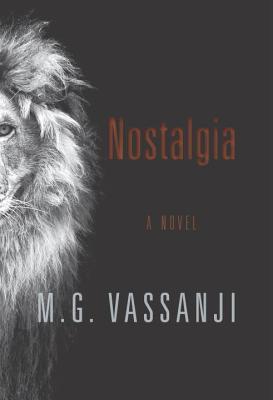
Review | Nostalgia, M.G. Vassanji

28363849I really thought M.G. Vassanji’s Nostalgia would be right up my alley. Vassanji imagines a world where immortality is possible, and identities can be chosen as humans transfer their consciousness onto an entirely new body when they tire of their current one. Their memories are tucked away, providing the opportunity for a completely fresh start. The term “nostalgia” refers to what they call “Leaked Memory Syndrome,” when the memories belonging to one’s previous body “leak” into one’s current consciousness.

The concept is fantastic, a mix of science fiction and existentialism that tickled my geek bone. As well, I’ve long heard good things about Vassanji’s work, and thought this would be the perfect place to start. Unfortunately, this book just wasn’t for me. It’s a short read at barely over 250 pages, but it took me months to get through it, and I might have decided not to finish it if it hadn’t been such a short book and a review copy.

Nostalgia is the story of Frank Sina, a doctor who specializes in working with patients to generate their new identities. One of his patients, Presley, is suffering from nostalgia, odd flashes of memory of a lion. He escapes treatment and Frank is ordered to help authorities bring him back. Concurrent to this storyline is one about a less developed nation, where a reporter from a CNN-type media outlet is captured by rebels and presumed dead. The story explores questions of politics, inequality and immortality, and I’m sure it’ll be fascinating and thought-provoking for some readers. I just couldn’t get into it.

+

Thank you to Penguin Random House Canada for an advance reading copy in exchange for an honest review.


Blog Tour | The Woman in Cabin 10, Ruth Ware

28187230I loved the Agatha Christie-ish feel of Ruth Ware’s first thriller In A Dark, Dark Wood, so The Woman in Cabin 10, feature a similar locked room trope also caught my eye. The book begins with the heroine being robbed in her own home, and the tension just ratchets from there. Still recovering from her experience of a break-in, travel journalist Lo Blacklock is grateful for an escape, with an assignment to write a fluff piece about a luxury cruise. One night, she thinks she witnesses the woman in the cabin beside hers being thrown overboard, but when she reports the crime, she learns that all the ship’s passengers are accounted for and that the cabin beside hers was unoccupied.

Like Dark Wood, Cabin 10 provides us a narrator whom others deem unreliable, mostly because of her trauma from the break-in, coupled with heavy drinking in public and a mental health condition. I love that Ware tackles head-on how victims of crime are often judged for their own behaviour, such that their reliability is called into question. (As an aside, I also love that the promo package from the publisher included a pink tube of mascara, which plays a big part in the mystery, but is also useful to have around.)

This book is a tightly wound thriller full of twists and turns. I actually got scared reading it, and was so caught up in the story that I literally jumped at a mysterious sound in my hallway while I was reading. What I love most is that Ware adheres to the rules from the golden age of crime fiction, in particular the one that states that the writer must equip the reader with all the information necessary to solve the mystery themselves. When the big reveal was made, I re-read some of the earlier passages and realized that an important clue was indeed provided for a reader more observant than I to catch. Overall, I found this book utterly gripping, and it was a lot of fun waiting to see how it all turns out.

Q&A with author Ruth Ware

  1. How did the idea for this book come around?

It’s funny, because for In a Dark, Dark Wood I had a really clear answer to this – I could pinpoint it to a single conversation. Whereas The Woman in Cabin 10 it’s a lot harder to pin down. I think part of it came about because I was starting the book at the same time as reviews for In a Dark, Dark Wood were beginning to appear. Many of them made reference to Agatha Christie and the way she wrote such excellent “closed room” mysteries. I suppose it got me thinking about her most famous settings – Murder on the Orient Express, Death on the Nile, And Then There Were None, and so on. She does that feeling of stifled luxury so well – where her characters are somewhere really beautiful and luxurious, but also terrifying! A cruise felt like a natural way to pay homage to that type of setting – somewhere incredibly glamorous, but at the same time, you can’t get away.

The other element was that while I was writing, there were a lot of he said / she said cases in the news, and it got me thinking about how society looks at different kinds of witnesses and the way some kinds of evidence are given priority over others. It seemed to me that young women – and particularly young, drunk women – were right at the bottom of the pile in terms of how courts and the police viewed their evidence. I wanted to write a narrator who fitted that bill and maybe force people to question their own preconceptions in how they evaluate what Lo sees.

  1. What is it about a cruise ship that makes it such a great setting for a murder mystery?

Well aside from all the Christie-ish locked room stuff above, it’s a naturally dangerous setting. You have a built in way of getting rid of bodies, which is incredibly hard to trace, and no law enforcement at hand. There is also the grey legal area that Lo talks about in the book – the way that crimes committed in international waters are very muddy in terms of whose responsibility they are to investigate and prosecute. You can have a situation where a Swede is suspected of killing a Spaniard, off the coast of Morocco, owned by a British company, sailing under a Panamanian flag. In that scenario it would usually be Panama who would be responsible for investigating, even though they are thousands of miles apart.

  1. The danger Lo faces at sea is heightened by her dependence on prescription medication. How did you research this aspect of Lo’s character?

I’m lucky that I know a few medics who were able to advise on likely dosages and types of treatment, but I also found message boards and forums invaluable for giving first hand insight into how different people react to withdrawal and so on.  

  1. Without giving too much away, there’s a fairly elaborate scheme at the heart of this mystery. I’m curious about your process — how did you plot it all out? (e.g. did you write out the scheme in advance in post-it notes? Or did you work backwards and try to fill in the various questions logically as they arose?)

I had the basics of it plotted out – nothing elaborate like post-it notes, just an A4 outline of how the plot would pan out – but the ending surprised me and meant I had to go back and re-write a chunk of it to make it work! Mostly I work using a mix of the techniques you describe – I have the bones in place, but the fine details I work out on the hoof.

  1. If you were a travel journalist like Lo, what would be your dream assignment and why?

I have always wanted to go to India or Thailand and I never have. So I would love to go somewhere beautiful and remote, and completely detach from everyday life. I’m also – contrary to how it may have come across in the book – a big fan of spa treatments. So throw in a massage or two, and I’d be in heaven!

Blog Tour Schedule

Check out the rest of the tour on the blogs below!

woman-in-cabin-10-blog-tour

+

Thank you to Simon and Schuster Canada for an advance reading copy in exchange for an honest review, and thank you to Ruth Ware for participating in this Q&A!