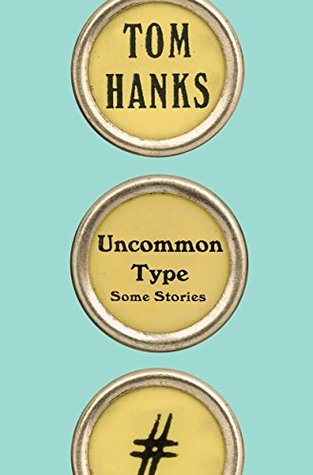
Review | Uncommon Type: Some Stories, Tom Hanks

34368390Tom Hanks’ short story collection Uncommon Type is much like his on-screen persona — warm, comforting, nostalgic. The stories, even the more sci-fi ones, harken back to simpler times, and the writing style reminds me a bit of classic lit.

Hanks’ strength as an actor is the humanity he brings to his roles, and similarly, the strength of these stories is the depth of the characters. On one hand, the characters feel ordinary, and not the real type of ordinary that socks you in the gut with their realness, but more like the extras in Hollywood movies. But there’s a glimpse of the emotions and experiences beneath the surface, and that it turn infuses the tales with a bit of a bittersweet tang.

My favourite stories:
– “The Past is Important to Us” a time traveller falls in love with a young woman he sees at the World Fair, but the time travel technology can only take him back to that same day and gives him a maximum of 22 hours before he has to return. The choice he makes at the end is bittersweet.
– “Steve Wong is Perfect” – a guy hits a streak of perfect strikes in bowling and gains fame and fortune but loses the joy in playing. I love how Hanks depicts Steve’s gradual emotional decline.
– “Go See Costas” — a Bulgarian immigrant survives violence back home and struggles to find a job in America. The final scene is powerful.
– “A Special Weekend” — a young boy is treated to a weekend at a hotel and then a plane ride with his mom and her boyfriend — Hanks is coy about the role of this man in the mom’s life, realistically reflecting the perception of his child narrator who’s mostly excited about the plane
– “Three Exhausting Weeks” – a pair of best friends, one a health and exercise nut and the other a couch potato, hook up and their romance leads to the couch potato guy wondering if he can keep up with his girlfriend’s lifestyle. I found this funny and relatable, and I especially love the side characters MDash and Steve Wong, and the subplot about MDash’s citizenship ceremony.

I also really liked the stories “A Junket in the City of Light” and “Who’s Who?” because they both give a glimpse into the life of an actor. “Junket” does a great job in portraying how exhausting press tours can be when promoting a film, and in this story, the lead character has to face the harsh reality that it’s really his co-star the press cares about and not him. In “Who’s Who?” an agent tells a beginner actress she basically has to reinvent herself (change her name, change the way she presents her high school theatre experience) to land a job. When she tells him that she’s afraid changing her name will disappoint her parents, he responds, “Disappointing your parents is the first thing to do when you come to New York.”

Typewriter buffs and people who love shopping in independent stores will love “”These Are the Meditations of My Heart.” A woman takes a cheap typewriter in for repair and instead discovers the perfect state of the art typewriter for what she needs. When the shopkeeper asks her why she wanted that particular machine, she says:

“I just want to set down what few truths I’ve come to know. […] I want my yet-to-be-conceived children to someday read the meditations of my heart. I will have personally stamped them into the fibers of page upon page, real stream-of-consciousness stuff that I will keep in a shoe box until my kids are old enough to both read and ponder the human condition!” she heard herself shouting. “They will pass the pages back and forth between them and say, ‘So that’s what Mom was doing making all that noise with all that typing,’ and I am sorry! I’m yelling!”

“Ah,” he said.

“Why am I yelling?”

The old man blinked at the young lady. “You are seeking permanence.” [pp. 234-235]

Hanks is very public about his own love of typewriters, and he has a whole collection of them. I can imagine him yelling as the young lady in this story does, and pounding away at the eyes to tell the stories in this book. It’s a heartwarming image, and as a Tom Hanks fan, I’m glad I got to pass time with these pages of truths he’s come to know.

+

Thank you to Penguin Random House Canada for a copy of this book in exchange for an honest review.
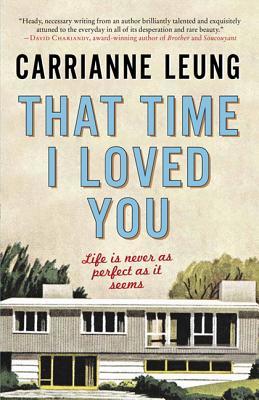
Review | That Time I Loved You, Carrianne Leung

35564928In That Time I Loved You, Carrianne Leung takes us into Scarborough in the 1970s, where an idyllic veneer barely conceals the various dramas in the lives of its residents. The book starts with June, a Chinese-Canadian girl who observes her neighbours with unnerving insight. She tells us that parents in their neighbourhood are committing suicide, and that the children can’t understand why. As the book goes on, we begin to understand the lives of the residents, and while we don’t delve too deep into the specific motivations of the residents who killed themselves, we do get an underlying sense of despair and various forms of loneliness among the residents in general.

The book started off a bit slow for me, and while the lives of the characters portrayed in the first few chapters had their interesting moments (one woman heard hateful words from the flowers she tended and another woman seemed trapped in her fairly new marriage), none of them really grabbed me. It was the later chapters I found most compelling, and made me bump up my rating to 4 stars on Goodreads.

My favourite chapters, and to my mind, the strongest by far, are:

  • “Things” – Darren’s story about being Jamaican-Canadian and dealing with a math teacher who keeps picking on him for no discernible reason feels heartbreakingly real. There’s a moment where he remembers something his mother told him at a mall when he was younger that was just bam! in terms of emotional impact. We get a hint about how his actions in the chapter turn out later on, but I would have loved to spend a lot more time in his life.
  • “Kiss” – Josie’s story about feeling overshadowed by her more outgoing best friend June and trying to be the perfect daughter and niece was very relatable, and I wanted her to have a starring role in a story all her own. In this chapter, she also had to deal with a situation that was horribly wrong, and I thought Leung was masterful in her portrayal of Josie’s growing discomfort.
  • “Sweets” – June’s grandmother Poh Poh getting used to life in Canada after immigrating from Hong Kong — I love, love, love the subtlety of the details that are revealed about her life and her character, and the delicacy with which each bit of information is revealed over the course of the chapter.
  • There’s also a side character named Nav who I really wish had gotten a chapter of his own. I loved him in the “Sweets” chapter, and would’ve loved to see more of him.

Overall, this was a strong book. There are many examples of suburban fiction that subvert the idyllic image of suburban life, but often those books focus on white, middle class families. Leung in turn subverts the suburban fiction genre with the sheer diversity of her characters, and it’s a welcome perspective as it likely does represent the diversity of Scarborough suburbs in the 1970s, and finally brings the stories of these communities to Can Lit suburban fiction.

+

Thank you to Harper Collins Canada for an advance reading copy of this book in exchange for an honest review.

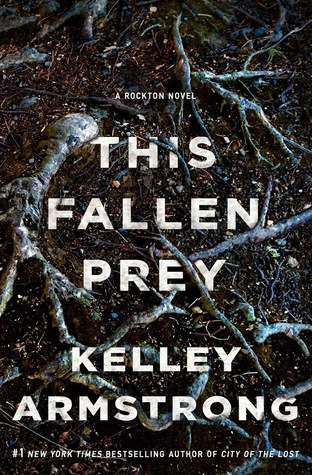
Review | This Fallen Prey, Kelley Armstrong

34953116One of my favourite things about Kelley Armstrong’s work is how well she writes kickass, diverse women characters. This Fallen Prey is no exception — its protagonist Casey Duncan is a half Chinese-Filipino, half Scottish detective who solves crimes in Rockton, a remote town in the wilderness of Canadian mountains. Like many of Armstrong’s heroines, Casey is smart, kickass and just all around awesome, and the men in her life respect her and her abilities without turning her into a special snowflake.

In This Fallen Prey, Oliver Brady, a wealthy, young alleged serial killer, is brought into Rockton to be imprisoned for six months, until he is convinced that his father’s proposal of house arrest is the preferable option. Casey and her boyfriend, town sheriff Eric Dalton protest that Rockton isn’t equipped to provide the level of security required for such a dangerous person (they have one jail cell and Rockton residents who commit crimes are often just sentences to hard labour), and true enough, Brady escapes and there’s evidence that he had help from a Rockton resident.

This Fallen Prey is gripping and thrilling, one of Armstrong’s most exciting page turners yet. I love the moral ambiguity Casey faces in her dealings with Brady. Brady insists he’s innocent and being set up by his stepfather, and Casey can’t figure out what the truth is. When she’s forced to hunt him down and sees the body count rise in his wake, she realizes all too well how an error in her judgement could lead to a vicious killer (whether Brady or otherwise) getting away.

The big reveal was satisfying — it validated a lot of the clues dropped along the way, had its disquieting moments, and pushed Casey’s character towards becoming a better detective. The book ended on a cliffhanger that will hopefully be resolved in the next Casey Duncan book, and I’m definitely liking where Armstrong is taking this series and these characters.

My one caveat is that it would be strongly advisable to read the first two Casey Duncan books before this one. Armstrong plunges us immediately into Rockton and drops in a lot of series characters with minimal introductions. I had read only the first book, City of the Lostbut not the second, and as I read City of the Lost back in 2016, I had completely forgotten much of the background of this town and its residents. I got to know and love the main cast fairly quickly — Casey, Dalton, Anders, the wonderful dog Storm — and some secondary characters Matthias and Isabel. But there were a lot of other series characters who played larger roles in the mystery and I had a hard time keeping them straight. Casey would make a startling realization about a character and I’d have to flip to the beginning to remind myself who this was. Or Casey would reference major traumatic events from a character’s past (that I presume happened sometime in the first two books), and it was hard to keep the back stories straight. So if you have the first two books, I’d highly recommend re-reading them before this one, or if you haven’t read them yet, definitely read them first.

+

Thank you to Penguin Random House Canada for a copy of this book in exchange for an honest review.