Review | Sofie and Cecilia, Katherine Ashenburg

35926484Sofie and Cecilia is such a lovely, languid novel, about the friendship between the wives of two prominent Swedish painters in the early 20th century.

Sofie is a talented artist who has to downplay her own skills in order to soothe the ego of her arrogant husband Nils. As may be obvious, I absolutely loathed Nils, even though I realize he was very much a product of his time, and even though Ashenburg does a good job of showing why the changing arts landscape makes him so insecure about his own work. Still, I loved it every time another character compliments Sofie’s work and Nils gets his hackles up. Even though Sofie is careful not to take the spotlight away from Nils, she does write letters that she never sends, where she reveals her true feelings, and the snappishness in these letters are a welcome touch.

Cecilia is a fiercely private woman who mostly enjoys independence in managing her husband’s professional life. She also mostly tolerates his infidelities, and in a rather easily foreseen twist, ends up finding an unexpected love of her own. Her story was interesting, though I found myself more drawn to Sofie’s struggles, and Cecilia’s half of the book paled somewhat in comparison for me.

Cecilia and Sofie’s friendship is punctuated by discussions around classic literature, which totally thrills the bookworm in me. They use book characters (e.g. Dorothea from Middlemarch, Becky Sharp from Vanity Fair, Jane Eyre and Mr Rochester from Jane Eyre, the characters in Virginia Woolf’s Mrs Dalloway and To the Lighthouse, and so on) to talk about the complex feelings they have but can’t quite express directly about their own lives. Through their discussions about books, we see all the little things that add up to their dissatisfaction about their lives and marriages, and about the limitations around women’s roles in society during their time. As a plot device, I absolutely loved it. I remember my own experiences of reading these books, and how my responses may be similar to different to theirs. In a way, I almost felt like engaging in dialogue with these characters myself, and talking about how a lot of the things women faced in their time are still things women face in the present-day, and how maybe women’s fiction is a bridge that connects women across variances in lived experience and time periods.

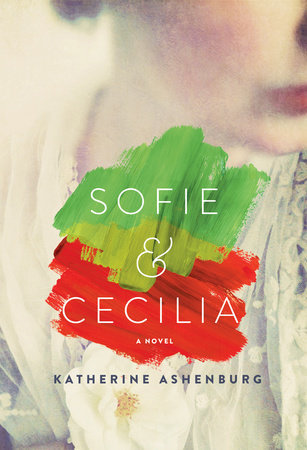
Sofie and Cecilia is a beautiful book, with a lovely cover, and I’d recommend it to bookworms or anyone looking for a languid read on a quiet afternoon.

+

Thank you to Penguin Random House Canada for a copy of this book in exchange for an honest review.

Review | The Dutch Wife, Ellen Keith

35068952In The Dutch Wife, Ellen Keith tells the story of Marijke de Graaf, a Dutch political prisoner in a Nazi concentration camp in 1943, who volunteers to work at the camp brothel in exchange for a reduced sentence. While working at the brothel, she catches the eye of Karl Muller, the second-in-command Nazi officer at the camp. Karl is struggling to balance his distaste for the brutality of his job with his desire to make his father proud, and sees in Marijke a welcome respite from the pressures of his life. Alternating with Marijke and Karl’s stories is that of Luciano Wagner, a political prisoner in 1977 Buenos Aires during the Argentine Dirty War, who is trying to work through a fraught relationship with his domineering father.

The Dutch Wife is beautifully written, and distressingly bleak. Marijke’s story is certainly a perspective I haven’t seen in fiction before — I had no idea prisoners at Nazi camps had brothels — and Keith does a great job at detailing all the various ways in which the Nazis used it more to reinforce their power rather than actually give prisoners moments of pleasure. In a heartbreaking scene, Marijke’s first client can’t perform, because of how much his experiences at the camp weigh down on him. I don’t know if I’d describe him as broken exactly, but Keith paints a very stark picture of how diminished he is when he comes to Marijke, and how sexual pleasure isn’t even among his concerns anymore. In another, more horrifying scene, the Nazis send a gay man to Marijke’s bed, and watch closely to make sure he performs. His desperation when attempting to fake sexual attraction so as to avoid punishment are heartbreaking, and it was such a difficult scene to read.

Karl and Marijke’s encounters were even more difficult to read. Karl believed he was in love with Marijke, and schemed about ways in which he could get rid of Marijke’s husband, who was assigned to a neighbouring camp. The things he ended up doing were horrific, and a scene where he learns that the husband (a mild-mannered professor type) has been given special dispensation to visit a prison library, and then tracks him down to yell at him just infuriated me. His treatment of Marijke as well is so creepy-crawly given the power imbalance, and it was heartbreaking to see Marijke exhibiting symptoms of Stockholm syndrome and thinking that Karl isn’t that bad. This storyline is outright disturbing, and kudos to Keith for such a stark portrayal of what must have been a reality for some women in those camps.

Luciano’s story is tied to the 1943 storyline in a way that makes the story feel like it comes full circle. His storyline does tease us with a bit of hope, as he and some of his fellow prisoners use their jobs at the prison to try to help the resistance and the families affected by the war. I have so many conflicting emotions about how Luciano’s story turns out, but ultimately, I do feel that the ending it realistic, and fits in with the story Keith has built up so far.

The Dutch Wife is beautifully written and engrossing, but by no means an easy read. I’d recommend reading it, then treating yourself to a bit of self-care afterwards.

+

Thank you to Harper Collins Canada for the wonderful meet-the-author event in May, and for a copy of this book in exchange for an honest review.


Review | Foe, Iain Reid

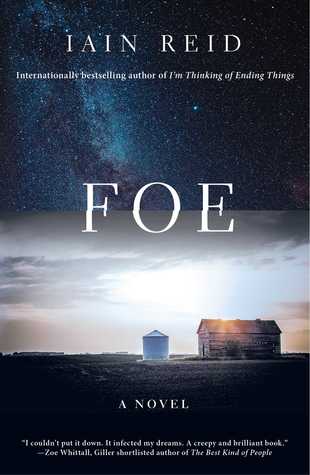
37510662Foe reads very much like a Black Mirror or Twilight Zone episode or maybe a Philip K Dick short story. If you’ve read a lot of speculative fiction or watched a lot of classic science fiction, the ending may not be a huge shock to you, but the story is no less powerful for that. Reid writes beautifully, and his spare style works very well for this reflective, quietly disquieting tale.

Junior and Hen are having a quiet evening in their remote farmhouse when a stranger comes up to the door and tells Junior he’s been selected by random lottery to travel to space. The stranger, Terrance, will help prepare Junior for the journey, and will also make arrangements so his wife won’t feel so alone while he’s gone. As Terrance begins recording every aspect of Junior’s physical appearance and everyday habits, Junior begins to fear that arrangements are being made to take over his life. Worse, Hen seems to be drawing further away from him, and more welcoming of whatever it is Terrance is doing than Junior feels comfortable with.

I loved this novel. It does raise the usual science fiction / speculative fiction questions about personhood and identity: who are we really? What makes us human? Is the essence of our humanity something that we can eventually manufacture? What if something happens that throws doubt on everything we know is true?

But for me, the power of this story is in the questions it raises about love and relationships. The story is told through Junior’s perspective, and his storyline is certainly thought-provoking and emotionally resonant in many ways, but Hen’s story also really stood out for me. I love the subtlety in which Reid explores the complex gamut of her emotions, from the little niggling things that dissatisfy her about the current state of her life and her relationship with Junior to the flashes of affection when she realizes — seemingly to her surprise — how much she loves her husband. I absolutely love the way her story turns out, and the ending of the book made me so incredibly happy for her.

Equally masterful to me is the promotional letter that accompanied my copy of this book, which is probably the most intriguing letter from a publisher I’ve ever received as a book blogger. The excerpt that hooked me is as follows:

Foe is a master class in writerly tightrope walking. Iain places realistic characters in hyperreal situations and then increases the pressure higher and higher, while at the same time taking away all conventions, tricks, and devices a reader recognizes from the literary world.

  • How does a writer make an engrossing thriller with no thrills, a horror story with no violence, science fiction with no science?
  • How is a book about outer space paradoxically about confinement?
  • How can a writer give readers exactly what they want but simultaneously take away everything familiar from them?

Foe is a literary high dive. It’s a book about alienation and belonging, outer space and inner space, individuality and conformity. It’s about whether you or I or all of us could ever be replaced.

[Letter to reviewers from Nita Pronovost, Vice President, Editorial Director, Simon & Schuster Canada. Dated May 1, 2018.]

The letter raised my expectations for Foe sky-high, and the book didn’t disappoint.

+

Thank you to Simon and Schuster Canada for an advance reading copy of this book in exchange for an honest review.