Review | Girls of Paper and Fire, Natasha Ngan

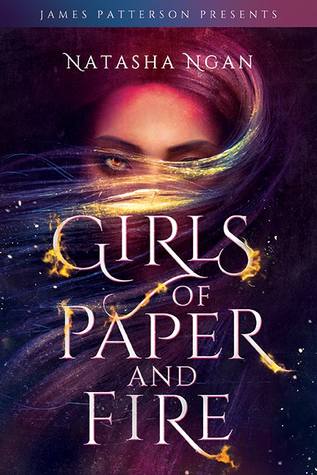
34433755Girls of Paper and Fire is an Asian-inspired fantasy about a world where your social standing is determined by how much demon blood you have. At the top is the Moon caste — fully demon beings like the king. At the bottom is the Paper caste — fully human beings like the novel’s heroine Lei. Every year, a handful of girls from the Paper caste are selected to serve the king as his concubines. Except this year, Lei and another Paper girl fall in love, and Lei gets drawn into her lover’s plot to rise up against the caste system and overthrow the king.

I absolutely loved this novel. Mostly, I admit, because of all the Asian influences. The East Asian influences are immediately obvious — characters wear traditional Chinese clothing like cheongsams and ruquns, ‘Lei’ is an East Asian name (Chinese, according to Google, but I also know a Japanese woman named Lei), and the descriptions of the demon king’s Imperial court reminds me of Chinese history. But some of the character names also sound South Asian, and some of the food seems to have Southeast Asian and Malay influences. So I love all the little touches that feel like this fantasy world borrows details from various parts of Asia.

The world building is fantastic, and the descriptions wonderfully vivid. The way the palace’s designers creates dresses for the Paper girls that reflect their personalities reminds me of how Cinna in The Hunger Games designs Katniss’s outfits. And just as Cinna’s scenes were among my favourites in that trilogy, the descriptions of the outfits here are absolutely breathtaking. Take for example this cheongsam Lei wears early in the book:

I pull aside the folds of silk. There’s the wink of metallic silver… Cut long and slender, sleeveless, with a high collar, silver threads woven through flicker like running water when they catch the light. The delicate silk fabric is almost sheer. A scattering of moonstones, opals, and diamonds wind along the hips and chest. …It fits perfectly, clinging to my frame like a second skin. Despite the jewels, the material is light, mere brushings of gossamer across my skin. The warmth of magic thrums in the fabric. Whatever enchantment has been placed on the dress also makes it glow. Every moment I make sends of scatters of silvery light, as pale as moonbeams. [p. 88-89]

How much do you want to see that dress?! Or more importantly, feel that fabric against your skin?

The food as well sounds absolutely delicious. Even the food in a prison scene — pandan-wrapped rice balls — is mouthwatering.

That being said, this book isn’t all as light-hearted and pleasurable as I may have made it sound. Ngan never lets us forget that these Paper girls are, ultimately, sexual objects for the king’s pleasure. I believe the book merits trigger warnings for rape, sexual assault, and gender-based violence, and Ngan doesn’t flinch from portraying the reality that Lei and the other girls have to face. So this book is intense, but in a good way. At its heart, it’s a story of female empowerment, women reclaiming agency and independence within a social system that tries to render them mere objects. It’s somewhat like Atwood’s The Handmaid’s Tale but for a YA audience, in a fantasy setting with Asian characters.

As Lei says on the back cover of my ARC:

In my land, we’re known as Paper Girls… easily torn, existing only for others to use and discard.

But there’s something they’ve all forgotten about paper. It can light the world on fire…and make it burn.

And indeed, as the story progresses, we see Lei develop from being a frightened girl wanting only to survive to becoming a powerful young woman ready and able to make her world burn. I loved this story and can’t wait to see where Ngan takes this next.

+

Thank you to Hachette Book Group Canada for an advance reading copy of this book in exchange for an honest review.
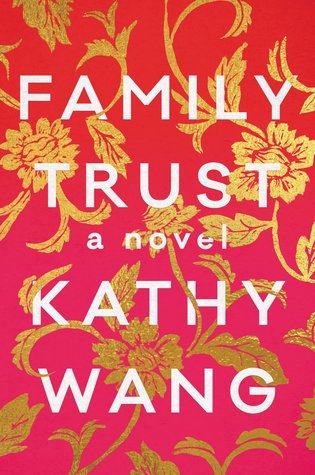
Review | Family Trust, Kathy Wang

38359019Finally — a book to satisfy my post-Crazy Rich Asians cravings! (My review of China Rich Girlfriend and Rich People Problems.)

I absolutely loved Family Trust. Where Kevin Kwan’s trilogy was an affectionately hilarious take on the super rich Chinese families in Asia, Kathy Wang’s story is a biting yet heartfelt comedy on a wannabe rich Chinese American family in Silicon Valley. It’s a story that feels universal — any rich family can have a similar battle over inheritance. But it’s also specifically Silicon Valley, with the conversations around wealth and the tech innovation approaches to achieve wealth. And there are little touches that feel uniquely Chinese — and more accurately, Chinese-American and first+second generation immigrant. Things like the network of friends/rivals built amongst Chinese immigrants in America, the subtly ostentatious displays of wealth that signal the difference between rich and wannabe rich, the idea of the American dream and the lives in Asia people give up for their shot at it. Things I can’t quite quantify in words, but are woven through the text that makes it feel like an Asian-American story. It doesn’t have as many of the sly insider details as Kwan’s trilogy, but it’s still to me a big win for Asian American rep in contemporary fiction, and I think will appeal to fans of Crazy Rich Asians.

Family patriarch Stanley is dying and his family — ex-wife Linda, daughter Kate, son Fred and current wife Mary — are all angling for their inheritance. Linda has little faith in Stanley’s financial skills and urges her kids to basically get a dollar figure in writing from their father. She also decided to try online dating for a lark, and I just love how formidable and likeable this woman is. Michelle Yeoh may be a bit young to play her, but I’d love to see Michelle bring this character to life onscreen.

Kate is the family peacemaker / caregiver, a woman who is kicking ass career wise and has a great family, but discovers her husband (a supposed genius trying to start his own business) may be hiding something from her.

Fred reminds me of Eddie Cheng in Crazy Rich Asians — always angling for the next step up in the corporate ladder and wondering why he isn’t getting his due reward for his financial and business genius. A former classmate makes him an offer that may make his dreams of major wealth and entry into top-tier Silicon Valley C-suites come true, and the results are hilariously fitting.

I also loved Mary’s chapter — she knows who she is within the family dynamic and loves Stanley for the financial stability and relative comfort he brings to her life. She massages his feet and makes him feel like a king, and he gives her money and a house. It’s all very clear and straightforward and I like how Kathy Wang shows how she does have genuine affection for Stanley instead of painting her as totally avaricious. This holds true for the other characters — despite the discussions over inheritance and wealth, Wang keeps them all human and sympathetic.

Even Stanley — whom we learn has anger management issues and a history of obfuscating the truth to make himself feel more important — is portrayed with sympathy, and by the end appears almost like a King Lear tragic figure, a man who wanted to be larger than life but cannot escape the realities of age.

Finally, I love the feminist feel of this book. While the men in the Huang family are the ones most overtly grasping at wealth and corporate success — and most bombastic about their claims to such — it is the women who reveal themselves as the true successes, which they’ve achieved through much quieter means. I love that because the idea of the American Dream often rewards the extroverted and the ruthlessly ambitious. So I love this nod to the Susan Cain-esque quiet revolution, where you don’t have to be a Type A go-getter to achieve success.

+

Thanks to Harper Collins Canada for an ARC of this book in exchange for an honest review.

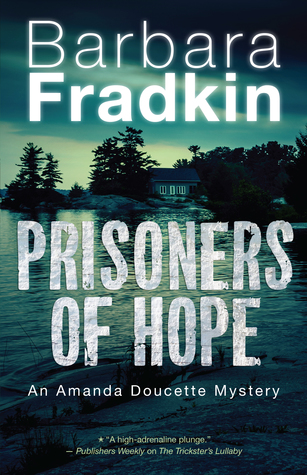
Review | Prisoners of Hope, Barbara Fradkin

36697410In Prisoners of Hope, Amanda Doucette is in Georgian Bay researching outdoor adventure options for her charity when a wealthy doctor is murdered at his summer estate and his family’s Filipina nanny goes missing. Amanda had encountered the nanny shortly before her disappearance, and, concerned about her welfare, decides to enlist the help of her RCMP officer boyfriend to find the nanny.

The mystery itself is compelling. Amanda is a sympathetic character, and I like how passionate she is about helping people she perceives to be in need. This is the first book I’ve read by Barbara Fradkin, and I look forward to checking out more of her titles.

But more importantly, I really like that Fradkin’s characters confront the difficult realities of how undocumented immigrants in Canada are forced to survive. The nanny, Danielle, came to Canada to build a good life for her family back in the Philippines, but was kept a virtual prisoner by the doctor’s family, who kept her passport hidden and basically prevented her from leaving them. Her husband Fernando gets duped by a fake immigration lawyer in Manila, and ends up having to go underground when he and his son arrive in Canada. I love how realistically Fradkin depicts their stories, and how sympathetic she is for why they wouldn’t trust institutions like the RCMP to be looking out for their best interests. Fradkin also clearly did her research into contemporary Philippine politics, and I love how the situation with current Philippine president Duterte is mentioned as a major impetus for Danielle and Fernando to need to escape the country.

But the reason this book really resonated with me is that I especially love how Danielle wasn’t fully a victim nor an innocent saint. Too often, I’ve read stories where the main character — often Caucasian — has to rescue the Filipino character from a horrible situation, and the Filipino character is depicted as a figure of tragedy. There’s certainly a lot of tragedy and injustice in Danielle’s situation, but she’s also definitely a fighter. She makes some dubiously moral choices to survive and keep her family safe, and while her actions are understandable, not all of them are legally or even morally justifiable, and in one case, an innocent ends up dying because of her decisions. And while Danielle is uncomfortable with violence, she also acts in a way that leaves no doubt that she would hurt people if she had to, for her family to have a good life. All this to me makes her feel real, and I absolutely love that even though she’s offstage for most of the book, she’s still such a complex, multifaceted character.

I really enjoyed this book, and highly recommend it to mystery fans.

+

Thank you to Dundurn Press for an advance reading copy of this book in exchange for an honest review.