Unknown's avatar

About Jaclyn

Reader, writer, bookaholic for life!

Review | Darkness Rising (Daughters of Light # 3), Mary Jennifer Payne

40545398Darkness Rising felt somewhat like the final Hobbit movie in that it’s almost like one long battle scene. The Seers spend most of the book on the run from the authorities who think they’re terrorists until the climactic Final Battle.

I like that the author began the book with a quick summary of the trilogy to date, as it helped remind me of the events so far, but I still found myself struggling to keep up with all the characters. There are so many Seers that apart from the lead twins Jasmine and Jade, and from Eva who has a tragic backstory (in an earlier book, she watched her twin being tortured and killed), it was hard to keep the other Seers distinct, and so really care much about their parts in the Final Battle.

The story also felt long, much longer than 200 pages, and I think it’s because the chapters ended up feeling the same throughout — the Seers find a new hiding place, new baddies appear, there’s more talk about climate change and corrupt politicians, etc.

Now, I love a good environmentalist story, so I really wanted to love this story with its commentary on corrupt and greedy politicians, unjust immigration and refugee policies, racism in social views of terrorism, and so on. The trilogy tackles a LOT of important subjects and with a fantastical spin tailored for young adults.

But it all feels a tad too convoluted. The various themes don’t quite mesh, and the fantasy elements feel less like a fully realized world and more like a vehicle created and manipulated for the themes. For example, late in the book, Jasmine thinks about how the Seers got their powers from the earth, so they can save the planet. Great concept, but not at all the mythology I got from the trilogy. Possibly I missed it, but it mostly felt like the Seers were super powered teenage girls who can fight demons and happened to live in a time when the big bads were using demons to defend their planet-killing activities. There’s also a big reveal at the end about the Toronto mayor Sandra Smith’s motivations, and it’s suitably horrific, but also there was no lead up to it, no “aha” moment as I remembered all the clues that pointed to that being her goal. Instead it just felt random, and so when Jasmine called it “evil beyond Hitler”, the horror felt unearned. Side characters like love interests Raphael and Sam (? the guy who flirted with Jade?) show up near the end but again because they weren’t really interwoven through the story, their significance in the Final Battle feels unearned.

And for all the build up, the Final Battle wasn’t as epic as I’d hoped, and seemed to be resolved really quickly.

It was also much gorier than I expected, but that will possibly appeal to some readers.

And finally, the kitten near the end felt random, but I liked it. 🙂

+

TL;DR: Lots of great and important messages, but the story (book and trilogy overall) felt messy.

+

Thanks to Dundurn for an egalley in exchange for an honest review.
Review | The Bird King, G. Willow Wilson

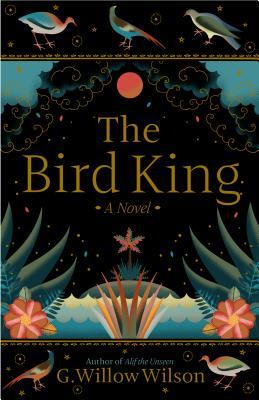
40642333The Bird King is, quite simply, a beautiful, vividly imaginative book. The story, the characters, the world building, the mythology… Wilson crafts all of these so masterfully that it’s easy — and immensely enjoyable — to lose oneself in the world she has created. The story is set in 1491, at a sultanate on the verge of collapsing to the Christian Spanish empire. Our heroine is Fatima, one of the sultan’s concubines who has never been beyond the palace walls. Her best friend is Hassan, the palace map maker with the ability to create reality with the maps he draws. When Fatima unwittingly reveals Hassan’s abilities to a woman from the Spanish Inquisition, she and Hassan flee the palace to save Hassan’s life.

The story takes place in an actual historical period, and there are certainly many elements that reveal the realities of the time. Through Fatima, we feel almost viscerally the fear the Muslim characters felt as they are hunted by the Spanish Inquisition. We see elements of the torture they inflict, and how the sultan himself is kept hostage by his love for his children. I especially love the details that make Fatima and Hassan’s struggles feel real, for example the taste of the water they have to drink and the way Fatima’s feet are in great pain because she’s never walked further than within the palace walls. Most of all, the story is infused with a sense of impending tragedy. We know that Islamic sultanates will fall to Spanish rule, we know the horrific injustices done to non-Christians, and we know how the effects of this period in history continue to be felt today. Yet like Fatima, we are helpless to do anything to prevent its inevitability; all we can do is hope that Fatima and Hassan, and others like them, can at least escape.

The magic of this novel however is how deftly Wilson interweaves mythology and supernatural elements within the realistic events. In the palace, even before the Spanish forces arrive, Fatima and Hassan pass the time by telling stories about The Bird King. Inspired by a half-finished poem they found, they imagine how various kinds of birds travel long distances to a mythical island where the king of the birds dwells. In Fatima and Hassan’s flight, what begins as a casual pastime transforms into a focal point of hope, as Hassan draws a map that he says leads to the real island of the Bird King, where he and Fatima will be safe both from the sultan and from Spain.

Wilson somehow makes this work, and even though we share in Fatima’s skepticism that the map actually leads anywhere, we also can’t help but get caught up in her hope that it does. Throughout their journey, they are assisted by djinns and a Catholic priest, and I love how Wilson uses these characters to make her world so much richer. For example, when Fatima asks one of the djinns how the original Bird King poem ends, his response is cryptic yet turns out to be more true than we initially realize. And when the Catholic priest sees Hassan’s map and shares a story from his own culture, we realize how many of these stories and mythologies can overlap, and somehow all be true in some way.

The ending fell a bit short for me, just because the lead up was so epic, and to be honest, the last few chapters confused me at first. But I do like how the story of the Bird King turns out, and how it critiques and subverts ideas of gender roles. And even though it confused me, I do like how the ending blurs the boundaries between space and time, much as the story has always blurred the boundaries between mythologies.

This is an incredible book, perfect for readers of historical fantasy, especially if like me, you’re looking for more women-centric stories, and more diverse range of mythologies.

+

Thank you to Publishers Group Canada for a copy of this book in exchange for an honest review.

Review | All the Wrong Places, Joy Fielding

40712004All the Wrong Places is an entertaining, engrossing read.

It’s billed as a thriller and in some ways, it is. There’s certainly an undercurrent of menace throughout with the presence of the serial killer (who gets his own chapters so we see his schemes unfold in terrifying detail. There are also red herrings galore and an unexpected, violent twist.

But despite all that, the novel didn’t feel as if it focused on the thrillerish aspects so much as on the three women (Paige, her mother Joan and best friend Chloe) all trying to rebuild their lives after traumatic experiences. Even though the blurb teases about the dangers of online dating, only one of the characters ever actually seriously tries it out. The rest dip their toes into it, but their stories ultimately take them in a different direction.

I liked that. I was expecting a pretty standard thriller but got something else entirely, which kept me off-balance throughout. I also like how Fielding delves into issues of domestic violence and emotional abuse (with enough detail to merit a content warning), and the harsh realities thereof.

One thing I didn’t like is that the subplots about Joan’s trips to the hospital got a bit repetitive after a while. The first time was horrific, but by the last visit’s reveal, it just felt like an unnecessary element to add artificial drama rather than anything real. That being said, I do like that Joan gets her own romance, and that Fielding makes Paige, and likely many readers as well, confront and critically examine our assumptions when it comes to dating for senior citizens.

I also really didn’t like how Heather’s story turns out. Fielding does a good job of making her sympathetic despite all the crap she pulls. And possibly because all the other main characters hate Heather so much, I genuinely found her one of the most sympathetic characters. I thought she at least deserved more sympathy than she was given, and I wish her story could have been resolved differently.

+

Thanks to Penguin Random House Canada for an ARC in exchange for an honest review.