
Unknown's avatar

About Jaclyn

Reader, writer, bookaholic for life!

I Try to Solve An Agatha Christie Mystery: The Moving Finger (Miss Marple)

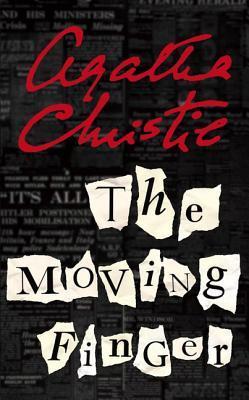
MovingFingerInspired by this YouTube video, where a book vlogger named Emmie decided to try solving The Murder of Roger Ackroyd by Agatha Christie, I decided to give the project a go myself. Roger Ackroyd is one of Christie’s best-known mysteries, and while it’s not one of my personal favourites, I knew it for its history-making big reveal, and part of the fun was watching Emmie come into it cold and try to puzzle it out.

As a long-time Christie fan, I figured my odds were better than Emmie’s. After all, I already knew that I had to rule out the mysteries with Christie’s most iconic twists: And Then There Were NoneMurder on the Orient Express, and Curtain all had shocking reveals, yet were all too memorable for me to try to play detective myself. Personal Christie favourites like A Murder is Announced, Sleeping Murder, Murder on the Links, Death on the Nile, ABC Murders, Crooked House were also out of the question. Surely, I thought, the mysteries that remained for me to try solving should be somewhat easier to tackle?

Enter the Miss Marple mystery The Moving Finger. A series of poison pen letters results in a(n apparent?) suicide and then a murder. I’ve had the ebook for years and must have read it at some point, but I could no longer remember who the letter writer or killer were. Small town, lots of gossip, an anonymous and malicious letter writer? Sounds like exactly the kind of soap opera-ish mystery melodrama I love!

MovingFingerAndNotebook

Detective hat on, little grey cells at the ready!

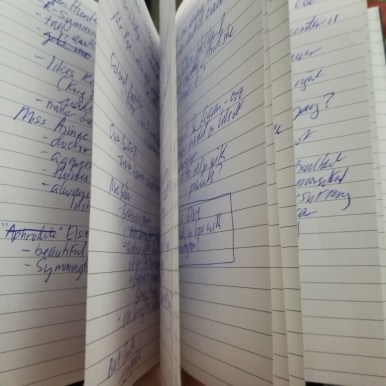
And so, armed with my trusty detective notebook (an unused AGO notebook that’s been gathering dust since I can’t even remember when), a ballpoint pen, and my little grey cells, I set to work. Within the first few chapters (16% of the book), I had pages of notes, strong theories about the poison pen writer’s identity and motives, and a renewed appreciation for Christie’s craft in creating complex, psychologically textured characters. I also had a bit of a headache from actively paying attention to the characters and their backstories, rather than just sitting back and waiting for Miss Marple or Hercule Poirot to tell me what actually happened. Detective work is harder than I thought!

By the 60% mark, I had two really strong (or so I think) theories about the murderer and their motive. It was around this point that I started to feel really smug: the Queen of Crime thought she was being clever, but here I was already outsmarting her at barely even past the halfway point.

Then I kept reading. At some point Miss Marple shows up and starts making cryptic little side comments about things that are apparently “interesting” and actions that are supposedly “brave.” And then my confidence falters. Because suddenly, I realize that my two very strong theories don’t really make all that much sense. And while they address some aspects of the mystery, they also create some big gaping logic holes. So I tried thinking through both theories, and testing out a couple alternative theories that maybe fit the puzzle a bit more fulsomely. By the 74% mark, I realized that I had a whole mess of new clues, theories, and suspects, and zero idea what had actually happened.
MovingFingerNotebook

My detective notebook, with all my notes and theories.

It was at the 87% mark that I realized I needed to stop reading. Things were coming to a head, and I could tell the big reveal was coming up soon. I figured it was time for me to take a pause to study all my clues and come up with a final theory about who the letter writer and murderer is/are. At this point, I had about four rather wild (and no longer strong) theories, and close to zero confidence any of them made logical sense.

Conclusion

So: did I solve the mystery? Can I now brag that I’ve outsmarted the Queen of Crime?

The answer, I’m afraid, is no, not even in the least bit close. Yes, this suspect flitted through my mind at one point while reading the book, but to be honest, all the characters flitted through my mind as suspects at one point or another, and this particular one barely made a dent.

Bah. So much for my impeccable little grey cells.

Onward and upward then, and on to find another Christie mystery to solve. Go, little grey cells, go!

The actual solution, along with my wild theories, are all beneath the spoiler tag below. Read on if you’re curious; skip if you want to read this book for yourself. (It’s much more fun coming in cold!)

*** SPOILERS BELOW ***

My Theory / My Detective Big Reveal:
Continue reading

Review | The Party House, by Lin Anderson

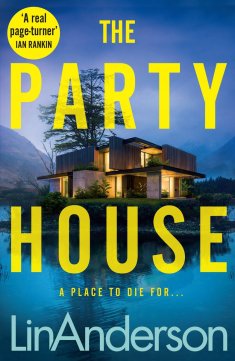
PartyHouseCoverThe Party House is a small town thriller set shortly after the unnamed-but-clearly-COVID pandemic. A few years ago, some rich folks broke quarantine and threw a big party at an estate in the fictional remote village of Blackrig in the Scottish Highlands. A new strain of the virus infected the local population shortly after that party and resulted in a number of deaths. In the present-day, the pandemic is no longer a problem, but Blackrig residents are still leery when the same party organizers return to party again at the same estate. Some locals decide to deface the property in protest, only to find the body of a young woman who’d disappeared around the same time as the first party.

The novel follows two main characters: the estate gameskeeper Greg, who was present at the first party and knew the victim more intimately than he’d ever admitted to the cops, and his current girlfriend Joanne, who, unbeknownst to Greg, accepts his invitation to Blackrig only because she wants to write about the village on her blog and escape her violent and abusive ex.

The Party House wasn’t bad. The setting was wonderfully depicted; I got a strong sense of the tight-knit village community and the atmosphere of the remote Scottish highlights. The mystery behind Ailsa’s murder was also set up well, with relevant clues doled out over the course of the novel. But the thriller itself just wasn’t very thrilling. The myriad of secrets Greg and Joanne kept from each other, which shaped a lot of the tension throughout the novel, just got annoying after a while, particularly on Joanne’s end. I can understand why Greg may want to keep his past with Ailsa a secret, especially from a new girlfriend, but Joanne writing about Blackrig seemed like such an innocuous tidbit, I don’t get why it took so long for her to reveal it. I can also kinda understand why she may not want to talk about her ex with her current boyfriend, but that secrecy just created so much tension that again, the secrecy felt unnecessary. There was one big secret she kept from Greg that I did understand, but the circumstances behind that reveal came so quickly that it barely seemed worth the build-up.

A key element of the story is the depth of Greg and Joanne’s feelings for each other. It’s what drives them to finally open up; it’s what drives another character to do something that set off the entire climax and denouement of the story; and most of all, it’s why the stakes around their secrets are so high in the first place. But while the author takes pains to show us how much the characters love having sex with each other, the emotional arc of their relationship didn’t really have enough of a build-up for me to buy into their connection. I feel like I knew they were growing to love each other only because they said so in their narration or to other characters, but the spark itself fell pretty flat on the page.

The author has penned a bestselling crime series starring forensic scientist Dr Rhona MacLeod. The writing in The Party House is strong enough and the village personalities compelling enough that I may give one of her series mysteries a try. But overall, this book fell flat for me.

+

Thank you to Publishers Group Canada for a copy of this book in exchange for an honest review.

Review | Better the Blood, by Michael Bennett

BetterTheBloodBetter the Blood is a thoughtful and thought-provoking crime novel that delves into the injustices of colonization and the deep-seated and driving need for reparations. A series of seemingly unrelated murders in Auckland, New Zealand turn out to be the work of a Māori person seeking utu for the killing of a Māori Chief by British soldiers eight generations ago. The concept of utu takes this beyond a simple revenge story: the term refers to reciprocity and balance, and while the killings are undeniably wrong, the killer’s motives are complex and multi-faceted.

The themes are explored with even greater depth and nuance through the main character, Detective Senior Sergeant Hana Westerman, who is Māori. A talented detective, the tension between her Māori roots and her chosen profession was made stark eighteen years ago when, as a junior cop, she was part of a police team sent to end by force a peaceful land rights occupation protest by Māori peoples trying to reclaim their land. In the present day, Hana is raising a biracial teenage daughter who can’t understand how her mother can be part of an institution like the police that continues to perpetuate injustices against indigenous peoples.

As a thriller, Better the Blood is slow-moving, and its pace more deliberate and contemplative than page-turning. While the killer remains definitively the antagonist rather than an anti-hero, the character is shown to take no delight in their actions. Rather, they seem weighed down by the murders themselves, and when we learn a bit more about their personal history before they began to kill, you can almost feel the weight of hundreds of years of injustices weighing them down.

Likewise, the climax of the story begins with violence, but finishes with a call to heal. A character says, ‘The people rose up….for peace, for love, the things that are much bigger than anger, stronger than violence.’ (page 336) That character then makes a choice that sends a powerful statement about what courage can be, and what a path to balance can look like. It’s a beautiful moment that ends the novel on an uplifting note while never letting us forget all we’ve learned and reflected on throughout the story.

Better the Blood is not meant to be a comfortable read, but it is a hopeful one. The mystery at its core doesn’t quite feel like the point; rather, the novel feels more like an invitation to read up on the realities of how colonization impacted indigenous peoples in New Zealand, and how those impacts continue to manifest in imbalances in the present-day.

+

Thank you to Publishers Group Canada for an advance reading copy of this book in exchange for an honest review.