


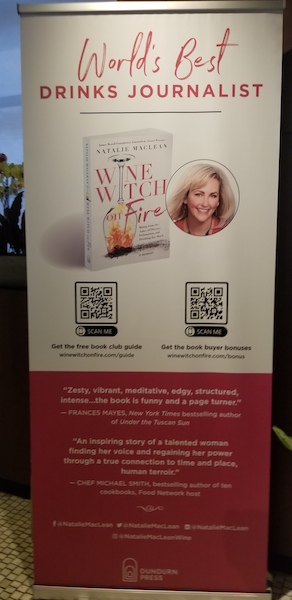
As author Natalie MacLean describes it, her memoir Wine Witch on Fire: Rising from the Ashes of Divorce, Defamation, and Drinking Too Much is about a “bad vintage” in her life. She jokes that there are “lots of dismal D’s in the subtitle,” but as anyone who met the author at her book event earlier this month can likely attest, the key phrase in the subtitle isn’t the “dismal D’s,” but rather the image of a phoenix rising from the ashes.
In an interview by Angela Aiello during the event, Natalie shared how she chose the title because witches resonated with her. “They get their strength from within, not from external validation,” she said, citing the white witch of Narnia as ironically satisfying for her “goody-two-shoes” younger self. Fire, of course, has an unfortunate historical association with witches, yet the author turns the element into a symbol of power. For her, witches are “strong women who’ve been through fire and come out the other side stronger, wiser, and fiercer.”
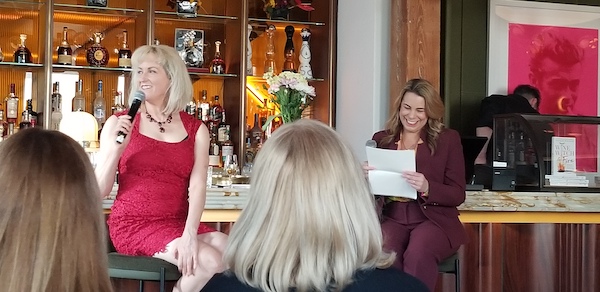
In Natalie’s case, her year of fire began with a google alert about an article accusing her of improperly attributing quotes on her website. While she tried to fix her error, industry rivals had picked up on the article and came after her. Beyond a memoir, Wine Witch is also an expose on sexism in the wine industry, and Natalie shared how the comments directed at her got pretty personal at times. She also pointed out the sexism inherent in wine tasting notes, how lighter and “more accessible” wines tend to be described with feminine adjectives, whereas “sommelier” wines are described in more masculine terms.
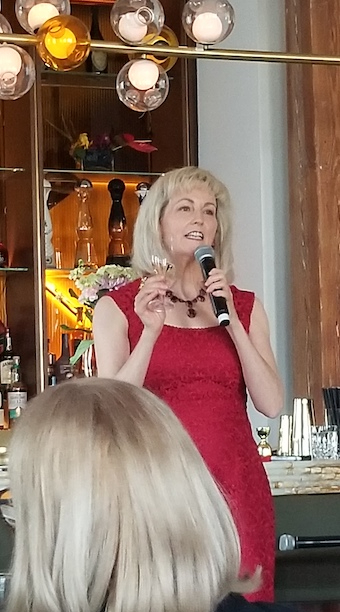

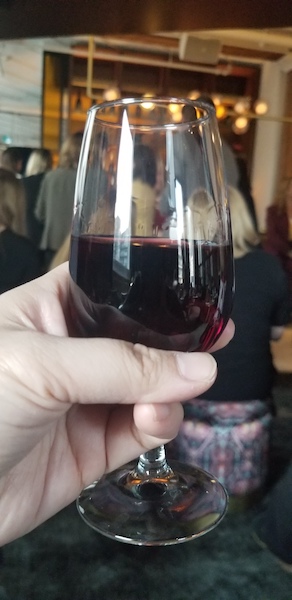
And speaking of wine, the book event on May 10th featured three glasses of Creekside wine for all the guests. There was a sauvignon blanc bubbly when we arrived, a sauvignon blanc before the author interview, and finally a syrah before the book signing. The bubbly was my personal favourite, but mostly, I was just glad of this sorely-missed opportunity to celebrate a book with fellow book lovers in person. So many blogger previews have shifted to a virtual format during the pandemic, and haven’t yet reverted to in-person, that when Natalie offered me a media pass to this event, I jumped at the chance. (Fun fact: Apart from festivals, this is my first in-person book event post-pandemic, and my last in-person book event pre-pandemic was the launch of another Dundurn Press title: J.J. Dupuis’ Roanoke Ridge. So thank you to Dundurn Press for keeping my bookish social calendar active!)
Even better, this event had a pretty swanky feel, which made the evening feel particularly special. It was at Clio, a social club in Toronto (former site of the Spoke Club). I can’t remember if I’d ever been to the Spoke Club before it closed, but I’ll be honest: when I looked that Clio’s website, I was intimidated. What does one wear to a social club that did primarily exclusive, members-only experiences? I had genuine anxiety about being turned away at the door and having to show Natalie’s email to be let in, but ultimately decided that if I could brazen it out in a denim skirt at Kevin Kwan’s ultra-swanky Crazy Rich Asians book launch at the Shangri-La Hotel, I could totally do this.
Fortunately, the organizers were thoughtful enough to have someone at the door greeting guests and directing us to the elevator. The elevator itself was funky-awesome with unusual wallpaper of large flowers. And by the time I got to the event space and saw the space packed with people chatting happily on plush white sofas and chairs, I was fully relaxed and ready to enjoy myself.
In fact, the overall atmosphere turned out to be pretty relaxed. Angela and Natalie seem to be good friends, and their interview had a very lighthearted, conversational feel. The people at my table were also really friendly. One of them told me how they love driving around the countryside, discovering new wineries, and sometimes even helping to harvest grapes. Another had enjoyed some of Natalie’s online wine classes, and had brought a stack of earlier titles for the author to sign. And a third took photos for a friend who loved Natalie’s writing but couldn’t make it that evening.
Natalie also shared some tips on moderating your wine consumption during the interview, of course with the disclaimer that she’s not a medical professional and different people find different strategies effective. I personally thought this tip was helpful: ask yourself, what’s the thought before the thought that says I need a drink? If it’s just “I had a bad day,” follow up by asking yourself if there’s something else you can do to make yourself feel better. And of course, if the answer is that a glass of wine would be really helpful, then there’s no judgment here. But as someone who often goes immediately from “ugh what a day” to “I need wine,” I appreciated the suggestion to be more mindful of that thought process.
I also really loved Natalie’s suggestion to be more mindful in general about the wine we drink. She shared that she wants people to see wine not just as being about the drink, but being about the people behind that drink. And so she likes to highlight stories of women in wine. I love that; I often select my wine based on the label design, but I would love to know more about the people and families behind those labels. And of course, make more mindful decisions about which wines and which wineries I want to support.

Ultimately, at least based on the interview at the event, the book to me felt very much like an act of courage. I love the phrase Natalie used in talking about writing this book: “post-traumatic growth.” She said she had to write this book because she “makes sense of [her] world on the page.” It took her a few years before she could shape her writings about her experiences into a book; she quoted Glennon Doyle’s adage to write “from a scar and not an open wound.” Yet it was important to make that effort and turn this into a book for publication, because as a poet (I missed the name and can’t find it online) said, “right now, there’s someone with a wound in the same place.”
I’m excited to read this book for myself, and I hope any wine witch out there who happens to be going through a bad vintage of their own can find their way to this book.
+
Thank you to Natalie MacLean and Dundurn Press for the media pass to this wonderful evening!
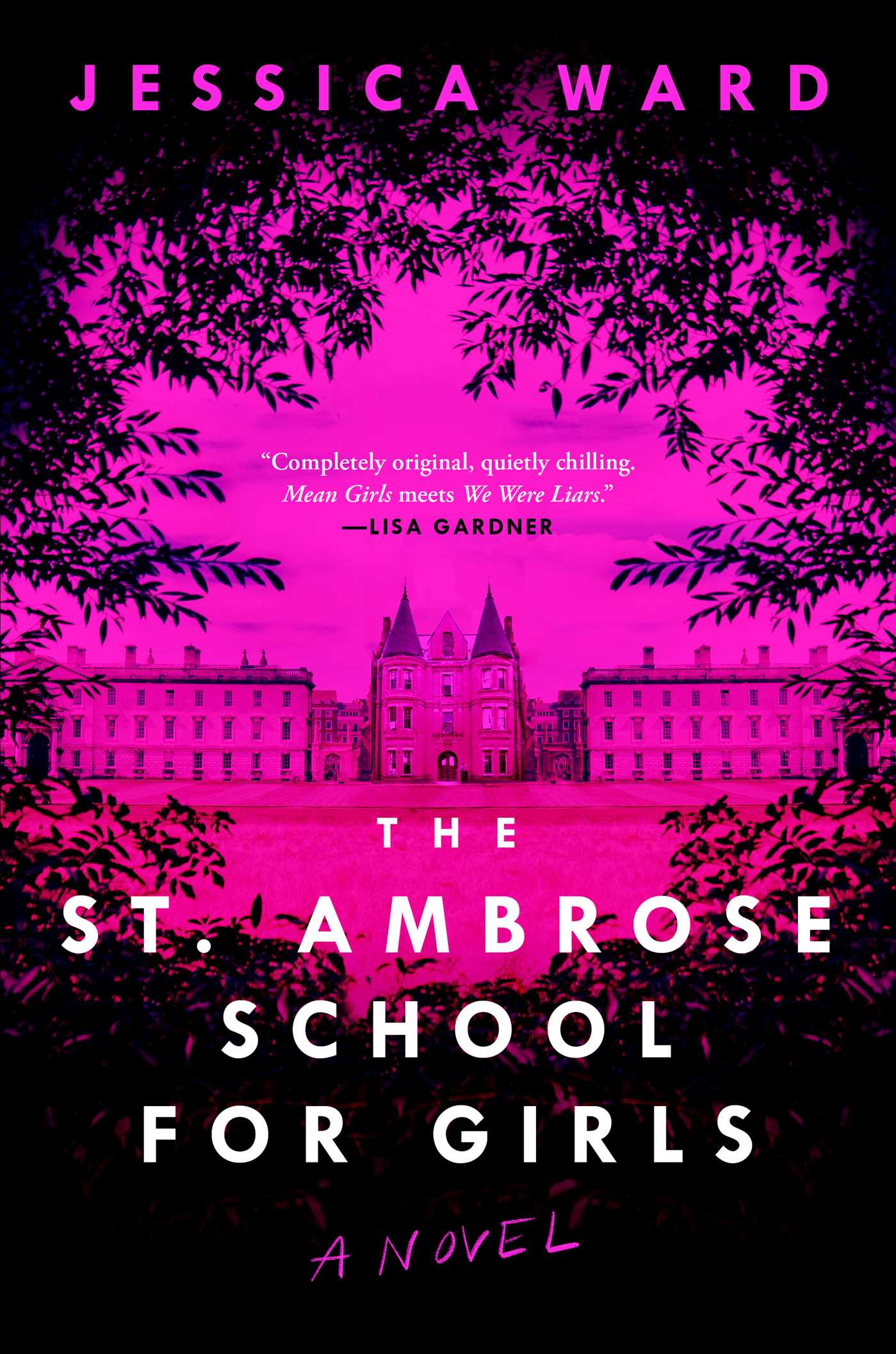 When Sarah Taylor arrives at the exclusive St Ambrose School, she’s hyper-aware of how different she is from her wealthier classmates. Her attempts to escape her social climber mom and carve a new identity as goth girl Bo are foiled when her mom meets mean girl queen bee Greta on the first day. Fortunately, Sarah finds a friend in her roommate Strots, an athlete too cool to care about what Greta thinks and too rich to ever get into trouble herself.
 Fresh off my defeat from trying to solve
 Literary Treats