Unknown's avatar

About Jaclyn

Reader, writer, bookaholic for life!

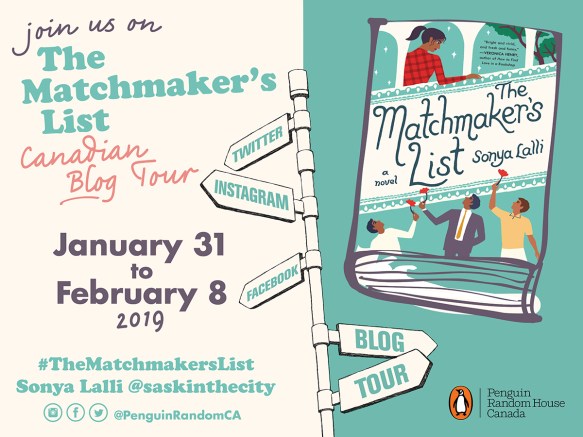
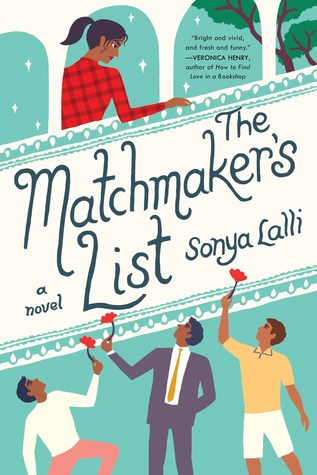
Review | The Matchmaker’s List, Sonya Lalli

40061992I made the mistake of starting Sonya Lalli’s The Matchmaker’s List after dinner on a weeknight. I’d planned to reading a few of chapters before bed, then saving the rest for another day. Instead, I found myself so completely engrossed in the book that I was still reading past midnight and had to force myself to stop just so I could get enough sleep before work the next day.

The Matchmaker’s List is such a compelling story, and so beautifully told. I was hooked by the characters and their lives. Nani in particular is a star, and I want so much for this to be turned into a Netflix movie, if only so I could see Nani brought to life on screen.

The titular list is one that Nani creates for her granddaughter Raina, who is still single at 29, earning their family censure from the rest of their close-knit Indian-immigrant community. Determined to have Raina married by 30, Nani sets her up on a series of blind dates, but doesn’t realize that Raina still secretly holds a torch for an ex-boyfriend. When Raina tells a lie to get her grandmother off her case, the lie unexpectedly blows up much larger than Raina anticipates, with far-reaching consequences for Raina’s family and friends.

From the cover and the blurb, I had expected a Bridget Jones Diary-type romantic comedy, filled with hilariously horrific blind dates and an unexpected one-true-love who will be part of Raina’s happily ever after. There is a love story, and bits of red herring romances, but the book is really more women’s fiction than romance. The love story is almost a subplot, as the story is much more about Raina struggling to balance her grandmother’s traditions and expectations with her own more modern and more North American desires.

I love Lalli’s writing, and the characters she has created. The novel has such a rich and complex cast of characters that we can understand and sympathize with them even when we see how some of their decisions hurt others. Raina in particular makes a number of questionable decisions throughout the story, and because Lalli’s characterization is so rich, I almost found my loyalties divided in my response. For example, with the lie Raina tells Nani, each time the lie gets bigger and more out of control, I felt an almost physical pain at the thought of how hurt Nani would be when she inevitably learns the truth, and yet I can also understand Raina’s choices and sympathize with how she herself is trapped in a spiral of her own making.

And even with the judgemental mother of Raina’s best friend, I can understand where she and the other, more traditional members of Raina’s community are coming from. Inspite of the effect on Raina and her friends, I can also understand these older adults’ desire to maintain traditions from their own childhoods and how scary and somewhat hurtful it must feel to have their children show considerably less interest in these traditions. There’s a beautiful moment at the wedding of Raina’s best friend that illustrates how this struggle between generations can reach a compromise, and possibly begin to create new traditions out of the old.

I especially love the subplot about Raina’s mother rebelling against Nani’s strict rules, then causing shame for the family by being a single parent, then by leaving her child to be raised by grandparents. This resulted in their family’s social standing being diminished in their community, and I love how this subplot helps explain why Nani is so desperate to have Raina married by 30, and conversely why Raina is so reluctant to tell her grandmother about her true feelings. I also love how, as this subplot develops, we gradually realize that the story isn’t quite as simple as we may have once thought, and that no matter how lovable Nani is as a character, she may be just as culpable as her daughter in causing the rift.

In brief, I absolutely loved The Matchmaker’s List. It’ll definitely resonate with many second- and third-generation Canadian or American women who are trying to define their own identity while continuing to respect the traditions of their parents and grandparents. And it’s a wonderful, heartwarming story of love and family as well, and sure to keep many readers up past their bedtime and, like me, having to struggle to break away from Raina and Nani’s world.

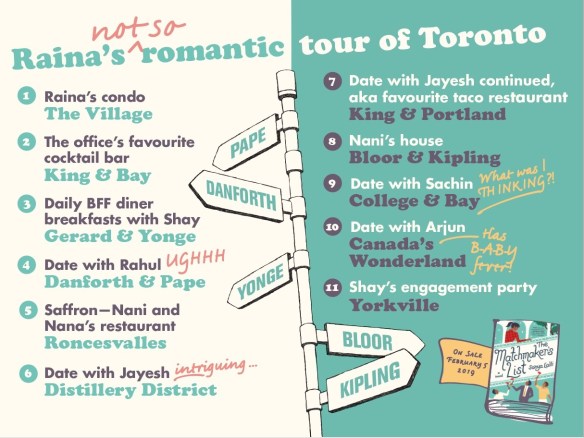
Raina’s (Not So) Romantic Tour of Toronto

Check out some of the Toronto neighbourhoods featured in this book!
matchmaker's list - toronto

matchmakerslist_blogtour-v2

+

Thank you to Penguin Random House Canada for an advance reading copy of this book in exchange for an honest review.

 

Review | Watch Us Rise, Renee Watson and Ellen Hagan

40025175Watch Us Rise is a call to action to teenage girls everywhere to stand up, speak their minds, and fight to make their voices heard. It tells the story of Jasmine and Chelsea, who start a women’s rights club at their high school and write blog posts that resonate with other students. When the principal shuts them down for causing discord amongst students, Jasmine and Chelsea rally their friends, women teachers and women in their community to fight for their club’s right to exist.

It’s the kind of book that’ll speak to teenage girls who have something to say and feel frustrated by all the barriers in their way. The story will also hopefully inspire girls who feel silenced by those in authority to speak up and find allies within their own communities. At a time when some of the most vocal figures on social media are teenagers, Watch Us Rise is a catalyst that reminds readers of all ages that we have the right and the obligation to speak our truth.

The novel does get a bit heavy-handed at times, but Jasmine’s story fleshes it out and makes these characters feel real. She’s dealing with her father’s cancer, and with larger issues like racism and fatphobia. One of the plot threads that resonated the most with me was how even Chelsea, who is Jasmine’s best friend, had no idea that most of the clothes in their favourite shop were too small for Jasmine. This comes to a head in a big way near the end, and is a compelling reminder that even the most ‘woke’ people and the most caring friends can fail to recognize their own experiences of privilege.

Chelsea was a bit harder for me to relate to, if only because her activism at times feels performative. For example, she refuses to wish her Catholic grandmother a Merry Christmas because she wants to honour other holidays like Hanukkah and Kwanzaa, but she knows nothing of these holidays except what she reads on Wikipedia. Or she goes for a walk around the block, and complains about every single advertisement for being sexist. Other characters do call her out for some of what she does, but with the exception of Jasmine calling out Chelsea’s thin privilege, the story seems to set up most of the other characters’ reactions as wrong.

Her activism also sometimes feels reductionist, like she sees everything in black and white, with no room for nuance. Chelsea’s main beef is with what she calls the “princess industrial complex,” and how women are expected to just be pretty and wait for Prince Charming. While I agree that media raises unrealistic expectations of women’s looks and limiting notions of women’s roles, I admit sympathizing with the mean girl characters who wore princess outfits and were accused of bullying. The story sets it up so the mean girl characters were indeed targeting Chelsea and Jasmine’s blog posts, but I’m a bit tired of people policing how girls should behave, and that includes people like Chelsea who think wanting to be a princess is bad, full stop.

That being said, the book isn’t written for me necessarily, but for teenage girls. And I can certainly remember how fulsomely I threw myself into my beliefs when I was a teen. One of my favourite quotes in high school was, “I may not agree with what you say, but I’ll fight to the death for your right to say it.” So, to be completely fair, I may have been a lot more like Chelsea than I realized as I was reading this. (Interestingly, that favourite quote of mine is often attributed to a man, Voltaire, but in actuality was written by a woman, Beatrice Evelyn Hall. Chelsea and teenage me would likely have both been overwhelmed with fury at that injustice.)

So while adult me feels like telling Chelsea to chill out, teenage me would have likely been right there with her, feeling inspired to go forth and make some tangible change in my own community. And that’s exactly the kind of reader whom I hope discovers Watch Us Rise. I hope that readers, and particularly younger ones, take heart in how much Jasmine and Chelsea are able to accomplish with what really began as just a couple of blog posts.

+

Thank you to Raincoast Books for an advance reading copy of this book in exchange for an honest review.

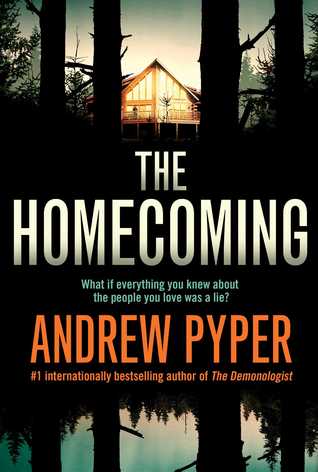
Review | The Homecoming, Andrew Pyper

40538904

This book blew my mind. Halfway through The Homecoming, I tweeted:

It’s 9:28 PM. I’m at 56% of The Homecoming. Do I:

  • Read on (So exciting!!)
  • Stop (Nightmares!!)

And that was pretty much my frame of mind throughout most of the book. I tried switching to a different book to avoid having nightmares, found myself unable to concentrate because I really, really wanted to keep reading The Homecoming, and finally at the 61% mark, I chickened out completely and burrowed under the covers, trying to think of anything but the story. The last time I remember being this affected by a book is, fittingly enough, another Andrew Pyper title, The Guardians. I’ve read other unputdownable books since The Guardians, so I might be misremembering, but this at least puts The Homecoming at my absolute favourite or second-favourite Andrew Pyper books ever.

The set-up for The Homecoming is absolutely my kind of atmospheric thriller: a controlling but absentee man has died, and his family has to stay in the same house for a month, isolated from all forms of outside contact, in order to claim their massive inheritance. It’s a set-up straight out of an Agatha Christie novel, and for a while, I expected one of the family members to murder another, and a third family member stepping up as amateur detective, And Then There Were None-style.

Except of course, this being an Andrew Pyper novel, things got quite a bit weirder and more twisted than I anticipated. Family members all having the same dream of a boat, alien music and drowning, for example. Mysterious figures in the woods. A doorway to an old campsite with violent messages graffitied to the walls. Things go wrong, and what I love about this is that everything that could be supernatural could also have a realistic explanation. The story is incredibly frightening, horrifying, terrifying — and I feel the need to include all those words because I went back and forth through an entire range of emotions while reading this book — and throughout it all, there’s this undercurrent of disquiet that just had me going “WTF” the entire time.

The best part for me is that all the scary bits are framed by this incredibly rich and complex family drama. The characters come to terms with how they feel about the man who died, and how they feel about all the stuff they’re learning about each other and about their family as they’re trapped in this house. So for all the fear this story raised in me, I also found it incredibly moving and emotional. I cared deeply for these characters, and the big reveal was more tragic than I could ever have anticipated.

And finally, I love how the book took on a bit of a sci fi twist. Like all good sci fi, even the more outlandish parts of this book are rooted in reality. And no matter how messed up the big reveal is in itself, the truly chilling thing about it is that its logic is believable. I can actually see why someone would do such things and, more horrific, I can actually see why some may consider such actions in service of a greater good.

This book is brilliant. Read it.

+

Thank you to Simon and Schuster Canada and Netgalley for an egalley of this book in exchange for an honest review.