
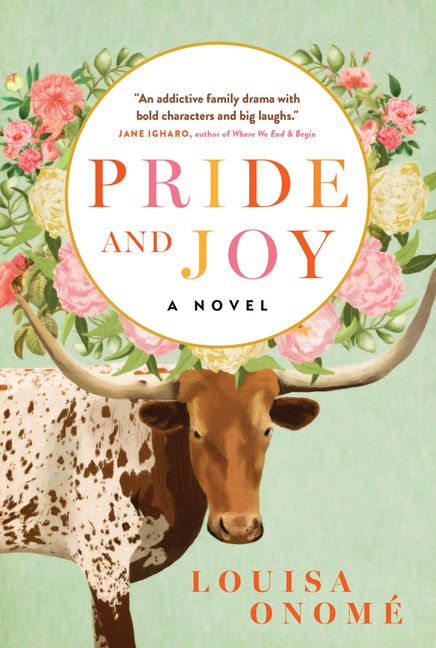
SUCH a fantastic book!
Pride and Joy hooked me with its very first paragraph:
Mama Mary Okafor is turning seventy today, Good Friday, and at first, no one was happy about this. Simply put, if there’s anything anyone, including Mama’s daughter, Joy, knows about Mama, it’s that she would rather die than upstage God, and yet, here she is turning seventy on a holy day.
As someone who grew up in a devoutly Catholic country and with a devoutly Catholic mother, this opening made me laugh. With two simple sentences, Onomé has painted me a vivid picture of exactly who Mama Mary Okafor and her daughter Joy are, and how they relate to each other.
Onomé’s skill in writing vivid characters carries through as the story continues to unfold. Mama Mary then proceeds to die in her sleep, and before Joy can even figure out how to grieve, Mama Mary’s sister, Auntie Nancy, declares that she has had a premonition that Mama Mary will rise from the dead on Easter Sunday. The declaration is both comic (she got the insight from seeing a brown cow on the road) and tragic (beneath it all is very real grief that the sister she has followed her entire life is gone, and to a place she cannot follow), and it’s testament to Onomé’s skill that the author balances both emotions so masterfully.
As the story progresses, an ever-intensifying escalation into absurdity barely conceals the family’s ever-intensifying struggle to manage their grief. A reporter comes to film the resurrection, dozens of Nigerian Canadians show up on the lawn to hold vigil, and a cousin shows up live streaming the happenings to her social media followers. All at the same time, relationships — between siblings, between romantic partners, amongst cousins, and across generations — deepen, fracture, and heal in varying degrees. And the birthday party turned resurrection vigil gradually morphs into a beautifully moving, raw, and gut-wrenchingly real portrait of a family coming to terms with a heartbreaking moment in their living history.
The Okafors are Nigerian Canadian, and, with the caveat that I’m not myself of that culture, the book very much feels Nigerian. Characters speak Igbo, details like the cow in Auntie Nancy’s premonition feels culturally specific, and when they Zoom in Pastor Lazarus and his congregation from Nigeria, it’s both hilarious (“Lazarus” being the name of someone who was brought back from the dead in the Bible) and also very vividly brought to life.
The book also feels very Nigerian Canadian, specifically in Joy’s anxiety that her son Jamil has learned more about his Italian heritage from his father than about his Nigerian heritage from Joy. With Mama Mary gone, who will teach Jamil the language and all the traditions that Joy isn’t confident about knowing herself? It’s an anxiety that struck a chord in me as an immigrant; my mom was my strongest link to my Filipino heritage, and ever since her death, I’ve felt more pressure to remember and keep alive all the many traditions and practices that used to be such a naturally large part of my way of life.
Overall, I absolutely adore this book. The way characters come together in the end, how they’ve grown as individuals, and how their relationships have evolved over the course of Easter weekend… it’s all so masterfully done. I particularly felt my heart swell at a scene near the end where Joy and her brother Michael “do something dumb.” The song “Sweet Mother” isn’t familiar to me at all, but I imagine it’s as meaningful to some readers as it is to Joy and Michael. The scene is pure silliness, and a vivid reminder of how cathartic and full of love silliness can be.
Read this book. It’s fantastic.
+
I won a copy of this book in an online giveaway, with no expectation of a review. I just loved it so much that I wanted to blog about it.
 Literary Treats