

Ravi Jain’s ASL/English production Prince Hamlet is the most visceral, emotional experiences I’ve ever had watching Shakespeare. Dawn Jani Birley plays Horatio, the friend tasked to tell Hamlet’s story after his death. A deaf actress, she does so in American Sign Language, with no interpretation. She gives a brilliant performance, and I love how seamlessly the director integrated both ASL and English (or consciously chose one over the other) in the staging of all the scenes.
Much of the success of this structure lies in Birley, who is seamless in her transition from narrating the story to the audience to signing alongside spoken dialogue to participating as a character in the scene. Even when she interprets other characters’ lines, she remains very much present in the scene, somewhat like the speaking characters’ id come to life. At times, her facial expressions reveal emotions that the speaking character struggles to keep in check, and this is most apparent in Hamlet’s scenes with Claudius, as Christine Horne keeps Hamlet’s dislike to a bare simmer in her tone while Birley’s gestures bely the violence kept in check.
I also love where Jain has Birley signing other characters’ monologues in full, before the other actor steps forward and speaks the lines. The most vivid in my mind right now is that of Ophelia’s death, where Birley’s hands set the scene of flowing water, and her gestures convey Ophelia floating, then making some kind of garland, then sinking, struggling and finally giving in to death. Throughout, Jeff Ho’s Ophelia crosses the stage behind her, his steps measured and heavy, and it’s an unforgettable tableau overall. Gertrude’s speech afterward, informing Laertes of his sister’s death, is given added resonance by the memory of Horatio’s version. There’s another scene where this worked very well, with Hamlet and Horatio to one corner of the stage, and Horatio signs a monologue about Hamlet’s father before Hamlet delivers the speech. I don’t remember now what it was about exactly, but I very much remember the darkness and pain and fear that Birley’s performance evoked.
Christine Horne was very good as Hamlet as well. I was never quite sure if Hamlet really was going mad, or if he was scheming throughout. There are moments where she delivered her lines with a manic playfulness, and I wondered if perhaps Hamlet’s heart wasn’t completely set on revenge after all, if part of him just wanted to have a normal life and forget his promise to his father’s ghost. Then other times, Horne stalked around the stage with steely eyes fixed on Claudius, and I felt sure Hamlet was a hairbreadth’s away from committing murder. It’s a very nuanced performance, and often very much enhanced by Birley’s interpretation.
I can go on for ages about everything I loved about this play, but instead I strongly urge you to go see it for yourself. I love the gender bent casting — only Claudius and Ophelia are played by male actors — and the fact that there are many persons of colour in the cast. I also love that it’s a fully bilingual play with many scenes in both languages, but also some scenes solely in one or the other. Though all the other actors speak most of their lines, some of them sign parts of their dialogue as well, and I particularly love when Horne signed her lines (sometimes without speech) when in conversation with Horatio. I’ve seen ASL interpreted events before, but this was my first experience of a bilingual performance, and I was impressed.
The final scene was particularly powerful. All other characters having died on stage, Horne faces the audience delivers Hamlet’s final monologue, entreating Horatio to be his voice and tell his story. Birley doesn’t even attempt to interpret these lines. Overcome by grief, she stretches out a hand as if she could pull her friend back from death. And as Horne crumples to the floor, Birley is just about ripped apart by her grief in the middle of the stage. Her hand is shaped in what I think is the sign for the letter “P” and she whips it across her body in multiple directions, and I wonder if that’s the sign for pain or if her pain has gone beyond words. Her hands form the shape of a heart in front of her chest and then breaks apart. Her face crumples, and she signs what I recognize from earlier in the play as “good night,” and I remember the line from Shakespeare, “Good night, sweet prince.” And it’s just the most poignant moment ever. Part of me wishes I knew ASL so I could fully appreciate her performance, another part of me is moved with the experience of understanding her without quite knowing the words.
Prince Hamlet is onstage at The Theatre Centre until April 29. Tickets are available online. The best part is that Why Not Theatre tickets are ‘pay what you can afford’, with four ticket options from $5 – $75 and general admission seating.
For other perspectives: this Toronto Star article gives a great overview of the play, and this Globe and Mail review credits the signing narration as the highlight of the play and was what convinced me to see the play for myself.
 Dr. Eitan Green has the perfect life, a neurosurgeon with a wife and two children, until he accidentally runs over an Eritrean migrant in his car. The migrant’s wife, Sirkit, finds his driver’s license near the body, and goes to Eitan’s house to demand reparation. While Eitan is prepared to offer money, what Sirkit actually wants is for him to set up a clinic for the refugee community and provide free medical care. There is the added danger of the violence faced by the refugees, as well as Eitan’s wife Liat being the detective in charge of tracking down the driver in the hit and run.
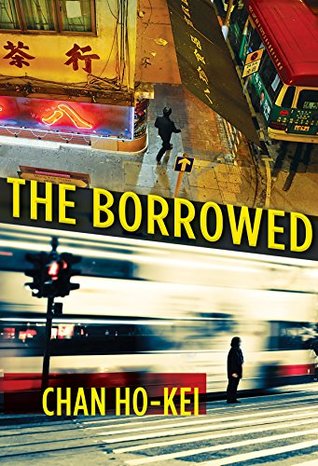 I’m a huge fan of classic detective fiction, so it’s no surprise that I absolutely adored Chan Ho-Kei’s novel/collection of interconnected short stories
  Literary Treats