 Mona Awad’s 13 Ways of Looking at a Fat Girl is a beautifully written, profoundly moving collection of interconnected short stories about a young woman’s ongoing struggles with body image. For anyone who has ever felt insecure about their weight or their looks, Awad’s book may hit uncomfortably close to home. The first few chapters alone were an emotional gut punch, recalling many insecurities I thought I’d long left behind in high school.
Awad’s protagonist Elizabeth is a “fat girl,” and as she attempts multiple times to escape her fatness and reinvent herself (from “Lizzie” to “Elizabeth” to “Beth”) by losing weight, it becomes increasingly clear that her being “fat” has almost nothing to do with the physical reality of her outward appearance. For Elizabeth, being a fat girl means viewing compliments with suspicion, thin and beautiful friends as enemies, and other fat girls with derision. Awad’s light touch belies the pain in the stories, and I love how she refuses to pull her punches. Elizabeth and other women in the stories aren’t “overweight” or “plump” or even “obese” — they’re “fat,” with all the baggage that word implies, and all the empowerment that claiming the word can bring. What struck me was that the character who is most cruel to fat girls appears to be Elizabeth herself, as if the only way she can feel better about her looks is by putting others down.
Take this assessment of a romantic rival for example:
I look at her. Her tight black slacks covered in little dog hairs. One of those awful Addition Elle sweaters my mother and I would never buy. The ones they sell at the back of the store with all the lame bells and whistles that no self-respecting fat woman would ever purchase. Sweaters for the women who have given up on style. Sweaters for the women who just want their flesh to be covered. [p. 62]
Implicit in this assessment is that Elizabeth isn’t as pathetic a fat girl as this woman is, and her need to assert this is itself really sad.
Awad explores several of Elizabeth’s relationships, from her friendships with thin girls she secretly hates to the various men in her life who either deign to have sex with the fat girl or fetishize her fatness. The man she eventually marries actually seems like a really nice guy, who unfortunately is turned off by her dourness resulting from an extremely strict diet regimen, and turns instead to online adult videos featuring fat women.
I found the development of Elizabeth’s relationship with her mother to be particularly powerful. It’s a tumultuous one: Elizabeth blames her mother as the source of her weight problems, which is turn is the reason her father left the family, and when Elizabeth loses weight, she resents being paraded in front of her mother’s friends and rather haughtily compares her newly svelte form with her mother’s still rounded body. Yet her love for her mother remains evident throughout, and some of the saddest, most beautiful passages in the book are about her mother. A chapter titled “Fit4U,” about Elizabeth picking up her mother’s favourite dress from the dry cleaners, almost made me cry. The dress is described as:
Deep blue like the hour between the dog and the wolf. An attractively scooped neckline. Sleeves and hemline a length and cut you would call kind. Buttons in back like discreetly sealed lips. Good give in the fabric. Double lined. The sort of dress that looks like nothing but a sad dark sack on the hanger, but on the body it’s a different story. Takes extremely well to accessories. My mother loved this sort of dress. At whatever weight she was — thin, fat, middling — she owned an iteration. [p. 119]
The dress, designed to flatter whatever figure, is so beloved by Elizabeth’s mother that she wears it even around the house, all the way until it wears out and she has to buy another one of a similar style. This desire to look beautiful and this belief that beauty is within the power of a dress to confer, is poignant, especially within the context of this passage from the same chapter:
I stare at the buttonholes, worn from all the give and tug they’ve endured. I see the expanse of my mother’s back, the red imprints of zippers and too-tight buttons on her skin along the spine. [p. 121]
The chapter goes on to describe how mother would ask daughter to zip the dress up, squeezing in her tummy as far as it would go just so that this dress that makes her feel beautiful would fit. Particularly arresting is the image of “a small cluster of holes by the hip that look like the dress was gored on one side by Freddy Krueger,” inescapable proof that, try as they might, the dress simply doesn’t fit.
I especially love how Awad transforms the dress into a symbol of Elizabeth’s mother, of their relationship, and ultimately of Elizabeth’s fear of the kind of fat girl she may become. When the dress is laid on the dry cleaner’s counter:
The smell of her perfume, her old sweat rises up between us. There is my mother. Barefoot in her apartment, playing solitaire on her deck, splayed knees stretching the skirt, toes twiddling under the table. Lying on the sagging boat of her brass bed after a long workday, flipping channels, too tired to change. Asleep with her mouth open, her troubled breathing, the hemline hitched up and tangled around her legs. [p. 120]
Wow. There’s just so much to unpack in this excerpt, in this chapter, in the entire book as a whole, and I wouldn’t even know where to begin. It’s such a potent, emotional roller coaster of a read, and all I can do is invite you to start reading for yourself.
One note is that the ending disappointed me somewhat. With such powerful moments sprinkled throughout the book, the final story seemed to somehow just peter out. While I understand that it’s a series of short stories and not a single story and while I’m glad Awad resisted the urge to give a neat and tidy resolution, I still wished for a bit more oomph for the final story.
Upcoming Author Events
If you happen to be in Montreal or Toronto, author Mona Awad will be in town this week.
+
Thank you to Penguin Random House Canada for a copy of this book in exchange for an honest review.

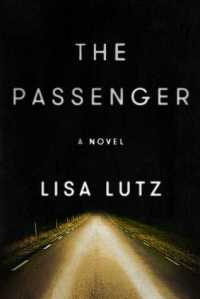 Upon discovering her husband’s dead body at the foot of the stairs, Tanya Dubois cashes in her credit cards, dyes her hair, and flees town under a new assumed identity. She’s done this before, and in the midst of the plot twists that require her to change her name multiple times throughout the novel, the one thing that Lisa Lutz makes clear is Tanya’s weariness at running. Along the way, Tanya encounters Blue, a woman on the run from an abusive husband, and while Blue appears to be a useful ally, she has much more of an edge than Tanya does and may soon prove more dangerous than Tanya realizes.
 Literary Treats